Buffalo Bill, la légende du Far West
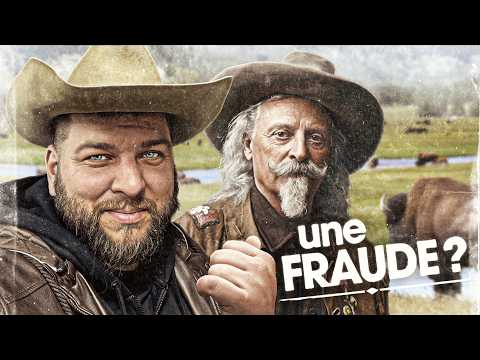
Buffalo Bill is a true legend of the West, whose fame rapidly transcended borders.
11 chapters
- Introduction and context of the Far WestPopular mythsThe Far West is often depicted through stereotypes drawn from popular culture, from cowboys to stagecoach attacks to Native American chiefs. These stereotypical images stem largely from a single man: William Cody, known by the nickname Buffalo Bill.Buffalo Bill's impactBuffalo Bill becomes a true legend whose fame rapidly transcends American borders. As an entrepreneur of his own glory, he organizes international tours that attract millions of spectators.Reality versus fictionOne of the major challenges in studying Buffalo Bill's history is that fact becomes intertwined with fantasy. It is crucial to distinguish the fictional elements in his biographical accounts.Additional resourcesThe comic book series 'Sagas indiennes' by Patrick Prugne, already 7 volumes published with the new volume 'Cheyenne', offers a perspective on the history of Native peoples during the conquest of the West and the Sand Creek massacre.
- Youth and early exploits of William CodyFamily originsWilliam Cody is born on February 26, 1846 in a small town in Iowa. His father, Isaac Cody, originally from Toronto in Canada, is a convinced abolitionist. After moving to Fort Leavenworth in Kansas, Isaac Cody is stabbed twice following his pro-abolitionist speeches and dies in 1857.Adventurous beginnings• At age 11, William earns his living as a hand on freight convoys crossing the plains • He joins General Johnston's army to suppress a Mormon revolt at Salt Lake City • According to his memoirs, he supposedly killed a Sioux warrior approaching their campPony Express and gold rushWilliam plans to head to California for the gold rush in 1860. Along the way, he meets a Pony Express agent, this horse messaging service capable of linking the Mississippi to California in just 10 days. Cody reportedly gets hired as a rider before leaving to be at his ailing mother's bedside.Military serviceFaithful to his father's abolitionist convictions, William attempts to enlist in the Union Army but is rejected for his young age. He resumes his freight caravan activities at Fort Laramie before finally donning the uniform in 1863 in the 7th Kansas Cavalry Regiment.
- The birth of Buffalo Bill and the buffalo huntThe nickname's originThe Kansas Pacific Railway worksite requires feeding hundreds of workers daily. The region is traversed by herds of thousands of wild buffalo. Cody supposedly kills 4,282 buffalo in just 18 months, averaging 8 per day.Hunters' duelBill Medicine Comstock challenges Cody for the title of greatest buffalo hunter. The two men engage in a duel where each must kill as many as possible in one day without dismounting. Cody kills 68 buffalo against only 48 for Comstock.Strategy and weaponryCody uses a large-caliber Springfield 1866 rifle he calls Lucrezia Borgia. He develops a strategy of killing the leaders first to make the rest of the herd circle. Comstock attempts to pursue the animals over long distances, which proves less effective.Humanitarian consequencesThese massive hunts also aimed to starve certain Native populations whose subsistence depended on buffalo exploitation. This practice represents a dark aspect of the conquest of the West often forgotten in legends.
- Media rise and meeting with Ned BuntlineThe decisive meetingBuffalo Bill meets journalist Ned Buntline who initially wanted to write about Wild Billy Hickok. Hickok violently rejects him, and Buntline turns instead to Buffalo Bill, a 23-year-old young man embodying the stereotype of the typical American frontiersman.Creation of literary mythBuntline, accustomed to invented tales, makes Buffalo Bill the king of frontier men. His two serial stories find some success in major American cities and are adapted into a theater production in New York in 1872.Birth of the spectacleWhen invited to see his own story performed by an actor at the theater, Bill refuses and asks Buntline to write him his own show. 'Scouts of the Prairie' puts him alongside cowboy Texas Jack and Italian dancer Giuseppina Morlacchi, who introduces the French Cancan to America.On-stage troublesWild Billy Hickok joins the troupe but his bad temper creates tension with the audience. One evening, he even shoots at a spotlight that blinds him. Buffalo Bill's fame rapidly transcends borders, notably attracting Grand Duke Alexis Alexandrovitch, son of the Russian Tsar.
- Little Big Horn and war storiesReturn to military lifeBuffalo Bill leaves civilian life again in July 1876, just days after the Battle of Little Big Horn where General Custer faces the troops of chiefs Sitting Bull and Crazy Horse.Ambush strategyBuffalo Bill guides Colonel Merritt's troops to stop the advance of Cheyenne warriors of Chief Morning Star. They set an ambush by hiding his men in wagons. The Cheyenne vanguard, believing they are meeting settlers, charges but is met with gunfire.Scalp and dramatizationBack on stage, Buffalo Bill recounts fighting a chief named 'Yellow Hair'. He claims to have shot him with his Winchester before scalping him and exclaiming 'this is the first scalp for Custer'. No witness to this skirmish recalls this scene.Trophy exploitationBill regularly displays Yellow Hair's scalp at each performance of his shows for years, reinforcing his legend despite the lack of witness confirmation.
- Formation of the international Wild West ShowEvolving spectacleAfter 10 years of touring, Buffalo Bill founds his own traveling show where the audience can applaud personalities recounting their exploits. As years pass and Western legends disappear, he must find new ways to immerse the spectator.Spectacular enhancements• Cowboy orchestra for Far West ambient music • Stands offering typical food from the era • Fairground phenomena including former enemies like Chief Sitting BullNative American starsSitting Bull, the chief who had defeated Custer, appears during the show to earn a living. Iron Tail becomes the show's Native American star, parading alongside Bill. He is often confused with Chief Iron Hawk present at Little Big Horn, but Iron Tail was not a war chief.Other show attractionsAnnie Oakley, renowned sharpshooter, is capable of splitting a playing card lengthwise at nearly 30 meters distance. Iron Tail becomes Buffalo Bill's close friend and goes hunting with him during breaks.
- European tour and international triumphsRoyal invitationIn 1887, Prince Edward, son of Queen Victoria, invites Buffalo Bill to perform his show for his jubilee. The troupe embarks for its first year-long European tour, comprising 218 passengers including 97 Native Americans, 180 horses, and 18 buffalo.British successOver two million English people flock to see this show in England. It is a phenomenal success that solidifies Buffalo Bill's international fame.Parisian triumphA year later, in 1889, the show sets up in Paris during the Universal Exposition. Cowboys parade under the newly inaugurated Eiffel Tower. The show's highlight is an attack on a real stagecoach by Native Americans, with a stagecoach difficult to find in this era when trains dominate.French cultural impact• The Buffalo Bill Wild West Show welcomes three million French people • Equestrian painter Rosa Bonheur receives a Native chief costume and creates a portrait of the hunter • The troupe continues to Italy where Bill meets the Pope, then heads to Germany
- Global expansion and renewed spectaclesInternationalizationThe troupe is enriched with Syrian riders and Zulu warriors. They continue their route through Austria and Belgium before returning via England. This tour of international caliber lasts several years.New show titleUpon his return to the USA, Buffalo Bill extends his show's title which becomes 'Buffalo Bill's Wild West and Congress of Rough Riders of the World', incorporating volunteer riders from the Spanish-American War.Adapting to changeVeterans of the Indian Wars become fewer and fewer: Sitting Bull dies in 1890, followed by many others. Bill thus appropriates the figure of the Rough Riders with numbers taking the form of a military carousel added to Far West reenactments.Film documentationThe show is immortalized for the first time by Thomas Edison in 1894. Buffalo Bill builds his own town in Wyoming which he names Cody, realizing a dream he had harbored for 20 years.
- Decline, accident, and spectacular farewellsRailway catastropheIn 1901, the Buffalo Bill Wild West Show is hit by a terrible railway accident. The wagon carrying animals and some performers is struck by a freight train, killing nearly all of their menagerie. Annie Oakley is seriously injured in the legs and will bear lasting damage.Environmental consciousnessBill acknowledges that he belongs to a bygone era. He positions himself against buffalo hunting, whose numbers have drastically declined since his youth, showing some awareness.Grand farewell tourAs he approaches his 60s, he launches the idea of a grand farewell tour lasting 4 years crossing a dozen countries. Three trains of wagons transport troupe members. After three months in Paris, the show crosses nearly 120 French towns, penetrating deep into the countryside.Glorious returnBuffalo Bill returns covered in glory but struggles to finance irrigation projects for his town of Cody. Despite his age and pains, he continues to take the stage to embody the vigorous cowboy of his youth.
- Final years and death of Buffalo BillBusiness declineThe public tires of all these old heroes of the past and watching an old man perform stunts no longer generates enthusiasm. Competition from cinema becomes fierce, and Buffalo Bill agrees to play his own role in fictions inspired by his youthful exploits.Final years of performanceBuffalo Bill continues touring the United States accompanied by the famous Chief Iron Tail. In 1913, Iron Tail serves as the model for the portrait struck on the Buffalo nickel, with a bison on the back of the coin.Iron Tail's tragedyIn May 1916, during a performance in Philadelphia, Iron Tail falls ill with pneumonia. To avoid missing the next show in Baltimore, Buffalo Bill leaves his companion in a hospital. Iron Tail finds himself alone, unable to communicate, and is sent by train back to the Native American reservation in Dakota where he dies before arrival.Death and legacyWilliam Cody deeply regrets abandoning Iron Tail but dies shortly after, on January 10, 1917. The news is a global event and despite World War I, tributes are paid by both sides. His legend, though partly mythologized, remains interesting testimony to the pivotal moment in American history.
- Lasting influence and historical legitimacyMyths versus realityBuffalo Bill's history has been picked apart by historians because several elements feel mythologized and contributed to the character's aura. However, this story remains particularly interesting testimony to this pivotal moment in U.S. history.Cultural appearances• EuroDisney chooses Buffalo Bill as an ambassador in 1992 for a daily show with buffalo • The show attracts western enthusiasts until 2018 • Buffalo Bill leaves a rich and surprising legacy especially in FranceTraces in FranceBuffalo Bill and his troupe leave notable traces in France. The passage through the country, particularly in the Camargue, leaves a lasting mark on the territory and local culture, with stories yet to be explored.Additional resourcesThe author is preparing a documentary on cowboys that will be available on FranceTV in the coming months, promising to shake up the traditional vision of the subject. A previous episode on the conquest of the West also debunks several common misconceptions.