Exposing Why Farmers Can't Legally Replant Their Own Seeds
This is a video about Monsanto, one of the biggest agricultural companies in the world.
17 chapters
- The Murder of Mike Wallace and Monsanto's ControlTragic EventAn Arkansas farmer named Mike Wallace was murdered in October 2016 over a herbicide chemical, not money or land.Company Power• Monsanto owned more than 80% of seeds planted in the United States • They had policies that pitted farmer against farmer • They could send investigators to farms and take farmers to courtLegal System AbuseMonsanto colluded with EPA officials, twisted scientific evidence, and destroyed communities' health through their chemicals.Investigation BasisThis investigation is based on publicly available documents, recordings, and third-party opinions with all sources linked in the description.
- The Discovery of Herbicides: From Poison Ivy to 2,4-DOriginal ProblemIn 1942, chemist Franklin D. Jones experimented with spraying poison ivy with hormones to protect his children from violent reactions to the plant.Chemical BreakthroughJones discovered that 2,4-D, a growth hormone, caused intense uncontrollable growth in poison ivy, effectively acting like plant cancer in a bottle.Selective Properties• 2,4-D killed broad-leaved weeds like dandelions and poison ivy • Grasses like wheat, corn, and barley were resistant to 2,4-D • 2,4,5-T was created by adding another chlorine atom for even greater selectivityAgricultural ImpactThese herbicides replaced manual weeding and dangerous chemicals like arsenic, revolutionizing farming and creating modern American lawns.
- Monsanto's Factory Explosion and Dioxin DiscoveryDisaster at NitroIn 1949, Monsanto's 2,4,5-T factory in Nitro, West Virginia exploded, releasing a dark stinking powder that caused workers to develop severe skin lesions and acne.Medical MysteryMonsanto's doctors noted workers were excreting a foreign chemical through their skin, but neither the company nor doctors knew what was causing it.Dioxin IdentificationIn 1957, German dermatologist Karl Schulz discovered that trace amounts of dioxin, a byproduct created when 2,4,5-T production temperatures exceeded 170 degrees Celsius, caused the skin disorders.Corporate Response• German companies sent warning letters to Monsanto and Dow about dioxin contamination • Monsanto denied receiving the letters; Dow claimed they misfiled them • Monsanto did not warn the public about the danger
- Operation Ranch Hand: Agent Orange in VietnamMilitary CampaignThe US sprayed 72 million liters of Agent Orange in South Vietnam to destroy jungle cover where the Viet Cong operated.Chemical CompositionAgent Orange was a 50/50 mixture of 2,4-D and 2,4,5-T, with Monsanto being the largest supplier by volume.Hidden Knowledge• Monsanto and Dow secretly exchanged information acknowledging dioxin was the most toxic compound they had ever experienced • They knew even trace amounts caused severe acne • They never warned the US government about the threatHuman CostThree million people suffered from Agent Orange effects including skin diseases, cancer, and birth defects in children.
- The Development of Glyphosate and RoundupScientific BreakthroughIn 1970, scientist John E. Franz discovered glyphosate during his final set of experiments on the agricultural herbicide project.How It Works• Glyphosate blocks the EPSPS enzyme in the Shikimate pathway • This pathway produces three amino acids essential for plant survival • The pathway exists in plants and bacteria but not in humans or animalsMarket LaunchIn 1974, Monsanto released Roundup, marketing it as safer than table salt and safe enough to drink.Advantages• Killed all weeds, not just broad-leaved ones • Enabled no-till farming, saving soil and labor • By the late 1980s, it generated over $1 billion annually
- Genetic Engineering: Roundup Ready SeedsThe ProblemGlyphosate killed all plants, so farmers could only spray it before planting or after harvest, limiting its use.Engineering Solution• Monsanto engineered crops to be resistant to glyphosate • They discovered a glyphosate-resistant salmonella strain in factory sludge • The salmonella's mutated EPSPS enzyme prevented glyphosate from blocking itGene Insertion MethodMonsanto used a gene gun firing gold particles coated with salmonella DNA at plant cells at 1,400 kilometers per hour.Market Dominance• By 2001, over 70% of US soybeans were Monsanto's Roundup Ready variety • By 1998, Monsanto had patents for glyphosate-resistant canola, corn, and cotton • The product generated over $2.5 billion annually
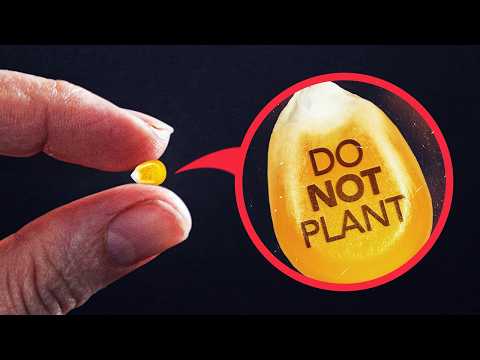
- Monsanto's Technology Use Agreement and Farmer ControlRestrictive Terms• Farmers could not save seeds for replanting next year • Farmers could not share or sell seeds to others • Agreement binding simply by opening a bag of seedsSurveillance RightsMonsanto gained the right to access farmer lands, examine crops, take samples, and conduct inspections without consent.Market PressureWhen herbicide drifted from Roundup Ready crops to neighboring fields, it killed non-resistant crops, forcing neighbors to adopt Monsanto's system.Coercive TacticsMonsanto salesmen told farmers they could either sign on or be out of business within two years.
- Monsanto's Enforcement and Farmer IntimidationInvestigation Tactics• Monsanto sent private detectives and ex-cops to inspect farms • They hired pilots to survey farmlands from planes and helicopters • They established a hotline (1-800-ROUNDUP) for farmers to report neighborsLegal IntimidationDave Runyon, an Indiana farmer, received a cease-and-desist letter from Monsanto threatening patent infringement lawsuits despite never signing their contract.Community Impact• Fear and paranoia turned neighbors against each other • Farmers were afraid of who might report them • Some farms were deliberately contaminated with Monsanto seeds to destroy competitorsLitigation Results• By 2013, Monsanto sued over 400 farmers • Lawsuits generated over $20 million in settlements • Many farmers went bankrupt or settled out of court to avoid legal fees
- The Dicamba Herbicide and Mike Wallace's DeathCrop DamageMike Wallace's non-resistant soybeans were dying from Dicamba herbicide drifting from his neighbor's Roundup Ready field.The ConflictWallace estimated the damage at around $100,000 and tried to discuss the situation with the neighboring farm worker on a country road.The TragedyThe interaction escalated when Wallace allegedly grabbed the worker's arm; the worker pulled out a gun and shot Wallace until the gun was empty.Global PatternSimilar tensions and tragedies occurred in farming communities across India, Argentina, Canada, Brazil, and Vietnam.
- IARC Classification and Public ConcernCancer DesignationIn March 2015, the International Agency for Research on Cancer (IARC) classified glyphosate as probably carcinogenic to humans.Regulatory Disagreement• The EPA and World Health Organization claimed glyphosate posed no carcinogenic risk • IARC's decision shocked the public after Monsanto had spent 40+ years claiming it was safer than table saltMonsanto's ResponseMonsanto sent a scathing letter to the World Health Organization demanding the classification be rectified immediately.Industry DefenseFive review papers criticizing IARC's decision were published, though the main review paper was later revealed to be ghostwritten by Monsanto.
- The Monsanto Papers: Internal Documents ExposedLegal InvestigationCalifornia lawyer Brent Wisner investigated Monsanto after learning about a farmer who developed non-Hodgkin's lymphoma (NHL) after using Roundup.Evidence Discovery• Monsanto was forced to release internal emails, memos, and safety studies • Documents showed the company saying different things publicly versus privately • Evidence of systematic deception was jaw-droppingKey Findings• In 1983, mice receiving higher doses of glyphosate developed rare kidney tumors • EPA wanted to classify it as a possible carcinogen but Monsanto fought back • In 1989, EPA suddenly changed its mind without requiring further studiesPublic ReleaseBy mid-2017, Wisner released all internal documents to the public as the Monsanto Papers, causing widespread outrage.
- The Williams, Kroes, and Munro StudyFoundational PaperThe 2000 Williams, Kroes, and Munro safety study concluded Roundup posed no health risk to humans and was cited over 1,200 times.Hidden ControlMonsanto's toxicology director William Heydens was listed as providing scientific support but was actually the primary writer of the paper.Internal Deception• Heydens internally described the writing process as strangulation and rewriting demands • He stated Monsanto did the writing while the other authors just edited and signed their names • Internal documents showed they celebrated it as their defense for glyphosate worldwideRegulatory ImpactRegulators worldwide considered the paper the foundational research proving glyphosate safety, though it was controlled by Monsanto.
- Monsanto's Deception Strategies and CollusionSystematic Manipulation• Attempted to change glyphosate cancer classifications at different agencies • Colluded with corrupt EPA officials to kill opposing research • Ghostwrote safety studies and published them as independent researchMedia StrategyMonsanto's Let Nothing Go strategy involved coordinated responses to any public criticism online and in media.Training OperationsMonsanto trained nutritionists, academics, and other people on what to say and how to say it when defending glyphosate.Social ManipulationThey deployed trained advocates as an army that could respond whenever news articles about glyphosate appeared.
- Lawsuits and Bayer's AcquisitionMass LitigationBy summer 2018, over 11,000 plaintiffs filed lawsuits against Monsanto, and more than 3,000 cancer patients signed onto the case.Strategic EscapeAs the first lawsuit was starting, Monsanto signed an acquisition deal with German chemical giant Bayer, allowing executives to cash out.Bayer's BurdenBayer stock tanked immediately after the acquisition, later described as the worst acquisition in history by some financial outlets.Settlement Outcome• Dewayne Lee Johnson won the first trial with a $289 million judgment • By 2025, Bayer settled over 100,000 cancer lawsuits • Total settlements exceeded $10 billion
- Glyphosate's Health Effects and Scientific IntegrityCarcinogenic Mechanisms• IARC cited genotoxicity as a concern—overexposure can damage DNA in cells • Glyphosate disrupts the Shikimate pathway in gut bacteria microbiome • Glyphosate is a probable carcinogen in the same category as red meat and night shift workRisk AssessmentGlyphosate doesn't appear to be a particularly potent carcinogen, but high exposure is associated with modest increases in certain cancer types.Regulatory Conflict• EPA and European Food Safety Authority still disagree with IARC • US courts have repeatedly told EPA they're not doing proper analysis • About 50% or more of glyphosate safety research is probably industry-fundedIndustry ControlCompanies desire to control the science surrounding their products through funding and influence.
- Glyphosate Resistance and Product ChangesResistance EvolutionSince the 1970s, over 60 species of weeds have become resistant to glyphosate through repeated overuse.Bayer's Adaptation• Bayer removed glyphosate from some commercial Roundup products • Modern Roundup now contains 2,4-D instead • This is the same herbicide that started the entire agricultural revolution decades earlierPublic Health PriorityMany people may go through life unaffected by glyphosate, but others may develop cancer or disease.Future ImplicationsIt's important to protect the most sensitive individuals from glyphosate exposure.
- Scientific Independence and Systemic ProblemsCorporate InfiltrationLarge companies like Monsanto can infiltrate academia with resources to push around scientists and manipulate results.Regulatory Capture• When there are no firewalls between regulated companies and regulators, distrust in science is created • Lack of independence allows companies to manipulate regulatory decisionsScience's NatureScience is inherently political and socially constructed, never disconnected from world realities.Solutions NeededEstablish rules and regulations to ensure better independence and disconnection between regulators and regulated industries.