
Why Machines That Bend Are Better
10 chapters
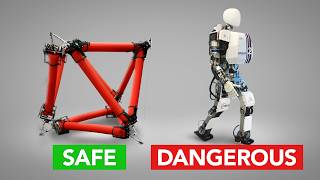
- Introduction to Compliant MechanismsDefinitionCompliant mechanisms are components that bend and are found in satellite thrusters, plastic tools, and micro mechanical switches.Paradigm ShiftTraditionally flexibility in machines was considered bad, but researchers are learning to use flexibility to advantage rather than avoid it.Expert IntroductionProfessor Larry Howell from mechanical engineering literally wrote the most cited book on compliant mechanisms.Application PreviewCompliant mechanisms are used in safing and arming systems for nuclear weapons to prevent accidental detonation.
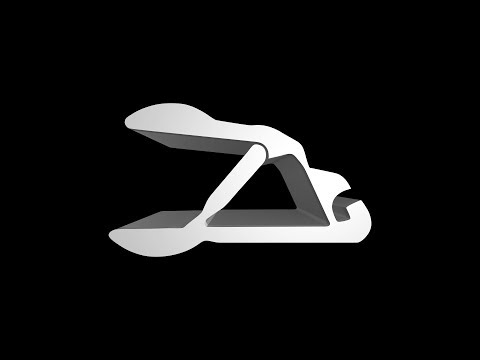
- The Compliant Gripper and Force AmplificationMechanism OverviewA compliant gripper is a single piece of plastic that can break chalk and amplify force by a ratio of thirty to one.Force DemonstrationOne pound of input force produces thirty pounds of output force, demonstrating significant mechanical advantage.Design Benefits• Single piece construction compared to traditional vice grips with multiple components • Can be produced via injection molding for minimal cost • Can be extruded and cut for efficient manufacturingPerformance TestingCompliant mechanism switches have been tested in fatigue machines and can withstand over a million cycles without failure.
- The Eight Ps of Compliant Mechanisms - Part Count and ProductionPart Count AdvantageCompliant mechanisms reduce part count by using bendy parts instead of separate hinges, bearings, and springs.Production FlexibilitySimple design allows use of different production processes including injection molding, extrusion, and cutting.Real World ExampleMicro mechanical switches achieve in one plastic piece what normally requires springs, hinges, and multiple rigid plastic pieces.Cost ReductionManufacturing cost drops to cents due to simplified design and efficient production methods.
- Precision Motion and Backlash EliminationSurprising PrecisionDespite being made of flexible parts, compliant mechanisms can produce very precise motion, which seems counterintuitive.Backlash ProblemTraditional hinges suffer from backlash because a pin in a hole has play that allows movement reversal delay.Performance Advantages• No backlash from flexible design • Reduced wear compared to traditional mechanisms • Minimal lubrication requirements • Better performance than rigid counterpartsWind Tunnel ApplicationCompliant mechanisms are used in wind tunnels to control model angle and movement without displacing position.
- Microscopic Design and Material InnovationSilicon ChallengesBuilding compliant mechanisms at microscopic level on chips required silicon fabrication, despite silicon being as brittle as glass.Design SuccessOnce the design was perfected for silicon, it could be produced in less ideal materials like PLA.Manufacturing Process• Uses photo-lithography process similar to computer chip manufacturing • Enables significantly smaller proportions than traditional mechanisms • Allows etching details at microscopic scaleCustomization AccessDesign files are available online for users to 3D print compliant mechanisms themselves in various materials.
- Space Applications and Material FlexibilityLightweight AdvantageCompliant mechanisms are more portable and lightweight due to simplified design, making them perfect for space applications.NASA Hinge InnovationA 3D printed titanium hinge developed with NASA can replace bearings for deploying solar panels.Titanium Properties• Solid titanium piece achieves plus-minus 90 degree bending (180 degree deflection total) • No alloy or special treatment needed for flexibility • Single piece design eliminates multiple componentsMaterial FlexibilityTitanium, normally rigid, can bend dramatically when designed as a compliant mechanism.
- Advanced Applications - Thruster Control and Clutch MechanismThruster Direction SystemA titanium device for NASA allows two motor inputs to direct a thruster in any direction using flexible beams.Design Efficiency• Single piece titanium achieves thruster directional control • No pinch points for fuel lines or electrical lines • One thruster replaces two separate unitsCentrifugal ClutchA flexible outer part on a spinning device expands outward due to centrifugal force and engages a drum for power transmission.Material DemonstrationPlastic version shows the mechanism visually while steel version demonstrates the actual application used in devices like chainsaws.
- Nuclear Weapon Safety System - The Ultimate ApplicationSafety PurposeThe device prevents random vibrations from earthquakes from inadvertently disabling safeties and arming nuclear weapons.Design Requirements• Must be made as small as possible • Traditional methods and Swiss watch manufacturing reached their limits • Compliant mechanisms solved the miniaturization challengeMicroscopic ScaleHardened stainless steel device contains components the size of a human hair, representing extreme miniaturization.Operation MechanicsDevice operates at 72 Hertz with a rotor wheel rotating a notch when proper inputs are given; an arming laser detects when the hole lines up with the beam.
- Reliability and ClassificationPerformance RequirementsThe device must maintain perfectly predictable performance even after sitting unused in a silo for decades.Testing ProcessPrototypes were designed, made, and tested before being handed over for classified military use.Classified StatusAfter testing, the technology went 'behind the fence' where military operations remain classified and undisclosed to the public.Deployment ConfirmationThe actual deployment and use of these devices on nuclear weapons is not publicly confirmed by the researchers.
- Home Security Sponsorship - SimpliSafe OverviewMotivationThe host became serious about home security after a nearby house break-in during a police helicopter incident.System Components• Base station • Camera • Multiple sensorsSetup and Monitoring• Installation takes about one hour • 24/7 professional monitoring • Police dispatch available in break-in eventsKey Features• Intuitive user interface • Door open reminders • Fair pricing with no contracts or hidden fees • Works without Wi-Fi or power via backup systems