
3 Perplexing Physics Problems
5 chapters
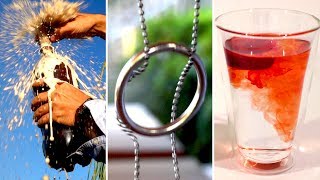
- The Shaken Soda Bottle ParadoxThe QuestionWhen a carbonated drink bottle is shaken, does the pressure in the headspace increase, decrease, or remain the same?The ExperimentA bottle with a pressure gauge fitted shows approximately 3 atmospheres (330 kiloPascals) of pressure before and after shaking, with no increase in pressure observed.Why It MattersThis explanation contradicts a theory published in New Scientist in 1986 that claimed pressure increases were responsible for soda bottle explosions.Next StepsThe actual explanation for why carbonated drinks explode when shaken will be revealed after exploring the other two physics problems.
- Ice Melting in Fresh Water vs. Salt WaterThe QuestionWhen identical ice cubes are placed in fresh water and salt water, which melts faster?The Setup• Fresh water in one cup, salt water (with one tablespoon of salt) in another cup • Both solutions brought to room temperature before ice cubes are added • Visual observation shows ice in fresh water melts noticeably faster than in salt waterThe PuzzleSalt is used on roads to melt ice faster, so it seems counterintuitive that ice melts slower in salt water than in fresh water.PreviewThe explanation involves the density and circulation of water around the melting ice cubes, which will be demonstrated with food coloring and colored ice cubes.
- The Ring and Chain TrickThe ChallengeA metal ring is dangled over a closed loop of chain. When dropped normally, the ring falls off, but there is a way to make it stick to the chain.The Technique• Release one side of the ring (using the thumb) before the other side • This introduces rotation causing the ring to rotate approximately 90 degrees • The ring slides down the chain with pieces rising up the sidesThe MechanismAs the ring descends, the bottom piece gets drawn into the middle of the ring and then pulled around at the last moment, causing it to snap and lock in place.Key InsightThe asymmetric release creates rotational motion that fundamentally changes how the ring interacts with the chain geometry.
- Why Salt Water Ice Melts SlowerFresh Water CirculationWater melting from the ice cube is cold and denser than surrounding fresh water, so it descends and is replaced by warmer fresh water flowing upward, accelerating melting.Salt Water InsulationWater melting from the ice cube is fresh and less dense than the surrounding salt water, so it stays in place around the ice cube, insulating it from warmer salt water.Visual Demonstration• Food coloring dropped on ice cubes shows different sinking patterns in fresh versus salt water • Colored ice cubes clearly reveal currents of cold water streaming down in fresh water but not in salt waterThe Density PrincipleThe melting rate difference is entirely due to water density differences causing different circulation patterns that either enhance or inhibit heat transfer to the ice.
- Why Shaken Carbonated Drinks ExplodeThe Equilibrium ConceptA bottle sitting for days reaches equilibrium where dissolved CO2 in the liquid matches the gas pressure in the headspace, typically around 3 atmospheres.Shaking Creates Bubbles• Shaking does not increase headspace pressure but introduces tiny air bubbles into the liquid • These bubbles act as nucleation sites that make it easier for dissolved CO2 to come out of solution • Pressure increases only after opening when dissolved CO2 escapes, not from the shaking itselfThe Explosion Mechanism• Bubbles expand due to pressure decrease when bottle opens • Bubbles act as nucleation sites allowing rapid CO2 release • The combined effect forces liquid upward violentlyPrevention Methods• Flicking the bottle walls before opening removes bubbles clinging to sides • Mentos candy creates nucleation sites without shaking, causing immediate fountaining • Paper straws have more nucleation sites than plastic straws, creating excessive fizzing