Flamethrower vs Aerogel
this is the ultimate test of aerogel I put myself on the line to see who wins in the Battle of flamethrower versus aerogel
6 chapters
- Introduction to Aerogel PropertiesMaterial OverviewPyrogel XTE is a one-centimeter thick fiberglass blanket infused with aerogel, manufactured by Aspen Aerogel, designed to test extreme heat resistance.Structural Composition• Made from silica aerogel, the same base material as sand or glass • Possesses a sponge-like nanoscale structure with tiny pores measuring tens of nanometers • Can be up to 99.8% air, yet provides superior thermal insulationInsulation Mechanism• Hot air struggles to diffuse through the tiny pores • Nanoscale structure itself is a poor heat conductor • Iron oxide component makes it opaque to infrared radiationPractical ApplicationsAerogel particles are embedded in composite materials like blankets because pure aerogel is too fragile for most practical uses.
- Flamethrower Test on Non-Aerogel MaterialTest SetupA flamethrower from the Boring Company was used to test thermal resistance against a super-sized chocolate bar, with a FLIR thermal camera (T1020 model) capable of recording up to 2,000 degrees Celsius.Temperature Results• Within seconds, chocolate temperature reaches hundreds of degrees Celsius • Around 30 seconds, the chocolate structure begins to collapse • After flamethrower is removed, parts remain well over 600 degrees CelsiusObservable EffectsThe chocolate demonstrates rapid thermal degradation and structural failure when exposed to direct flamethrower flames.PurposeThis serves as a baseline comparison to demonstrate what typical materials experience when exposed to extreme heat before testing aerogel.
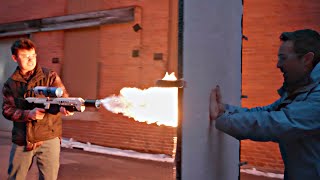
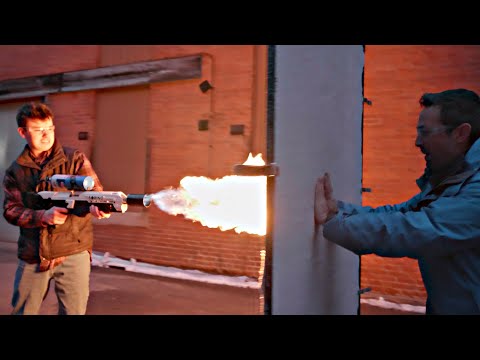
- Aerogel Withstands FlamethrowerTest ConditionsA flamethrower was fired at full bore on one side of the one-centimeter aerogel blanket with a hand placed on the back side to measure heat transfer.Temperature Measurements• Flamethrower side: over 660 degrees Celsius • Back side where hand is placed: approximately 50 degrees Celsius • Temperature ratio demonstrates extreme insulation efficiencyPhysical ExperienceDespite extreme heat on the opposite side, the person holding their hand against the blanket barely feels any heat and can even touch the surface.Thermal Imaging ResultsWhen using the extended thermal camera range, the blanket back side shows only around 50 degrees Celsius, and hand contact leaves visible thermal handprints on the surface.
- Heat Conduction and Safe Touch DemonstrationExperiment DesignA hot plate set to 150 degrees Celsius had a metal plate on top covered with one millimeter of Airloy aerogel coating, leaving one small corner uncovered for comparison.Temperature Paradox• Coated area: approximately 127 degrees Celsius • Uncoated area: approximately 180 degrees Celsius • Despite higher temperatures on uncoated surface, coated area remains touchableThermal Conductivity EffectThe aerogel coating prevents rapid energy transfer to the hand, making a surface hotter than boiling water feel merely warm rather than burning.Safe Touch ApplicationsAerogel's low thermal conductivity creates 'safe touch' surfaces where you can hold your hand on something hot enough to boil water for extended periods without burning.
- Cryogenic and Real-World ApplicationsCold Temperature Uses• Effective insulation for liquefied natural gas plants • Used by NASA for liquid helium applications • Prevents ice falls on uninsulated cold pipesMaterial FlexibilityCryo gel remains flexible when submerged in liquid nitrogen, which is essential for materials needing to function at ultra-cold temperatures.Consumer ProductsSki jackets featuring special aerogel-lined pockets keep cell phones warmer in cold weather, preventing device freezing while maintaining pocketability.Industrial Game-ChangerAerogel revolutionized subsea oil pipeline insulation by enabling pipe diameter reduction by three times compared to polyurethane foam, allowing approximately 250 ships worldwide to lay pipes that were previously too heavy, saving billions of dollars and relieving years-long backlogs.
- Behind-the-Scenes and Test ConclusionFilming ChallengesTo obtain necessary footage, the flamethrower trigger was pulled for 50 to 100 seconds at a time, far exceeding the manufacturer's recommended maximum of 7 seconds per use.Equipment Damage• Extended use caused internal components to break down • Flamethrower performance progressively deteriorated during filming • By end of shoot, trigger could not be pulled at allTest ResultsThe flamethrower was damaged and ceased functioning while the aerogel blanket remained intact and functional throughout all testing.Final VerdictIn the battle of flamethrower versus aerogel, aerogel definitively won.