
Do people understand the scale of the universe?
7 chapters
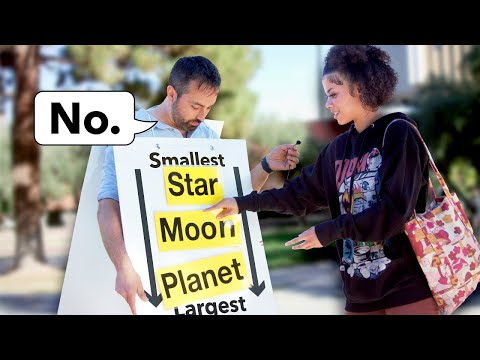
- Testing Public Understanding of Cosmic ObjectsSetupDerek conducts a street task asking people to rank cosmic objects from smallest to largest, including moons, planets, stars, and galaxies.Common Misconceptions• Many people believe the moon is bigger than the sun because it appears larger in the sky • Some think stars are smaller than planets • Confusion about whether the sun is a star or separate categoryDefining DifferencesParticipants struggle to articulate the differences between moons and planets, with incorrect suggestions including atmosphere presence and potential for human life.Correct OrderThe correct ranking from smallest to largest is: moons, planets, stars, galaxies.
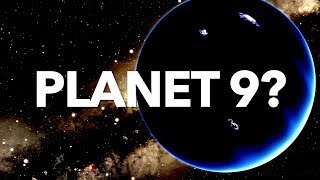
- Understanding Planets and Pluto's DemotionDefinition ProblemScientists needed to establish clear criteria for what qualifies as a planet after discovering multiple large objects in the Kuiper belt similar to or larger than Pluto.Discovery EventOn January 5, 2005, astronomers discovered Eris, an object in the Kuiper belt approximately 30% more massive than Pluto, triggering a reclassification decision.New Criteria• A planet must orbit the sun • It must have enough self-gravity to be round or nearly round • It must be gravitationally dominant and have cleared its orbital neighborhoodOutcomePluto was reclassified as a dwarf planet in 2006 because it fails the third criterion, leaving eight planets in our solar system: Mercury, Venus, Earth, Mars, Jupiter, Saturn, Uranus, and Neptune.
- Stars and the Solar System's Mass DistributionStar FormationStars form when hydrogen and helium gas clumps together, generating fusion in the middle that produces light and heat through explosions.Scale ComparisonApproximately one million Earths would fit inside the sun, demonstrating the enormous size difference between planets and stars.Mass DistributionIn our solar system, all eight planets, hundreds of moons, and millions of asteroids combined make up only 0.14% of the total mass, while the sun comprises 99.86%.Key InsightThe sun is vastly more massive and larger than everything else in the solar system combined.
- Galaxies and Their Staggering ScaleDefinitionA galaxy is a huge collection of stars, planets, gas, dust, dark matter, and other objects all bound together by gravity, typically containing hundreds of millions of stars.Size Reference• The Milky Way galaxy is approximately 100,000 light-years across • There are more trees on Earth than stars in the Milky Way galaxy • Typical galaxy sizes range from 50 billion to 300 billion starsDistributionGalaxies are grouped into clusters, which form superclusters, separated by enormous voids where essentially nothing exists between them except vast distances of millions of light-years.Average StatisticsA typical galaxy contains around 100 billion stars, and around each star there may be approximately six planets on average.
- The Observable Universe's Incomprehensible SizeGalaxy CountThe observable universe contains approximately 100 billion galaxies, with some estimates suggesting up to 2 trillion galaxies when accounting for less visible objects.Multiplication EffectWhen multiplying 100 billion galaxies by 100 billion stars per galaxy by approximately six planets per star, the total number of planets in the universe becomes almost incomprehensibly large.Human PerspectiveMost people significantly underestimate cosmic scales, often guessing numbers in the thousands or millions when the actual figures involve hundreds of billions or trillions.Cosmic HumilityUnderstanding the universe's immense scale provides perspective on humanity's insignificance while emphasizing responsibility to preserve Earth and treat one another kindly.
- The Pale Blue Dot and Our Place in the UniverseHistoric ImageOn February 14, 1990, the Voyager 1 spacecraft captured a photograph of Earth from 6 billion kilometers away, showing our planet as a tiny dot amid rays of light.Sagan's Perspective• All of human history occurred on this mote of dust suspended in a sunbeam • Every person who ever lived, loved, created, and destroyed civilization existed on this pale blue dot • All human emotion, achievement, and suffering happened on an incredibly small stageCosmic ContextEarth is an infinitesimally small stage in a vast cosmic arena, providing humbling perspective on human significance.ResponsibilityThis understanding underscores the importance of treating one another more kindly and preserving our only home, the pale blue dot.
- Media Literacy and Understanding RealityProblemMany people lack understanding of basic facts about the universe due to a media ecosystem that prioritizes speed and sensationalism over accuracy and facts.SolutionGround News, founded by a former NASA engineer, provides tools to consume news more nuancedly by gathering articles from around the world and showing how different outlets cover the same story.Features• Shows ownership information and reliability ratings for news sources • Displays political bias distribution for stories • Highlights coverage gaps across political spectrum • Identifies topics that different sides focus onBenefitUsing such resources helps readers escape media bubbles and see the full picture by understanding different perspectives on the same issues.