This Is the Oldest, Weirdest Instrument On Earth
6 chapters
- Discovery of Luray CavernsThe FindIn August 1878, hunters discovered a cool breeze coming from a small hole in Western Virginia and began digging to explore it.Exploration• Andrew and Quint descended with only a candle for light • They spent months exploring the cave system • They discovered giant caverns connected by narrow passagewaysScale & Features• Largest cave system in the Eastern United States, covering 26 hectares • Ceilings and floors covered in stalactites and stalagmites • Underground lake discovered within the cavernsLegacyNow known as Luray Caverns, visited by half a million tourists each year.
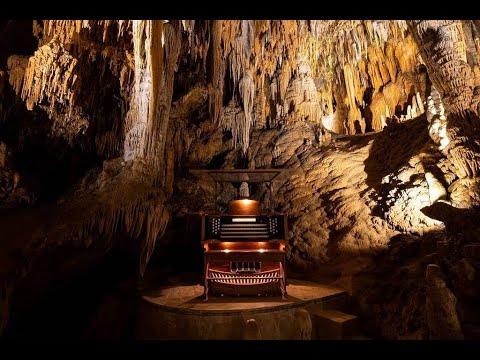
- The Stalacpipe Organ ConceptOriginal UseThe Cathedral chamber was used as a ballroom for dances and social gatherings in the 1920s due to its natural air conditioning.The InspirationIn 1954, mathematician Leland Sprinkle visiting the caverns for his son's birthday observed a tour guide hitting stalactites with a mallet to produce musical tones.The Project• Sprinkle conceived turning the entire cave into a musical instrument • Construction began in 1954 and took three years to complete • First played in 1957 • The organ covers three and a half acres spread throughout the cavernsTechnical NameOfficially known as the Great Stalacpipe Organ, located 260 feet below the surface, it is technically called a lithophone.
- Tuning the StalactitesMethodSprinkle walked the caverns with a ladder, tuning forks, and mallets, hitting stalactites to find those with desirable pitches.Fine-tuning ProcessWhen a stalactite matched the desired concert pitch, Sprinkle used a disc grinder to shave it down to exact specifications.How Stalactites Work• Form as slightly acidic water dissolves limestone and redeposits it • Grow at approximately 16 cubic centimeters every 120 years in this cave • Growth rate depends on water flow through the cave • Larger stalactites produce lower notes due to their resonant frequencySound PropertiesA stalactite's resonant frequency depends on its size, shape, and the elastic modulus of limestone, allowing Sprinkle to achieve specific musical pitches.
- Technical ImplementationStriking Mechanism• Custom-built brackets attached to each musical stalactite • Electrically operated plunger with rubber tip strikes the stalactite • Causes the stalactite to vibrate and produce soundSignal DetectionSteel bolts were added to each musical stalactite and electric guitar pickups detect the vibrations they produce.How Pickups WorkA guitar pickup consists of a coil of wire wrapped around a magnet that detects ferromagnetic vibrations and induces electrical current.Signal ProcessingDetected signals are amplified, mixed, and played back through speakers to address the variable volume of distant stalactites throughout the cavern.
- Unexpected ChallengesRadio InterferenceGuitar pickups created an unexpected problem: one of the keys picked up a local AM radio station signal.The EffectThe radio interference turned that key into an unintended sampler, broadcasting radio content when played.Stalactite Growth RiskIf Sprinkle had chosen actively growing stalactites, the organ would eventually go out of tune as they continued growing and changing their resonant frequency.Design DecisionSprinkle carefully selected inactive stalactites to minimize future tuning issues, though theoretically the instrument could drift out of tune over geological timescales.
- Experience and ReflectionPlaying the CaveMusician Rob Scallon described the experience as grounding, surreal, and beautiful, with unique properties impossible to replicate elsewhere.Sonic Qualities• Notes are scattered throughout the cavern at different distances • Immense natural reverb creates hauntingly beautiful sounds • Notes positioned in different locations have varying reverb characteristics • Pure, beautiful tones amplified selectively by the cave's acousticsGeological WonderThe organ is a fusion of human creativity and geological time, built upon structures created drop by drop over unfathomable years.Preservation ValueThe project transformed an already magnificent natural structure into something even more beautiful while raising questions about modifying ancient formations that took eons to create.