The Best Test of General Relativity (by 2 Misplaced Satellites)
6 chapters
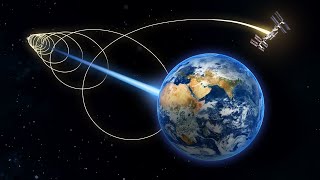
- The Satellite Launch AccidentMission OverviewOn August 21, 2014, the European Space Agency launched two Galileo satellites (Galileo 5 and 6) using Russian Soyuz-Fregat rockets to become part of the Global Navigation Satellite System (GNSS), the European version of GPS.Technical Failure• Thermal breach between a cold helium line and propellant line caused the propellant to freeze • Altitude control thrusters failed as a result • Satellites were injected into highly elliptical and seemingly useless orbits instead of the intended circular orbitOrbital Problems• At low point, satellites couldn't get full view of Earth, disabling Earth sensors needed to orient navigation antennas • At high point, satellites experienced significant radiation exposure from Van Allen belts • Risk of complete satellite shutdownUnexpected OpportunityScientists saw potential to use the misplaced satellites to conduct the best test of general relativity to date, a mission type they had been proposing.
- Elliptical Orbits and Gravitational Time DilationOrbital CorrectionSatellites used onboard propellant for course corrections, performing maneuvers to stabilize the orbits but lacking enough fuel to fully circularize them into perfect circles, which proved beneficial for the relativity test.Relativity PrincipleAccording to general relativity, clocks tick slower in stronger gravitational fields and closer to large masses. Therefore, clocks on satellites in weaker gravitational fields should tick faster relative to clocks on Earth.Orbital Advantage• Satellites in elliptical orbits oscillate between perigee (lowest point at 17,000 km) and apogee (highest point at 26,000 km), a difference of almost 9,000 kilometers • This creates rapid, repeated changes in gravitational potential • Clocks tick slower at the low point and faster at the high point relative to Earth clocks, continuously oscillating back and forthMeasurement AdvantageScientists don't need absolute clock accuracy; they only measure the difference in ticking rate between low and high points. Using the same clock at both locations eliminates many error sources like clock noise and systematic drift.
- Atomic Clocks and Frequency ComparisonClock TechnologySatellites carry atomic clocks, with the primary clock being a passive hydrogen MASER (microwave amplification by stimulated emission of radiation), similar to a laser but using microwaves instead of visible light.MASER Mechanism• Hydrogen atoms interact with one specific frequency of microwaves • A photon of this precise frequency flips the spin of an electron • By tuning microwaves to best interact with hydrogen and counting exact cycles of that radiation, one second is precisely defined • This clock would not be off by more than one second over 30 million yearsGravitational RedshiftA distant observer outside the gravitational field would observe the microwave radiation from the satellite to be red-shifted (lower frequency) compared to their own hydrogen MASER, with greater red-shift the closer the satellite is to Earth, indicating slower time passage.Local vs. Distant ObservationAn observer traveling with the satellite would not observe any relativistic effects due to the equivalence principle. Relativistic effects are only detectable when comparing the satellite clock to an Earth-based clock at a sufficient distance.
- Previous Gravity Probe A and Current Measurement StrategyHistorical PrecedentIn 1976, Gravity Probe A was launched aboard a sub-orbital rocket, reaching a maximum altitude of 10,000 kilometers in a parabolic trajectory. It measured gravitational redshift with direct frequency comparison between the onboard hydrogen MASER and an Earth clock, confirming general relativity to 140 parts per million.Forty-Year GapDespite being a crucial test of general relativity, no measurement had improved upon Gravity Probe A's precision for over 40 years until this satellite opportunity.Key Measurement Challenges• Determining precise satellite positions was the biggest source of error • Solar radiation pressure from photons bouncing on satellites significantly impacts measurements • Careful orbital modeling and laser ranging were necessary to reduce orbital uncertainties to acceptable levelsData Collection AdvantageUnlike Gravity Probe A which spent only 2 hours in space, scientists collected data over more than 1,000 days (almost 3 years), greatly improving the statistical reliability of the test.
- Results and Search for Physics Beyond General RelativityMeasurement ResultsThe team successfully reduced the measurement uncertainty by a factor of 5 compared to Gravity Probe A, setting a new high score for testing gravitational redshift—the first improvement in over 40 years.Seeking DeviationsRather than merely confirming general relativity, scientists are seeking deviations from its predictions because new physics historically appears at the boundaries of existing theories, often revealed through increasingly precise experiments.Physics Beyond General Relativity• General relativity and quantum mechanics are both spectacularly successful but incompatible, with nearly a century of failed merge attempts • Dark energy and dark matter comprise over 90% of the universe but remain poorly understood • These unknowns suggest gravity may have aspects not yet accounted for in general relativityFuture TestingMore precise tests are planned, including a cold cesium atom clock scheduled for the International Space Station that aims to reduce measurement deviation by a further factor of 10.