
Spinning Black Holes
8 chapters
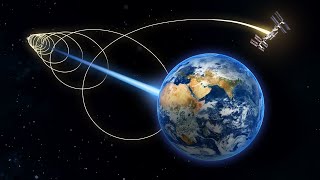
- The Tidal Disruption EventThe DetectionOn November 22, 2014, ASASSN detected a burst of X-rays from the center of a galaxy 290 million light-years away, initially thought to be a supernova but revealed to be a star being consumed by a supermassive black hole.How It HappensAs a star approaches a black hole, the side closest to it experiences much greater gravitational pull than the far side, ripping the star to shreds in what astrophysicists call being 'eaten'.Observable Effects• Matter spiraling into the black hole forms an accretion disk of gas and dust • The disk accelerates and heats up, emitting visible light, UV, and X-rays observable from Earth • The event transformed a dormant black hole into an observable oneRarityThese events are thought to occur approximately once every 10,000 to 100,000 years in a galaxy.
- The Mysterious X-Ray PulseThe DiscoveryThree X-ray telescopes observed the sky for years after the event and found a strong, regular pulse of X-rays brightening and dimming every 131 seconds.Consistency• The pulse appeared in data from all three telescopes observed periodically over 450 days • The rhythm remained consistent and did not weaken • The relative strength of the pulse actually got stronger over time, modulating the X-ray signal by around 40%Key QuestionsScientists needed to determine what was causing the periodic flashes of X-rays and what this could reveal about the black hole's properties.SignificanceThis unusual periodic signal would eventually lead to a breakthrough in measuring black hole spin.
- Black Hole Properties and SpinDefining AttributesBlack holes are characterized by only two key attributes: Mass and Spin. Charge also exists theoretically but black holes should be essentially neutral.Mass Measurement• Relatively easy to determine using gravitational effects on other bodies • Black holes range from stellar-mass (few times our Sun) to supermassive (billions of solar masses) • Supermassive black holes exist at the centers of most galaxies, including our ownWhy Black Holes SpinAll black holes form from collapsing rotating stars and remain spinning. As additional matter falls in, it contributes angular momentum, causing black holes to spin increasingly faster, similar to a figure skater pulling their arms inward.Spin ChallengesUnlike mass, spin only affects objects relatively close to the black hole, making it much harder to measure, but three methods exist to determine it.
- The Innermost Stable Circular OrbitISCO ExplainedIn general relativity, there is an innermost stable circular orbit (r-isco) closer to the black hole. Orbits closer than this radius all fall into the black hole.Spin Connection• r-isco depends on the spin of the black hole • Faster spinning black holes have smaller r-isco values • Spin supports particles against gravity, allowing them to orbit closer than around non-spinning black holesSpin Parameter ScaleSpin is expressed as a dimensionless parameter ranging from 0 (no spin) to 1 (maximum spin), or down to -1 if spinning opposite to the accretion disk direction.Maximum Spin Limit• As spin increases, r-isco shrinks by a factor of 6 down to the event horizon size • A naked singularity would occur if the minimum stable orbit were at the event horizon size • This theoretical discomfort suggests maximum real-world spin is around 0.998, though no strong theoretical limit exists
- Measuring Black Hole SpinMethod One: Accretion Disk• Examine the spectrum of light from the accretion disk to determine distance via redshifted absorption lines • Use temperature data approximating a black-body curve to calculate power radiated per unit area • Calculate the radius of r-isco by estimating the dark circle in the middle of the glowing accretion diskMethod Two: Iron LinesSome black holes show a distinct iron emission line that is broadened by Doppler shift from high-velocity iron in the accretion disk and gravitational redshift from extreme gravitational fields. The low-energy limit reveals how close the iron was emitted, indicating r-isco.Method Three: OscillationsLook for periodic oscillations in the data caused by clumps of matter orbiting the black hole. At high frequencies, these clumps must be near r-isco, traveling at half the speed of light.LimitationsThe accretion disk method only works when radiation is dominated by black-body radiation, which often is not the case.
- The White Dwarf ScenarioThe ProposalStudy authors propose that years before the tidal disruption event, a white dwarf star orbited this black hole in a stable orbit lasting perhaps one to two hundred years.Initial StateThe white dwarf by itself would not be visible from Earth, remaining cloaked and undetected during its stable orbit.The EventWhen another star wandered by and was ripped apart in the tidal disruption event, its stellar debris fell toward the black hole forming an accretion disk that cloaked the white dwarf in glowing matter.X-ray HotspotThe cloaked white dwarf created an X-ray hotspot orbiting the black hole, with its period directly relating to the spin of the black hole and explaining the 131-second pulse.
- Spin Measurement ResultsThe FindingThe measured spin parameter for this black hole turned out to be at least 0.7 and possibly as high as the theoretical maximum of 0.998.Orbital SpeedObjects in the accretion disk were traveling at least half the speed of light due to the high spin parameter.Historic AchievementThis was the first measurement of black hole spin made possible by a tidal disruption event, establishing a new method for determining spin.Future PotentialThis method could determine the spin of dormant black holes, which comprise about 95% of all supermassive black holes, by observing the tidal disruption of nearby stars.
- Black Hole Growth and OriginsTwo Growth Theories• Accretion model: Supermassive black holes grow mainly by feeding on a steady stream of matter from their own galaxy, with aligned angular momentum producing very large spins • Merger model: Supermassive black holes grow predominantly by merging with other black holes, with randomly oriented spins producing lower overall spinsResearch ImpactMeasuring spins of more black holes in different ways and at different distances reveals their formation history by showing whether accumulated matter is aligned or random.Cosmic SignificanceUnderstanding black hole spin measurements helps determine whether they grew through accretion or mergers, which directly informs understanding of their growth.Galaxy EvolutionSince supermassive black holes lie at the center of most galaxies, understanding their spin and growth is central to understanding how those galaxies formed and evolved over billions of years.