
Iran-Israël-USA : La longue guerre (1/2) | ARTE
This is the story of an unspoken war. A war that began more than 40 years ago, but which no one has officially declared.
4 chapters
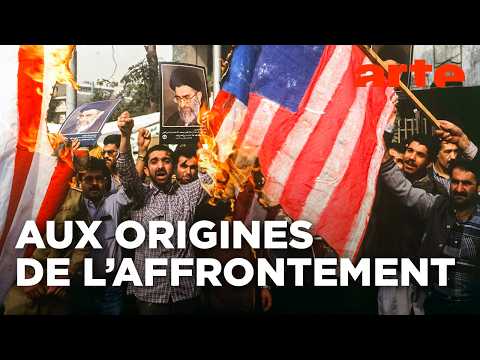
- The Origins of the ConflictContextOn February 1, 1979, Ayatollah Khomeini returned to Tehran on a plane from Paris to lead a revolution against the Shah's 40-year dictatorship, fundamentally changing Iran's history and the Middle East.The Uprising• From 1978, hundreds of thousands of Iranians protested the Shah's corrupt military dictatorship and its Western-style modernization • The regime suppressed dissent through military force, culminating in Black Friday (September 8, 1978) when the army killed between 87 and 4,000 people • The revolution united diverse factions including nationalists, Marxists, and Islamists under Khomeini's leadershipInternational Allies• The United States and Israel were the Shah's closest partners, conducting extensive military cooperation worth $1.2 billion • Israeli forces helped Iran in aircraft, missiles, and sensitive military areas while American intelligence supported the regime • Both Washington and Tel Aviv failed to understand the depth of popular opposition due to limited contact with ordinary IraniansRevolution's VictoryFollowing Khomeini's return, approximately 10 million Iranians welcomed him as a charismatic leader and legitimate representative of power. After just 48 hours of fighting, the monarchy collapsed on February 11, 1979, ending 37 years of Shah's rule.
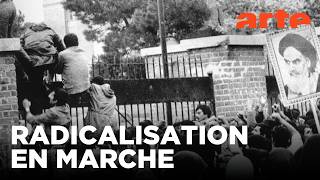
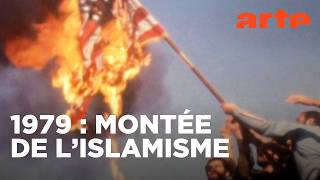
- Breach with the WestSevered Ties• The Israeli diplomatic mission in Tehran was ransacked and destroyed, with 33 Israeli staff forced to flee the country • Khomeini replaced the Israeli Embassy with the Palestinian Embassy as a powerful symbol of the new regime's priorities • Revolutionary forces targeted symbols of Western modernity including cafes, restaurants, banks, and cinemas associated with American and Israeli influencePalestinian SolidarityYasser Arafat, leader of the PLO, arrived in Tehran in February 1979 and was welcomed as a head of state. Khomeini declared Iran's support for the Palestinian cause as an existential struggle between Islam and the imperialist Christian West, making it a cornerstone of the new regime's ideology.Hostage CrisisOn November 4, 1979, hundreds of Islamist students invaded the American Embassy and held 52 diplomats hostage for 444 days. Khomeini supported the students to maintain control of the revolution, turning the crisis into the second founding myth of the Islamic Republic and creating a permanent rift with the United States.New Middle EastThe radical transformation established Iran as ideologically and strategically opposed to both Israel and the United States, creating a fundamentally new geopolitical order in the Middle East that would lead to decades of confrontation.
- Lebanon and the Birth of HezbollahIsraeli InvasionOn June 6, 1982, approximately 90,000 Israeli soldiers invaded Lebanon with Operation Peace in Galilee, intending to eliminate PLO bases in southern Lebanon and secure Israel's northern border. Israeli forces advanced rapidly northward toward Beirut under command of Defense Minister Ariel Sharon, extending far beyond the initial plan.Iranian Response• Engaged in the Iran-Iraq War since 1980, Khomeini could not open a second front against Israel in Lebanon • Instead, he stated that 'the road to Jerusalem goes through Karbala,' a religious expression of a strategic decision to prioritize defeating Saddam Hussein first • Iran dispatched several hundred Revolutionary Guards to the Bekaa Valley in summer 1982 to support newly formed resistance movementsHezbollah Formation• Lebanese Shiite leaders, inspired by Khomeini's ideology, established the Islamic Resistance of Lebanon (later renamed Hezbollah in 1985) with Iranian approval • The organization aimed to organize armed resistance against Israeli occupation and defeat the occupiers by any means necessary • Iran provided weapons, money, and know-how while Syria granted passage for Iranian Revolutionary Guards, establishing the Iran-Syria-Hezbollah strategic axisEarly Operations• Ahmad Kassir, an 18-year-old Hezbollah member, carried out the first suicide bombing on November 11, 1982, destroying the Israeli military headquarters in Tyre and killing 91 soldiers • This unprecedented martyrdom operation, rooted in Shiite religious tradition, marked Hezbollah's emergence as an effective resistance force
- Terror and International ConflictWestern Blindness• Israeli intelligence services failed to recognize Hezbollah as the perpetrator of the November 1982 Tyre bombing, initially claiming a gas pipe explosion was responsible • American and French forces in Lebanon were equally unprepared, lacking intelligence about Shiite movements and their Iranian connections • This intelligence gap proved costly as Western powers failed to anticipate emerging threats in the regionSuicide BombingsOn October 23, 1983, nearly a year after the Tyre attack, suicide bombers struck American and French military headquarters in Beirut. The attacks killed 241 American soldiers and 58 French soldiers in simultaneous operations claimed by the mysterious Islamic Jihad movement, widely believed to be a Hezbollah front supported by Iran.Strategic Success• Israeli forces suffered 600 casualties over two years of occupation, prompting a partial withdrawal on June 6, 1985 • Israel maintained a security zone covering 10% of southern Lebanon that lasted until 2000, representing a significant military loss and humiliation • Hezbollah's successful resistance marked its first major victory and established it as a powerful political and military forceLegacy• Hezbollah developed into a comprehensive counter-society with schools, scouts, and institutions that ensured generational commitment to the organization • The organization evolved from purely military operations to a sophisticated political and social movement with broad Lebanese Shiite support • By Khomeini's death in June 1989, Iran's proxy force in Lebanon had become a defining feature of Middle Eastern politics