
Lufthansa : une saga turbulente (2/2) | Documentaire | ARTE
Elle a connu des haut avant de tomber au plus bas, la Lufthansa. Terrassée par la pandémie en 2020, elle n'a pas fait faillite comme d'autres et a su se développer dans une époque turbulente.
7 capitulos
- Modern Operations and Historical OriginsIntroductionLufthansa survived the pandemic in 2020 without bankruptcy and continued developing despite turbulent times. The airline has survived crashes, terrorist attacks, and better-armed competitors.Daily Operations• Team Holderer (captain) and Lisan Kipenberg (first officer) conduct Frankfurt-Malta round trip followed by Düsseldorf route • Only one pilot in 15 is female in Lufthansa cockpits, remaining predominantly male-occupied • Aircraft are profitable only while flying; ground time is closely monitoredCareer DreamsLisan Kipenberg's father was a pilot and mother was a flight attendant. At age 13, flying as a copilot in a small aircraft revealed she could be paid to do what she loved, defining her career choice.Historical ContextThe desire to fly is as old as humanity but became reality only in the 20th century. Lufthansa followed aviation pioneers but was quickly enslaved by Nazi megalomania and dismantled by Allies in 1945.
- Post-War Reconstruction (1950s)Economic RecoveryAmerican aid favored German economic miracle after the war. In 1955, Allies restored German sovereignty, allowing Germans to build a better future in a state of law and freedom, at least in the West.Company Launch• New Lufthansa restart in 1955 was difficult; Allied ban prevented German-flagged operations for 10 years after war's end • Service resumed in Hamburg with four Convert 340 propeller aircraft • Marked as national event with British captains training German pilots • Five years later, fleet expanded to 32 aircraft including DC-3, Constellations for long-haul routesMarket ChallengesUnlike foreign competitors authorized to exploit German market since 1947, Lufthansa lost money. Airlines from Argentina, Panama, Brazil, and United States competed on German domestic routes.Service ExcellenceLufthansa distinguished itself through exceptional cabin service with carefully selected stewards and flight attendants. Margot Rader became the airline's figurehead, embodying the ideal stewardess: young, beautiful, and unmarried.
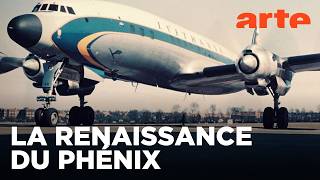
- The Golden Age of Long-Haul AviationTransatlantic Expansion• Super Constellation could carry up to 90 passengers with first class at rear and economy at front • Round-trip to North America cost equivalent of Beetle car (5,000 marks) • Only privileged few could afford it: businessmen and North Americans • Cost represented 15 months salary for average employeeFlight ExperienceEarly Lufthansa flights to New York made stops in Paris with 17 hours total travel. Lockheed Superstar was first aircraft capable of non-stop transatlantic flight at full load and with headwinds, reducing journey to 15 hours at nearly 500 km/h.Luxury Service• Multiple-course meals prepared by onboard chef • Caviar service and luxury menus branded 'Senator Service' • Entertainment limited to reading, board games, or cloud-watching • Cognac and alcohol freely circulated to manage fear and boredomCrew ExperienceCrews had 4-5 days free in New York to discover the city. First-time experience of seeing skyscrapers in person, shopping centers, credit cards, and air-conditioned cars with enormous trunks seemed incomparably different from Germany.
- The Jet Age RevolutionBoeing 707• Introduced in 1960, reduced transatlantic journey to 9 hours with same luxury level • Flew faster and higher, reducing turbulence significantly • Reduced ticket price to 1,500 marks, making New York affordable destination • Lufthansa authorized to operate only four aircraft on limited North Atlantic routesBoeing 747 ImpactJumbo Jet first flew in 1969, transporting twice as many passengers as Boeing 707. It became most important milestone in commercial aviation history and Lufthansa's biggest success symbol.Airbus Competition• European aerospace industry struggled with Boeing's Jumbo success; only 10% of global market share • Airbus founded in Toulouse in 1970 as European response to American dominance • Germany initially reluctant, questioning need for aerospace industry when automotive and chemical sectors existed • A300 initially unsold; only Air France purchased in 1971, followed hesitantly by Lufthansa ordering half the quantityModern A321 NeoCurrent Frankfurt-Malta A321 Neo consumes 20% less fuel than predecessors and is heir to Airbus success. Lufthansa now serves nearly all Europe with Airbus models, while Boeing dominates long-haul market.
- Crisis and Resilience (1970s-1980s)Terrorist Attack• September 1977: Four Palestinian terrorists hijack Lufthansa Boeing 737 'Landshut' with 91 hostages • Demands: 15 million dollars ransom and release of imprisoned Red Army Faction members from Stammheim • Terrorists assassinate Captain Jürgen Schumann; body thrown from aircraft • Odyssey lasted 5 days via Rome, Cyprus, Dubai, ending in Mogadishu, SomaliaRescue OperationAt 2 AM, German police commando GSG9 stormed hijacked aircraft, neutralizing three terrorists in 7 minutes. Crew member Gaby Delman became known as 'Angel of Mogadishu' for her support to passengers, receiving Federal Order of Merit from Chancellor Helmut Schmidt.Industry Transition• Following 20 years of Cold War thawing, marked transition toward new growth forms • Large airlines formed alliances for global reach • National airline era appeared to be endingStar AllianceIn 1997, Lufthansa launched Star Alliance as first global airline network. With single ticket, customers accessed worldwide destinations. By today, Star Alliance groups 25 airlines with 1,000+ aircraft led by United Airlines, Air China, Lufthansa, Turkish Airlines, and All Nippon Airways.
- Modern Era Challenges and ConsolidationGrowth and Records• Became largest airline outside United States after state withdrawal began in 1997 • In 2001, transported 125,000 passengers daily, making it second-largest airline outside US • Today transports three times more passengers than 25 years ago, 10 times more than 50 years ago • Earns only 10 euros per passenger despite volume growthSecurity Aftermath• September 11, 2001 attacks halted growth; four diverted airliners crashed into World Trade Center and Pentagon • Security strengthened: armed agents travel anonymously on long-haul flights • Cockpit doors secured, cannot open from outside • This measure inadvertently enabled future tragedyGermanwings DisasterMarch 24, 2015: Germanwings A320 (Lufthansa subsidiary) crashed in French Alps. Suicidal copilot locked cockpit door while captain at restroom, precipitating aircraft at high speed into mountain, killing 149 people including school class returning from Spanish exchange.Strategic Acquisitions• 2003: Italian Air Dolomiti acquired • 2007: Swiss company SWISS from Zurich bankruptcy • 2009: Brussels Airlines (formerly Sabena) • 2009: Austrian Airlines in Vienna • 2025: ITA based in Rome • Strategic consolidation to compete against monolithic American and Chinese carriers
- Pandemic and Legacy PreservationCOVID-19 Impact• Virus functioned like biological weapon targeting people and aircraft • From profitable operations, company faced one million euros per hour losses overnight • Entire fleets grounded including 14 brand-new Airbus A380s worth 400 million euros each • No long-haul carrier would have survived without home country supportA380 RecoveryBy 2022, eight of 14 A380s returned to service. Most appreciated aircraft by passengers and crew, these eight aircraft will operate minimum 5 additional years before retirement.Competitive Disadvantages• Lufthansa no longer represents Germany's national flag carrier to world • Economic factors (especially personnel costs) now prioritize over national pride • German company status brings disadvantages due to lack of political support • Turkish and Gulf carriers heavily supported by respective states; Lufthansa constantly struggles with German politicsHistorical AcknowledgmentNew Hangar One at Frankfurt displays 100 years of Lufthansa history with Junkers 52 from 1930s and 1958 Superstar. Company openly assumes responsibility for active role during Nazi dictatorship, promising this period receives proper attention for future.