

Les milices de l'Iran : qui sont les proxys ? | Le Dessous des Cartes | ARTE
5 capitulos
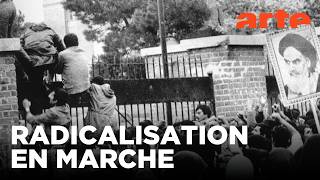
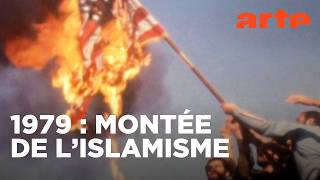
- The Iranian Revolution and the Birth of the Revolutionary GuardsContexte historiqueIn 1979, during the Cold War, the Shah of Iran Mohammad Reza Pahlavi, a staunch American ally, was overthrown by a revolution led by Ayatollah Khomeini, an ultraconservative Shia cleric whose motto was: 'God is the greatest, death to America, death to Israel'.Motivations antisionistes• Israel helped structure the SAVAK, the Shah's political police, which was responsible for assassinating Khomeini's son and hundreds of other opponents • Khomeini's exposure to the Muslim Brotherhood during his exile in Iraq instilled antisemitism as a central tenet, viewing Jews as responsible for Western influence in the Middle EastCréation des PasdaransKhomeini established the Pasdaran (Revolutionary Guards), a paramilitary force that rivaled the army, initially tasked with securing the Imam and eliminating his opponents, but later became crucial in the Iran-Iraq War and external military operations.Expansion régionaleVeteran Pasdarans from the Iran-Iraq War became instructors for external operations in countries with significant Shia communities: Lebanon, Syria, Iraq, Bahrain, and Yemen, arming militias to advance Khomeini's anti-American and anti-Israeli agenda.
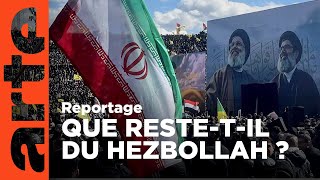
- Hezbollah: Iran's Armed Proxy in LebanonOrigins et soutienIn 1982, during Lebanon's civil war, Israel invaded southern Lebanon. The embryonic Hezbollah militia, drawing on Khomeini's doctrine and supported by Pasdaran instructors deployed via Syria, emerged as a resistance force among Lebanon's Shia population.Opérations meurtrièresBetween 1982 and 1985, Hezbollah conducted a series of deadly attacks, notably on October 23, 1983, when bombings targeting American and French military headquarters in Beirut killed 300 people.Consolidation politiqueIn 1985, Hezbollah officially declared its existence. From 1992 onwards, under Hassan Nasrallah's leadership, the Party of God participated fully in Lebanese politics while remaining primarily a military tool, strengthening through successive wars against Israel in 1990-2000 and 2006.Arsenal et soutien iranien• By late 2023, Hezbollah commanded approximately 50,000 combatants, 200,000 rockets and missiles, plus drones capable of striking any point in Israeli territory • Part of this arsenal is based in Syria, where Hezbollah deployed during the 2010s civil war supporting Bashar al-Assad's regime • Iran finances Hezbollah at approximately 200 million dollars annually and provides all weaponry
- Iraqi Pro-Iranian Militias: Badr Brigades and Hezbollah BrigadesContexte d'émergenceFollowing ISIS's seizure of Mosul in 2014, pro-Iranian Shia militias—the Badr Brigades, Iraqi Hezbollah Brigades, and the League of the Righteous—consolidated into the Popular Mobilization Forces to supplement the Iraqi army's weaknesses and counter ISIS.Brigades BadrThe oldest of the three pro-Iranian militias, formed in Iran during the 1980s and entering Iraq in 2003 after Saddam Hussein's fall. They constitute a true army of 50,000 men, with their weaponry, soldier training, and armored vehicles financed by Iran.Brigades du HezbollahNumbering 10,000 men with sophisticated equipment, these brigades actively harassed American troops in Iraq until 2011 and resumed operations from December 2019. In January 2020, the United States killed their founder Abu Mahdi al-Mohandes and the emblematic Iranian general Qassem Soleimani, commander of the Pasdarans' external branch.Ligue des VertueuxWith 10,000 men, this militia fought alongside Lebanese Hezbollah against Israel in 2006, then in Syria from 2010 supporting Bashar al-Assad alongside Iraqi Hezbollah. All three pro-Iranian militias gained parliamentary representation and formed a governing alliance from 2022 onwards.
- Houthis in Yemen: Iran's Southern Strategic ProxyFormation et idéologieThe Houthis are a tribal Shia group from northern Yemen that rebelled against the central government in the late 1990s. Their leader Hussein Badreddine al-Houthi exiled to Iran and Lebanon, adopting Khomeini's motto and fierce opposition to Israel's existence.Ascension militaireBeginning with a 2004 war in Saada against the central government, the Houthis—secretly supported by Iran from 2009 onwards and opposed by Saudi-backed loyalists—eventually captured the capital Sanaa and annexed large territories of Yemen by 2015.Rôle régionalWithout being entirely subordinate to Tehran, the Houthis emerged as a crucial component of Iran's regional apparatus to counter American presence in the Middle East, firing Iranian-supplied drones and missiles against Saudi Arabia and Israel.Importance stratégique• Houthi attacks have killed for the first time in Tel Aviv in July 2024, monopolizing Israeli resources • The Houthis' strategic position at the Bab el-Mandeb Strait controlling access to the Suez Canal amplifies their leverage, as attacks on ships have forced many shipowners to abandon the Suez route
- Direct Confrontation: Iran's Shift from Proxies to Direct Military ActionEscalade géopolitiqueUntil recently, proxies represented Iran's sole weapon against Israel. However, with intensified Gaza fighting and Israeli strikes against Iranian personnel on Iraqi and Syrian soil, Tehran shifted strategy in April 2024.Attaque directeIn April 2024, Iran launched over 300 missiles and drones directly against Israel from both Iranian territory and proxy positions, demonstrating its capacity for direct confrontation despite economic fragility, social unrest following the Women Life Freedom movement, and competing nuclear program priorities.Fragilité des proxiesThe proxies—ranging from partially autonomous to significantly weakened by Israel's determined operations—face mounting pressure as Israel views them as existential threats following Hamas's October 2023 attack.Perspective futureNetanyahu's government appears to set no limits in its wars to secure Israel, expanding operations against Palestinian Hamas and Lebanese Hezbollah militias positioned at its borders.