Golfe persique : carrefour stratégique | Le Dessous des Cartes - ARTE
Golfe persique : carrefour stratégique | Le Dessous des Cartes - ARTE
7 capitulos
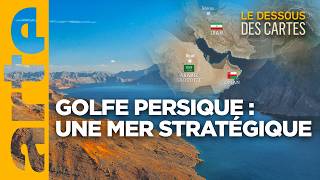
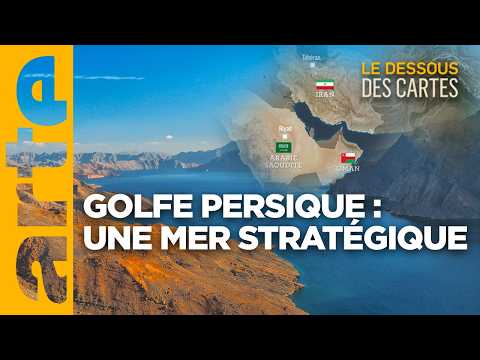
- Introduction to the Persian GulfContexte géographiqueThe episode begins in Oman, a discreet and peaceful country on the Arabian Peninsula that cultivates its neutral identity. The Musandam Peninsula showcases Omani territory where Iranian coasts are less than 50 km away, marking the strategic Strait of Hormuz.Importance stratégiqueThe Strait of Hormuz serves as the entrance and exit point for the Persian Gulf, a nearly closed sea in the Middle East bordered by hydrocarbon-exporting countries.Acteurs régionaux• Two major regional rivals: Iran and Saudi Arabia • Eight countries border the gulf: Iran, Iraq, Kuwait, Saudi Arabia, Bahrain, Qatar, United Arab Emirates, and OmanCaractéristiques physiquesThe gulf is over 1,200 km long and is locked to the east by the Strait of Hormuz, which opens onto the Gulf of Oman and the Indian Ocean.
- Energy Resources and Global CommerceRéserves énergétiques• The gulf contains immense reserves of oil and natural gas • Produces one-third of global oil and controls over half of known reserves • Produces 17% of global natural gas and holds 40% of reservesCommerce maritimeMost hydrocarbons are exported worldwide, making the gulf an essential crossroads for global maritime commerce. Its security is a major strategic issue far beyond its shores.Ports majeursJebel Ali port in Dubai is the 10th most active port in the world and the largest in the Middle East, serving as a major loading point for hydrocarbon exports.Passage critiqueThe Strait of Hormuz is the narrowest point at 45 km wide with two congested maritime corridors. One-third of transported hydrocarbons transit through this bottleneck, making it a vital chokepoint in global energy supply.
- Alternative Routes and Regional RivalryRoutes alternatives• Saudi Arabia transports part of its oil via pipeline to the Red Sea • The UAE invested in a pipeline connecting Abu Dhabi oil fields to Fujairah port on the Gulf of OmanContrôle du détroitControl of the Strait of Hormuz remains a major issue. The rivalry between Iran and Saudi Arabia structures the entire regional geopolitics and culminates in its waters.Puissances régionales• Iran: 88 million inhabitants, regional demographic superpower, leader of the Shia world with 90% of Iranians being Shia Muslims • Saudi Arabia: 36 million inhabitants, number one of Arab Sunnis, guarantor of Mecca and Medina, ruled with an iron fist by Crown Prince Mohammed bin SalmanTensions internesQatar was excluded from the Gulf Cooperation Council in 2017 and faced blockades until 2021, accused of complaisance toward Iran and hosting Muslim Brotherhood activities. Oman cultivates careful neutrality, earning it the nickname 'Switzerland of the Middle East.'
- United States Presence and Historical RoleAlliance historique• After World War II, Americans allied with the Saudis • Installed the Middle East force command in Manama, Bahrain to guarantee regular access to gulf oil and control its price • Their alliance with Iran's Shah was the other essential pillar for Western economic interestsRupture de 1979The 1979 Iranian Revolution and establishment of the Islamic Republic transformed the situation. The US military alliance with Saudi Arabia and Arab gulf states strengthened against Iran.Interventions militaires• During the Iran-Iraq War (1980-1988), the US Navy intervened directly when Iranian marines targeted tankers in the Strait of Hormuz • After the 1990 Gulf War against Saddam Hussein, the Fifth Fleet became the pillar of US naval power in the Persian GulfPrésence actuelleOver 30,000 American soldiers maintain presence with bases around the western perimeter of the gulf. Frictions between the US Navy and Iranian Revolutionary Guards are frequent, though less equipped Iranian ships maintain real power to disrupt.
- International Operations and Military CoalitionsOpération navaleSince late 2023, the United States has led a 10-nation coalition from the gulf called Operation Prosperity Guardian in the Red Sea, aimed at protecting merchant vessels against attacks from Yemeni rebels that have multiplied since the Hamas-Israel war.Alliances régionales• Iran aids the Yemeni rebels; Saudi Arabia and US support the Yemeni government forces • The United Kingdom, as a former colonial power, remains an important military actor with two major naval bases in the gulf region • France maintains an inter-service base in the UAE hosting command operations for the Indian OceanPrésence chinoiseChina has significantly strengthened its presence in the region over the past decade. Gulf oil is the fuel for its economic development, with three of Beijing's four oil suppliers being gulf countries: Saudi Arabia, UAE, and Iran.Stratégie d'influence• Approximately 60% of Chinese exports to Europe and Africa transit through Dubai port • A Chinese company renovates and creates new infrastructure at Doha port; Cosco acquired 90% of Abu Dhabi's container terminal • China signed an important strategic agreement with Iran in 2021 and brokered resumed diplomatic relations between Iran and Saudi Arabia in March 2023
- Climate Change and Energy TransitionRéchauffement climatique• In this desert region, temperature rise projections are alarming, approaching 60°C within three decades • The combination of this heat with high humidity on coastal cities would become deadly and render the region uninhabitable by 2070Responsabilité régionaleGulf countries, as major fossil fuel consumers, are partly responsible for global warming. Saudi Arabia and Iran are among the world's 10 largest CO2 emitters, while Qatar, UAE, Kuwait, and Bahrain hold the planetary record for highest CO2 emissions per capita.Initiatives énergétiques• The UAE hopes to produce half its energy from clean sources by 2050 • Abu Dhabi inaugurated the world's largest solar power plant in 2023 • COP 28 was held in Dubai in December 2023Limites de transitionAs demonstrated at COP 28, gulf countries remain far from completely abandoning exploitation of their gas and oil, showing reluctance to fully commit to energy transition despite growing climate pressures.
- Conclusion: The Persian Gulf Naming DisputeEnjeu linguistiqueThe rivalry between Tehran and Riyadh extends to the very name of this sea: 'Persian Gulf' for Iran, 'Arab Gulf' for Arabian Peninsula monarchies, or 'Arabo-Persian' to offend no one.Signification politiqueAccording to geopolitics specialist Akram Belkaid, this is not merely a semantic battle. If the gulf is Persian, then for Tehran, everything within it belongs to Iran, including disputed islands with the UAE and Bahrain.Reconnaissance internationaleThe United Nations recognizes only the historical designation 'Persian Gulf' to this day.Expertise mobiliséeThe episode was prepared with researcher Jean-Loup Saman, author of works published in English on this region of the world, providing specialized analysis of Persian Gulf geopolitics.