Why Robots That Bend Are Better
5 capitulos
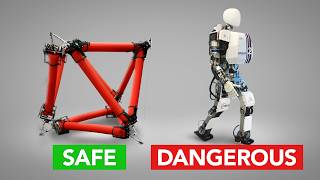
- Introduction to Soft RobotsWhat They AreSoft robots are built from flexible materials like plastic tubing instead of metal or wood.First ExampleZach Hammond at Stanford demonstrated a soft robot that uses punctuated rolling locomotion, tipping over faces to move forward.Design InnovationA turtle-inspired soft robot made of flexible tubing, powered entirely by compressed air with no electronics required.Key AdvantageCan be used in hazardous environments like mines where electronics could spark explosions or near MRI machines with strong magnetic fields.
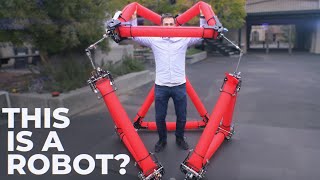
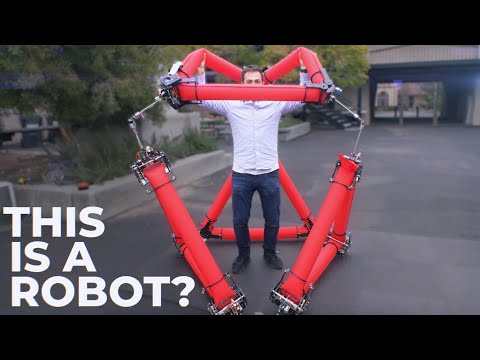
- Safety and Physical PropertiesSafety Benefits• Soft robots are safer for operation around humans due to their compliant structure • They have a maximum force limit they can exert, making them inherently safe • Can withstand being beaten, stood on, and compressed without dangerMaterial CompositionMain structural members are fabric tubes (nylon) inflated with air, with polyethylene tubes inside for air tightness.Pressure SystemTubes are inflated to about six PSI above atmospheric pressure, roughly 1.5 atmospheres total.Movement MechanismEach tube passes through pairs of rollers connected to a motor that pinches the tube like a pinched straw, with high friction material preventing slippage.
- Structure and Design EngineeringConstruction Details• Built by Zach Hammond and one other grad student in about one month • All structural members were hand-sewn by the teamConfigurationMade of four inflated tubes connected to pairs of motors forming triangular sides, creating an octahedral shape overall.Naming SchemeRobots are named after sausages based on their appearance, including Polish, Chorizo, Linguica, and Kielbasa.Shape-Changing Property• Can dramatically change shape from tall to short and squat • Overall perimeter remains constant, making it isoparametric • Controlled via MATLAB GUI where operators input desired positions in inches
- Advantages Over Rigid RobotsRigid Robot LimitationsHard robots are strong and precise with accurate and repeatable actions, but are heavy and cannot change volume drastically.Soft Robot Strengths• Can become tall to go over obstacles or short to fit under obstructions • Tubes bend around disturbances and rocks without damage • Still capable of carrying heavy loadsPublic PerceptionSoft robots are designed to convince people that robots are good, soft, kind, and friendly, contrasting with the terrifying appearance of Boston Dynamics robots.Volume EfficiencyCan shrink down their volume drastically, which is valuable for space applications where volume is an expensive premium for rocket transport.
- Applications and Future PotentialSpace Exploration• NASA explored soft robots for space missions • Potential deployment under ice sheets by drilling through and inserting robots through small diameter holes • Can be disassembled and reassembled to form larger structures in difficult-to-access areasGrasping CapabilitiesInspired by octopuses, these robots use shape-changing ability and compliance to squeeze through tight passageways and wrap around objects for manipulation.Object ManipulationDue to tube compliance, the robot naturally grasps and manipulates objects as tubes bend slightly, increasing contact area and distributing forces evenly.Main Vulnerability• Biggest risk is punctures or leaks since compressed air is essential for structure • Mitigation strategies include onboard small compressors to maintain pressure during minor leaks • Future will see more soft robots as they work closer with humans