The Science of Thinking
10 capitulos
- Why We Avoid ThinkingCommon Mistakes• People incorrectly answer that Earth takes 24 hours to orbit the Sun • In the bat and ball problem (total cost $1.10, bat costs $1 more than ball), most people incorrectly answer ten cents for the ballWhy We FailThinking is uncomfortable and takes effort, so people don't check their answers even when they could quickly verify them.Universal PatternThese mistakes aren't due to stupidity but reveal blind spots in all human thinking caused by how our brains fundamentally work.Learning OutcomeUnderstanding that cognitive limitations and mental shortcuts affect everyone's thinking, not just others.
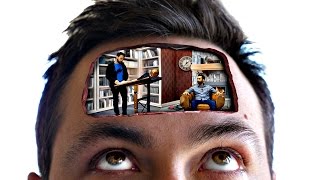
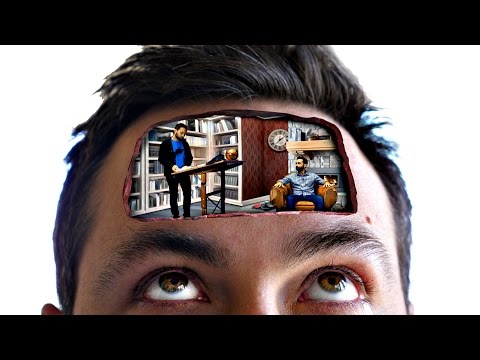
- System One and System Two: Gun and DrewDrew (System Two)• Represents conscious thought and the voice in your head • Capable of following instructions and executing steps • Lazy and slow but careful, able to catch and fix mistakes • Must manually calculate complex problems like 13 x 17Gun (System One)• Incredibly quick and processes massive amounts of sensory information automatically • Picks out relevant information and discards the rest • Works without conscious awareness • Reads text before you decide to read it and fills in gaps automaticallyMemory SystemsGun's automatic responses are enabled by long-term memory (your library of lifetime experiences), while Drew exists entirely in working memory and can only hold four or five novel things at once.FoundationGun's perceptions become the basis for your conscious thoughts, even though Drew is unaware of Gun's processing.
- Working Memory and ChunkingCapacity LimitsDrew can only hold and manipulate four or five novel things in mind at a time, which is one of psychology's best-known findings.Overcoming LimitsWhen information is familiar, you can overcome these limitations through chunking—grouping things together according to prior knowledge, allowing you to hold four or five chunks instead.ExampleRandom digits like '7102' normally use most working memory capacity, but reversing them to '2017' (the year) reduces it to just one thing.Learning ProcessLearning is building more and bigger chunks by storing and connecting information in long-term memory, essentially passing tasks from Drew to Gun.
- From Effort to AutomationLearning PracticeFor information to transfer to long-term memory, Drew must actively and effortfully engage with it multiple times, like reciting a rhyme while learning to tie shoelaces.AutomaticityAfter repeated practice, tasks gradually become automatic and Gun takes over, so Drew doesn't have to think about them anymore.Expert PerformanceMusicians and sports stars attribute superhuman ability to the incredible automation of Gun's skills, developed through deliberate and slow conscious practice by Drew.Real MechanismWhat appears to be 'muscle memory' is actually memory stored in the brain and controlled by Gun, not in the muscles themselves.
- Observing Mental EffortAdd One TaskA task where you read four digits, then add one to each digit and say them back on the beat, forcing Drew to hold and manipulate information simultaneously.Physiological Signs• When Drew is hard at work, your pupils dilate visibly • Other physiological responses include increased heart rate and sweat productionResearch FindingWhen participants were just chatting with experimenters (not doing tasks), their pupils didn't dilate, showing that the Add One and Add Three tasks are particularly strenuous for System Two.Daily RealityMost of our day-to-day life requires minimal effort from Drew, with most tasks handled automatically by Gun—our brains spend most of their time doing the mental equivalent of lounging around.
- Brain Evolution and Automatic HabitsEvolutionary PurposeBrains evolved to automate repetitive tasks with Gun, reserving Drew's limited capacity for things that really need attention—this is how we make best use of resources.Habit Conflicts• Moving to Australia, the presenter learned lights turn on by flicking down, but Gun had automated 'up means on' from Canada, causing years of switching lights off when entering rooms • Destin learning to ride a backwards bicycle took months to overcome automated habits and made normal bikes difficult afterwardFalse ConfidenceEven when Drew consciously knew the correct answer, Gun's automation would override it for years due to long-established habits.TakeawayUnderstanding Gun and Drew explains why we make errors—Gun automatically suggests answers that Drew endorses without careful checking because Drew is lazy.
- Forcing Deliberate ThinkingFont EffectWhen college students took a test in hard-to-read font with poor contrast, the error rate on the Bat and Ball question dropped from 85% to 35%.ExplanationWhen something is confusing, Gun can't quickly jump to an answer, so the task is handed to Drew, who invests the mental effort to reason his way to the correct answer.Learning BenefitWhen Drew works harder, you're more likely to reach the right answer and remember the experience.ApplicationDifficulty forces engagement—making information harder to process paradoxically leads to better understanding and retention.
- Modern Advertising StrategyTraditional ApproachAdvertising traditionally showed what products do, how they're better than competition, used clear branding and jingles to make messages easy to understand so Drew didn't have to work.New StrategyEffective modern advertising has shifted to being more confusing, using cryptic messages like a billboard with just 'Un' in Australia with no logo or product indication.Gun and Drew Leverage• Gun automatically filters out traditional advertising as it's everywhere and automatic • Something that doesn't make sense forces Gun to hand it to Drew, who consciously engages with the confusing messageInsurance ExampleThe 'Un' campaign revealed itself to be for insurance, using wordplay about unstressing, unhastle, undrive, and unworry—confusing messaging that forced engagement rather than passive viewing.
- Education and Learning EffortLecture DeclineLectures, long the dominant teaching method, are declining because they're too easy to tune out and Gun filters them automatically.Information OverloadMany science lectures present too many new pieces of information at once, exceeding Drew's capacity because students don't have big enough chunks to break the material into.New Methods• Universities are introducing workshops and peer instruction formats • Students are forced to answer more questions and do more work than just listen and take notesChallengeNew formats make Drew work harder, which is how learning happens, but many students don't like it because it requires more effort—just as it's hard to motivate someone to exercise, it's hard to get Drew to give full effort.
- The Discomfort of GrowthAppeal of Ease• Musicians prefer playing familiar songs that Gun has already automated because they feel and sound good • Watching videos creates the sensation of understanding without actually learning anything • Using GPS prevents getting lost but also prevents learning the wayExpert RequirementIf you really want to learn and get better at anything or have any chance of becoming an expert, you have to be willing to be uncomfortable.Cost of LearningThinking takes effort, involves fighting through confusion, and for most of us is at least somewhat unpleasant.Final MessageGrowth and mastery require overcoming the natural preference for ease and automation, embracing the discomfort that comes with engaging Drew's conscious effort.