The Illusion of Truth
10 capitulos
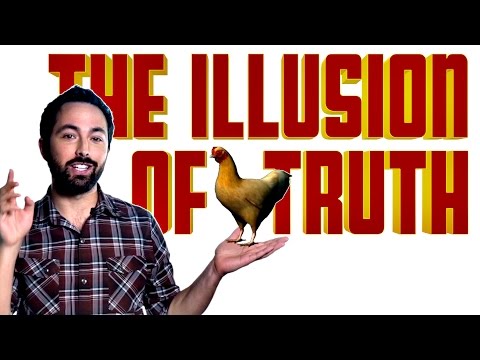
- The Chicken Temperature ExperimentThe PhenomenonRepeated exposure to a phrase makes people judge statements about that topic as more true, even without useful information provided.The ExamplePeople exposed repeatedly to 'the body temperature of a chicken' are more likely to believe it is 34 degrees Celsius, when the actual temperature is closer to 41 degrees Celsius.The MechanismThis occurs through cognitive ease, a measure of how hard your brain is working.The ImplicationThings we're exposed to repeatedly feel more true, familiar, effortless, and good.
- Understanding Cognitive EaseDefinitionCognitive ease measures how hard your brain is working, ranging from easy (scrolling Facebook) to hard (multiplying large numbers mentally).Truth and Ease• True statements generally elicit cognitive ease • Examples include 'fire is hot', 'earth revolves around the sun', 'dogs have four legs' • These feel familiar, effortless, and goodThe ProblemCognitive ease can be artificially created through other mechanisms beyond actual truth.ConsequenceArtificial cognitive ease leads people to misjudge what is actually true.
- Repetition and the Mere Exposure EffectThe Classic Study• Experimenters placed nonsense words in school newspapers at different frequencies • One word appeared once, while others appeared 2, 5, 10, or 25 times • Word frequencies were reversed at another universityThe FindingThe more frequently a nonsense word appeared in the newspaper, the more people thought it meant something good.Further Evidence• Songs are judged more favorably after repeated listening • People rate yearbook photos as more likable after seeing them multiple times • The effect works with Chinese characters and random shapes shown to English speakersReal-World ExampleThe Kardashians' fame results from repeated exposure to their names and faces, making them familiar and therefore processed with cognitive ease.
- Evolutionary Basis and AdvertisingBiological Purpose• Brains evolved to identify threats • Anything novel is a potential threat • Repeated safe exposure makes something familiar and comfortable, signaling safetyEvidence Beyond HumansChicks played a tone while in the egg made fewer distress calls when that tone was played to them later.Industry ApplicationAdvertising relies on repetition to make even 'brown carbonated sugar water' seem appealing.Logical ConsequenceIt is not surprising that repeated stimuli are perceived more favorably, given our brain's threat-detection evolution.
- Visual and Textual Cognitive EaseVisual Factors• Images with higher contrast are perceived with more cognitive ease and feel good • This explains most Instagram filters • Imperceptibly quick outlines before images cause people to smile and relax their browsCognitive StrainVideos with bad audio quality and low contrast create cognitive strain as the brain searches for threats, causing furrowed brows and frowning.Text Legibility• People choose answers with higher legibility and bold text • Nice, contrasting bold text is easier to read and is judged as more true • This applies even when answers are factually incorrectProfessional Consequences• Lawyers with easily pronounced last names are over-represented higher up in law firms • Companies with pronounceable stock market abbreviations out-perform those with unpronounceable tags
- Cognitive Ease and IntuitionHappiness EffectBeing happy makes you more likely to experience cognitive ease, which makes you more intuitive.Association Puzzles• People can determine if word sets share connections in seconds before knowing what the association is • Examples: cottage-Swiss-cake (cheese), sky-bulb-high (light) • A flicker of recognition deep in the brain causes feelings of cognitive ease and pleasantnessGut Instinct TestingOn multiple choice tests, following your gut is effective when you're uncertain because of this cognitive ease sensation.Danger of IntuitionCognitive ease can lead to incorrect logical conclusions when questions require careful analysis rather than intuition.
- Cognitive Strain and AccuracyThe Logic TestA logical syllogism test shows that 90% of people made at least one mistake when questions were printed clearly.The Legibility EffectWhen the same test was printed with illegible text, the error rate dropped to 35%.The MechanismIllegible text creates cognitive strain, forcing the brain to work harder and avoid jumping to intuitive but wrong answers.Key InsightMaking information harder to read can increase accuracy in analytical tasks.
- The Paradox of ThinkingThe Tradeoff• Cognitive ease is useful for creativity and intuition but also makes you more gullible • Skepticism and analysis require more mental work and don't feel good • Critical thinking is essential to separate fact from fictionDomain Application• On driving tests, going with your gut is a good strategy • In physics where answers are counter-intuitive, skepticism is important • Vigilance against intuitive errors takes mental effortThe CostBeing skeptical and analytical is associated with unhappiness, possibly explaining why rigorous scientists and analytical minds are often grumpy.The ParadoxCognitive ease is pleasant and promotes creativity, but it can trick you into believing things that aren't true.
- Balancing Thinking ModesThe MisconceptionThe point is not that we should only think critically more often.Practical RealityAnalytical thinking takes significant mental effort—sometimes half an hour just to select a toothbrush—making it impractical for all decisions.Appropriate Uses• Cognitive ease is appropriate for familiar, everyday situations • Our brains evolved to use it for a reason • There are definitely times when cognitive ease is the right mental stateThe SolutionThe key is identifying when more thought is required rather than always defaulting to intuition.
- Vigilance in the Information AgeThe ChallengeWith sharing and repeating ideas easier than ever before, we need to be more vigilant to distinguish true ideas from those merely heard repeatedly.The RiskThe more something is repeated, the more it starts to feel true, regardless of its actual accuracy.The NeedIn modern information environments, critical discernment between truth and familiarity is increasingly essential.The TakeawayUnderstanding the illusion of truth helps us make better decisions about what we believe and accept as fact.