I Waterproofed Myself With Aerogel!
6 capitulos
- Introduction to Aerogel PropertiesWhat is AerogelAerogel is the world's lightest solid, first recognized by inventor Samuel Kistler in 1931. It has a distinctive metallic ring when struck.Key Characteristics• Excellent thermal insulator • Breaks easily and is fragile • Has unique sound propertiesPractical ChallengeDespite extraordinary thermal insulation properties, aerogel is difficult to work with due to its brittleness.Solution DevelopmentA combination of silica aerogel particles with non-flammable binder creates a more usable form that can be applied to skin.
- Testing Thermal Protection with BlowtorchTemperature ConditionsBlowtorch flames reach at least 1500 degrees Celsius and can get as hot as 2000 degrees Celsius.The ExperimentAerogel mixed with binder is applied around a finger, then exposed to blowtorch flame while the binder burns.Remarkable Results• Finger does not feel hot despite extreme heat exposure • Thermal imaging shows aerogel at nearly 900 degrees Celsius • The thin aerogel layer provides exceptional insulationKey FindingThe material successfully insulates by preventing heat transfer through the aerogel barrier to the skin beneath.
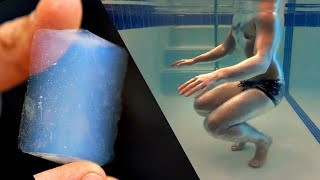
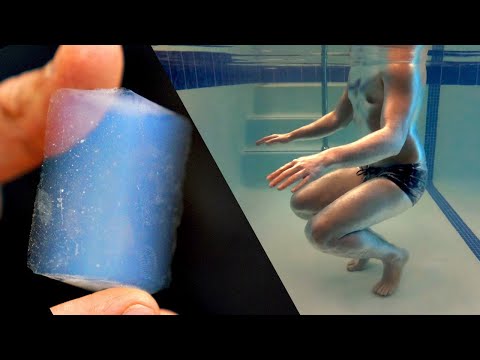
- Achieving Waterproofing in WaterThe Waterproof EffectA thin layer of air trapped against the skin due to aerogel coating creates total internal reflection, making skin appear silvery.Physical PhenomenonLight reflects off the water-air interface through total internal reflection, preventing water from directly contacting the skin.Practical Experience• The body feels more buoyant than usual • After exiting water, the body feels completely dry • The experience feels unusual and strangeMethod UsedWaterproofing achieved by coating the body with aerogel particles from a bucket.
- Hydrophilic vs Hydrophobic AerogelHydrophilic ProblemNormal silica aerogel is hydrophilic with OH groups that absorb water, causing the aerogel structure to collapse and ruin the material.Water Absorption Capacity• Ice cube-sized piece of aerogel contains half a football field of surface area • Aerogel can absorb up to 25 times its weight in water • This is due to nano-scale sponge-like structureSolutions CreatedA hydrophobe chemical replaces 30% of OH groups, creating non-polar groups that repel water instead of absorbing it.ResultHydrophobic aerogel repels water completely, bouncing water off and remaining unchanged even after months in water.
- Real-World Applications of AerogelPest Control InnovationPhysical insecticide uses aerogel to absorb oils and moisture from insect outer skin, causing them to dry out, instead of using neurotoxins.Museum Preservation• Company Opium in Italy makes museum cases including the case for Mona Lisa • Aerogels act as passive moisture regulators • Absorbs excess moisture when it increases, releases moisture when it decreasesSpace ExplorationNASA Insight Mission used aerogel with zeolite particles to maintain vacuum inside seismometers by absorbing moisture and gases from instrument components.Key AdvantageAerogel applications require no power consumption and are very lightweight.
- Varieties and Composites of AerogelMaterial Variations• Aerogels can be made from silica, polymers, and other materials • All contain nano-sized pores around 20 nanometers • All are over 50% air, making them lightweightInsulation PerformanceSilica aerogel provides 2-3 times better insulation than styrofoam. Polymer aerogels insulate 1.5-2 times better than styrofoam with better mechanical properties.NASA Polyimide AerogelPolyimide aerogel chemistry comes from NASA, called Martian tape internally, is non-flammable and feels like wood, trading some insulation for durability.Composite SolutionsFiberglass-aerogel composite blankets can be flexed, cut, sewn, and wrapped. Safe to use with readily expelled silica particles, used to insulate subsea oil pipelines with 1 centimeter thickness equaling 3 centimeters of mineral wool.