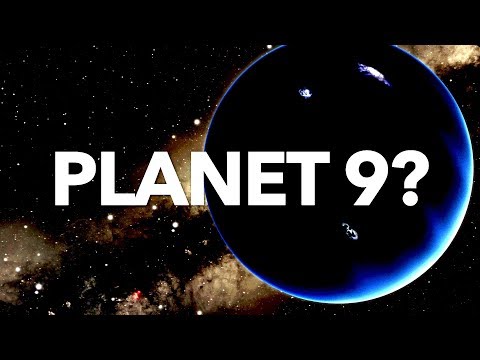
Does Planet 9 Exist?
7 capitulos
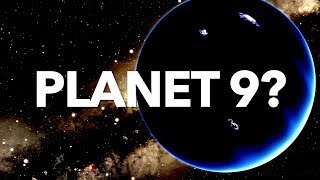
- Introduction to Planet 9 MysteryThe QuestionA scientist confidently states a 99.9% probability that Planet 9 exists in the outer solar system.Planet Characteristics• Mass five times that of Earth • Orbital period of 10,000 years • Highly elliptical and inclined orbitResearch LocationThe investigation takes place at Caltech with planetary science professor Konstantin Batygin.Core MysteryUnderstanding why scientists suspect such a strange object exists in the distant solar system.
- Historical Precedent: How Neptune Was DiscoveredUranus DiscoveryIn 1781, astronomer Herschel discovered Uranus and realized it had been imaged many times before in old observations.The ProblemThe orbit of Uranus deviated from calculations, showing anomalous motion that couldn't be explained by known planets.Mathematical SolutionFrench mathematician Urbain Le Verrier performed complex calculations predicting an unknown planet's location to explain Uranus's orbital anomalies.Successful PredictionNeptune was discovered in one night with pinpoint accuracy once astronomers knew exactly where to look.
- The Kuiper Belt DiscoveryThe PuzzleIn 1985, the question arose: why is the inner solar system full of asteroids and comets while the outer solar system beyond Saturn appeared empty?Initial SearchMike Brown and Jane Luu conducted a survey for five to six years searching for objects beyond Saturn but found nothing initially.First DiscoveryIn 1992, they discovered the first identified Kuiper Belt object at 45-50 astronomical units from the Sun, with Pluto being the misidentified second object.Belt Population• Over 2,000 Kuiper Belt objects have been identified in 25 years • Estimated population of a billion to two billion objects larger than one kilometer across
- Orbital Alignment EvidenceThe ClusteringDistant Kuiper Belt objects show orbital clustering, with orbits pointing in the same direction rather than random directions.Statistical StrengthExperts Scott Shepard and Chad Raheel identified this alignment as a 2.6 sigma result, which falls below the standard three sigma threshold for acceptance in science.Observational Bias RiskThere is a one in 500 chance that the clustering is a false alarm caused by observational bias, where objects pointing in other directions simply haven't been discovered yet.Simulation EvidenceComputer simulations show that after two billion years, Planet 9's gravity would scatter misaligned objects while keeping aligned objects clustered in the same plane.
- Planet 9's Unusual PropertiesMass Explanation• Five Earth masses is the most common type of planet discovered around other stars in the galaxy • Standard outcome of planet formation processes • More common than any planet in our solar systemOrbital PeriodA 10,000-year orbital period is unlike any known solar system planet and represents an extremely unusual characteristic.Orbital FlippingPlanet 9 could flip distant object orbits on their side, creating perpendicular and retrograde orbits that shouldn't exist without such a massive perturber.Observed Anomalies• Highly inclined bodies with orbits tilted up to 90 degrees exist in the Kuiper Belt • Retrograde orbits observed among distant objects • No other known mechanism naturally explains these configurations
- Search Challenges and TimelineDetection Difficulty• Planet 9 is just dim enough at the outer parts of its orbit to be discoverable with current telescopes • Requires perfect atmospheric conditions with no moon and calm skies • Successful observation nights occur every year but remain rareSurvey ProgressSince 2017, only two successful observational runs have been completed, representing approximately 20-25% of the planned survey.Time EstimateAt the current rate, the complete survey could take about a decade to finish.Future Technology• The LSST telescope coming online in 2022-2023 will discover many more distant Kuiper Belt objects • LSST will refine theoretical models and either find Planet 9 or rule out large portions of its potential orbit
- The Vast Unknown Solar SystemVolumetric DiscoveryMost of the solar system has been discovered volumetrically in the last 25 years, with planets occupying only 10,000 cubic astronomical units of space.Exponential ExpansionGoing ten times further out increases the searchable volume by a factor of a thousand, creating exponentially more space to explore.Hidden PossibilitiesIn the far outer solar system, there is enough room and darkness to hide almost anything, from large to small planets, remaining invisible to current observations.Future Naming• An online petition exists on change.org to name Planet 9 after David Bowie • If Planet 9 has moons, they could be named Ziggy Stardust and Starman • The naming question remains undiscussed among the scientific team