We Might Find Alien Life In 1827 Days
8 capitulos
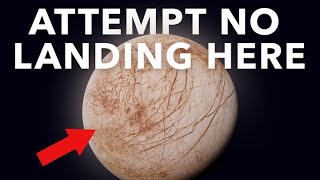
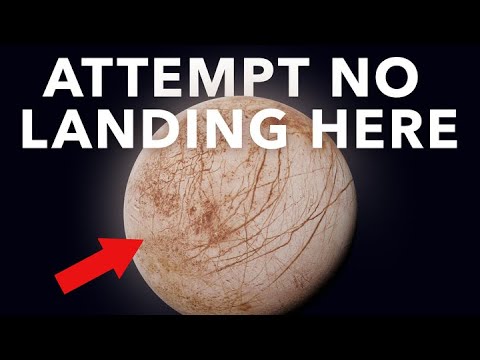
- Europa: The Moon That Could Harbor LifeHistorical ContextArthur C. Clarke's 1982 novel '2010: Odyssey Two' depicted an alien intelligence warning against landing on Europa. 42 years later, NASA is launching the Europa Clipper mission in October 2024 to hunt for signs of alien life on Jupiter's moon Europa.The ChallengeJupiter creates an extremely hostile environment around its moons through its powerful magnetic field and radiation belts that would destroy spacecraft within three months.Mission DesignThe Europa Clipper will not orbit Europa directly. Instead, it will orbit Jupiter from a distance and perform 49 quick flybys of Europa every few weeks, allowing it to survive in the radiation environment while collecting data.Why Europa MattersEuropa has virtually no impact craters despite billions of years of asteroid bombardment, suggesting recent geological activity that continuously refreshes its surface.
- Jupiter's Radiation Belts and Io's VolcanoesMagnetic Field GenerationDeep inside Jupiter, metallic liquid hydrogen generates an incredibly powerful magnetic field almost 20,000 times stronger than Earth's when measured at the same distance away.Radiation Belt Creation• Io's volcanoes eject sulfur dioxide into space • One ton of material per second gets ionized and trapped in Jupiter's magnetic field • Particles accelerate to over 300 kilometers per second • Trapped material slams into other moons, ejecting more particles and creating massive radiation beltsImpact on SpacecraftPioneer 10 and Voyager missions experienced glitches, false commands, and data corruption from radiation during brief flybys. Modern spacecraft within the radiation belts can only survive around three months.Europa's Radiation DoseEuropa's surface receives 5,400 milliSieverts of radiation daily, which is 1,800 times the annual dose on Earth. A person staying for a couple hours would die from radiation sickness.
- Tidal Heating: The Engine Beneath the IceOrbital ResonanceIo, Europa, and Ganymede are in orbital resonance: for each Ganymede orbit, Europa completes two and Io completes four. This causes Io to tug Europa inward on one side while Ganymede pulls outward on the other, creating an eccentric orbit.Stretching and SqueezingJupiter's gravity is stronger on Europa's closer side than the farther side, constantly stretching and squeezing the moon. This tidal flexing generates internal friction that produces enough heat to keep the ocean liquid.Observable Flexing• Without an ocean, Europa should flex about 1 meter in amplitude • With an ocean, it flexes 30 meters in amplitude • This enormous deflection will show clearly in gravity data • Cycloid surface features indicate the stress patterns that only an ocean could explainOcean TemperatureThe ocean temperature depends on salinity, with melting point depressed about 10 degrees Celsius below normal if very salty, similar to cold oceans on Earth.
- Hydrothermal Vents and the Potential for LifeVent FormationTidal flexing pushes magma from the outer core closer to the seafloor. Water flowing through the crust above is heated and picks up minerals from the ground, ejecting them into the ocean as hydrothermal vents.Earth's PrecedentOn Earth, thousands of meters below the surface where no sunlight reaches, hydrothermal vents are oases for ocean life supporting unique bacteria that feed on minerals rather than solar energy.Life's TimelineEuropa could have maintained an ocean for approximately 4 billion years, providing ample time for life to evolve. Organisms could use methane, carbon dioxide, sulfur reactions, or any chemical reaction as fuel for metabolism.Life Search FocusThe search is for single-cell organisms, not fish, whales, or squids. The Galileo mission was deliberately crashed into Jupiter in 2003 to avoid contaminating Europa due to concerns about potential life.
- Detection Methods: From Plumes to High-Resolution ImagingPlume Sampling StrategyLike the SnotBot drone that collects whale snot through whale blows on Earth, Europa Clipper could fly through water geysers erupting from Europa's surface and analyze their chemical composition using a mass spectrometer.Spectroscopic Analysis• Infrared spectrometer identifies chemical fingerprints and maps salt distribution • Ultraviolet spectrograph searches for plumes and confirms their presence • Mass spectrometer analyzes chemical composition of sampled materialImaging ResolutionWide-angle camera provides swaths of images over the surface at better than 100 meters per pixel. Narrow-angle camera from 50 kilometers altitude captures half-meter per pixel images, capable of resolving a desk-sized object on Europa.Future ExplorationA future lander mission would drill through the ice and search directly for signs of life on Europa. Studies suggest a lander could survive on the surface for approximately one month.
- Why Europa Over Enceladus and Mission TimelineEuropa Advantages• Europa likely has had billions of years for life to evolve, while Enceladus may have only recently activated its subsurface ocean • Jupiter's intense radiation creates chemical compounds like formaldehyde and hydrogen peroxide that serve as food for potential life • Evidence of icy shell overturn at chaos zones may allow radiation-produced compounds to reach the subsurface oceanComplementary JUICE MissionThe European Space Agency's JUICE mission will arrive 15 months after Clipper and perform flybys of Europa before settling into orbit around Ganymede. Both spacecraft can share observations and coordinate data collection.Launch StatusEuropa Clipper was scheduled to launch October 10, 2024, but NASA delayed the launch to wait for Hurricane Milton to clear Florida for safe spacecraft takeoff.Result TimelineFirst distant observations searching for plumes will arrive in 2030. First high-resolution data will come in 2031, approximately 1,827 days after the mission launches.
- The Bigger Picture: Ambition and ImpactHistorical PermissionDuring a Europa Ocean Conference in the late 1990s, NASA video-called Arthur C. Clarke and showed him plans for a future mission. Clarke finally gave NASA permission to land on Europa after seeing their plans.Mission SignificanceEuropa Clipper demonstrates what humanity can accomplish when setting ambitious goals and working together internationally. The mission represents 26 years of planning and development.Individual ImpactLarge international space missions inspire us to consider our own potential impact. Individuals can accomplish much more than they think when working toward making the world a better place.Finding Your PathOrganizations like 80,000 Hours provide research-backed career guidance to help people find work that creates positive global impact while feeling personally satisfying, offering free resources including career guides, podcasts, and job boards.