Why Metals Spontaneously Fuse Together In Space
4 capitulos
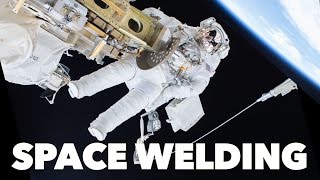
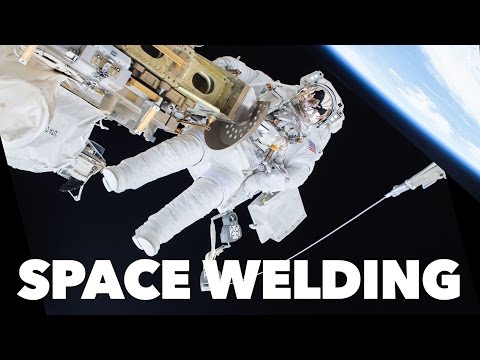
- The Gemini IV Spacewalk and Hatch ProblemThe Historic EventOn June 3, 1965, astronaut Ed White conducted the first American spacewalk aboard Gemini IV, propelled by a pressurized oxygen gun from a handheld device. He enjoyed the experience so much that flight control had to order him back into the spacecraft.The Technical Crisis• The hatch would not close after the spacewalk for about an hour • The spacecraft went out of communication range while over Africa • After significant effort and brute force, the crew successfully closed the hatchMission ChangesThe original mission plan included another depressurization to discard bulky gear, but pilot McDivitt refused to open the hatch again. The astronauts returned to Earth safely with the extra equipment stuffed into the footwells of their craft.Initial DiagnosisNASA engineers identified the hatch failure was caused by cold welding, where two metals can fuse together without heat or melting in the space environment.
- Understanding Cold Welding in SpaceMetal StructureMetals contain a lattice of positively charged ions embedded in a sea of freely moving negative electrons, similar to the structure of peanuts in caramel.Protective Oxide Layer• On Earth, metal surfaces react with oxygen in the atmosphere to create a protective oxide layer • This oxide layer prevents two pieces of metal from joining together • In space, this protective layer can be worn away through friction and contactThe Fusion ProcessWhen bare metal pieces contact each other with force or impact, electrons from one piece can flow into the other, fusing them together. As Richard Feynman noted, atoms have no way of knowing they are in different pieces.Space Applications ImpactCold welding has major implications for spacecraft construction and maintenance, particularly for facilities like the International Space Station.
- Why Cold Welding Isn't a Bigger ProblemReality CheckCold welding is not as significant a problem as scientists originally thought, despite experimental evidence that perfectly clean metal surfaces pressed together in vacuum will weld.Practical Barriers• Spacecraft metals are never perfectly clean due to oxide layers • Additional contaminants such as dirt and grease are present on surfaces • It would take an extremely long time for all contaminants to be eliminated so bare metal can touch in spaceGemini IV ReassessmentThe Gemini IV hatch problem was not actually caused by cold welding, but rather was simply a sticky door mechanism.Real-World ExampleThe 1991 Galileo spacecraft experienced actual cold welding when three of 18 antenna ribs refused to open due to cold-welded pins, forcing engineers to use the low-gain antenna instead of the intended high-gain antenna.
- Mitigation Strategies and Beneficial ApplicationsPrevention Methods• Use plastics or ceramics instead of metals where possible to avoid sliding metal-on-metal contacts • When metal must be used, employ two different metals or metal alloys to reduce welding risk • Apply durable coatings that resist wear to prevent bare metal contactNanotechnology BenefitsScientists have found cold welding incredibly useful for fabricating nanotechnology, where traditional welding techniques often fail due to difficulty pinpointing heat onto tiny nanowires.Perfect Nano-WeldsSingle crystal gold nanowires fuse to each other in seconds using cold welding with no heat required, creating perfect welds with crystalline structure, mechanical, and electrical properties identical to the rest of the nanowire.Earth-Based ApplicationsAlthough cold welding presents a potential problem in space, it is incredibly useful here on Earth for manufacturing nanotechnology.