La toute-puissance de la Révolution | 1979, la bascule vers l’islamisme (2/2) | ARTE
13 chapitres
- The Consolidation of Khomeini's PowerSituation politiqueIn summer 1979, Khomeini and Islamic forces celebrate the revolution's direction while leftist activists are progressively marginalized and intimidated by religious forces.Restrictions nouvelles• Left-wing activists prevented from organizing memorial ceremonies • Religious forces control the streets • Press freedom restrictions implemented • Opponents of new restrictions become targetsConfiance populaireDespite these changes, the majority of Iranians trust Khomeini, though some later discover his true face involves deception and manipulation.Pouvoirs constitutionnelsAn Assembly of Experts rewrites the Constitution to grant all powers to the Supreme Guide, giving Islamists the control they could not dream of achieving.
- Regional Expansion and Pan-Islamic AmbitionsProjections géopolitiques• Iran envisions a worldwide Islamic revolution • Naval demonstration off Iraqi coast • Ayatollah Muhammad Sadek Rouhani demands annexation of Bahrain • Revolutionary messages broadcast throughout the GulfPréoccupations régionalesNeighboring countries have reason to worry. After rapid changes in the 1970s, many Sunni and Shia believers lack cultural reference points and want to follow the Iranian Islamic example, creating shockwaves across the unstable region.Réactions diplomatiquesVice Premier Minister Sadek Tabatabai travels to Syria and Lebanon. An unfilmed summit in Taif brings together foreign ministers from six Persian Gulf countries to coordinate regional security, informed by intelligence about Iranian interference.Préoccupations sécuritairesConcerns mount about the Hajj pilgrimage and the Ashura festival, significant events for Shia communities, given their role in the Shah's downfall nine months earlier.
- The Afghan Jihad and Islamic RadicalizationInsurrection afghaneIn Afghanistan, Islamic and conservative religious rebels attempt to overthrow the Soviet-backed communist regime. Rebels are willing to die as martyrs, believing God has brought paradise to their doorstep.Brutality révolutionnaire• Presumed collaborators are harshly treated • Moderate mullahs are killed • Opposition to the religious party results in elimination • Armed groups act without restraint or mercyAvancée militaireDespite Soviet reinforcement with thousands of advisors, rebel morale remains high as they advance toward Kabul, though military implementation of these operations remains challenging.Légitimité perdueThe Afghan government calls tribal leaders to Kabul to explain policy to the population, but these leaders know President Hafizullah Amin is already overwhelmed by events.
- Egypt's Crisis and Sadat's Assassination PathTensions égyptiennesPresident Sadat holds an annual parade to commemorate his victory over Israel six years earlier, hoping to retain popular support after his peace treaty with the Hebrew state.Opposition islamiste• Muslim Brotherhood targets Sadat after his visit to Camp David • Brotherhood spreads hatred throughout society • Sadat's peace treaty characterized as betrayal • Normalization with Israel condemnedTentative de ralliementIn August, Sadat attempts to win over the Muslim Brotherhood leader by offering a seat on the Shura Council, but the offer is refused.Conséquence fataleSadat decides to repress Islamists in universities. Exactly two years later, at the same ceremony, he is assassinated in retaliation. Khomeini honors the assassin Khalid Islambouli by printing his image on stamps and painting his portrait on Tehran walls.
- The Hajj Pilgrimage and Revolutionary PropagandaPèlerinage politiqueAs Hajj begins, Saudi chief Zayed of the UAE arrives discreetly, as do Iranian dignitaries like future Supreme Guide Ali Khamenei traveling incognito. Khomeini calls on Iranian pilgrims to spread revolutionary ideology.Surveillance saoudienneSaudi authorities are concerned and monitor pilgrims from Iran as best they can. Iranian pilgrims travel by bus throughout Saudi Arabia, broadcasting propaganda that contests the religious legitimacy of the Saudi regime.Écho favorableThe Al-Qatif region reacts favorably to the Iranian revolution, both because its inhabitants are predominantly Shia and because the region genuinely needs change and reform. Islamic forces gain ground without violence, at least for the moment.Appel à l'actionIn the final weeks of 1979, dramatic events will help Islamists achieve their ambitions, as a series of crises unfolds in the region.
- Juhayman al-Otaibi's Messianic UprisingMouvement radicalA 43-year-old Saudi named Juhayman al-Otaibi, not an Islamist but an extreme conservative Sunni with 400 to 500 followers, influences people with claims that images on currency are signs of the End Times and Final Judgment.Prophétie messianiste• Juhayman believes the End Times coincide with the end of the Islamic century • He calls for divine help for his brother-in-law to be proclaimed the Mahdi • He believes the awaited Mahdi is Mohamed Abdouh al-Qatani • Followers are expected to swear allegiance to this figure at MeccaOpposition modernisteThese ultraconservatives want the country to rally behind their Mahdi and rise against the Saudi dynasty's modernization policies, including women's education, television introduction, and football.Présage historiqueAlthough their Mahdi is destined to be killed and their plan will fail, this group plays an important role in the year of revolution, foreshadowing major upheaval.
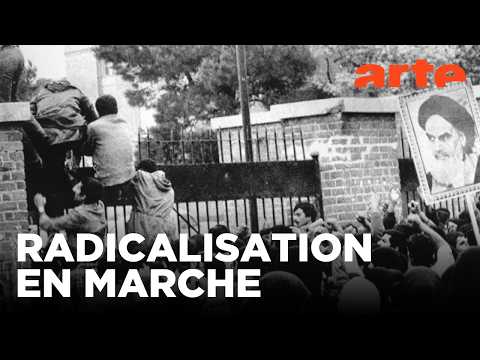
- The American Embassy Crisis and National MobilizationOpération audacieuseStudents and Islamic militias attack the American Embassy, officially foreign territory, taking 66 American employees hostage and demanding the United States extradite the deposed and ailing Shah.Mobilisation nationale• The episode inspires the Iranian people • Anti-Western sentiments unite left-wing activists, religious conservatives, and Islamists • Khomeini calls it a second revolution more important than overthrowing the monarchy • The United States is labeled the Great SatanConsolidation du pouvoirMost members of the provisional government refrain from protesting a situation that could provoke war with America. Khomeini appoints Mohammed Beheshti to lead an interim government, obtaining full powers for himself.Impact international800 million Muslims worldwide follow embassy events, impressed by Iranian audacity. The crisis diverts attention from chaos within the government and serves as a rallying cry before the Constitution vote that will legitimize Khomeini's title as Supreme Guide.
- The Grand Mosque Siege and Mecca CrisisPrise de contrôleJuhayman al-Otaibi and 350 radical traditionalist supporters smuggle weapons into the Grand Mosque hidden in coffins. They announce the arrival of the Mahdi and call on Muslims to pledge allegiance to him at dawn on the first day of the Islamic century.Réactions régionales• Police and army frontal attacks fail, causing heavy losses • A military helicopter is shot down • Saudi government declares martial law • Borders close and media blackout is imposedImplications géopolitiquesThe American nuclear carrier Kitty Hawk and other ships are sent to the Gulf. Washington is deeply concerned, and National Security Advisor Brzezinski believes showing strength is necessary to reassure Saudi friends and demonstrate commitment to their protection.Réaction iranienneIn Tehran, an enormous crowd demonstrates accusing America of this sacrilege. Khomeini, broadcasted on Radio Tehran, declares that American imperialist criminals likely committed this act and calls on Muslims to remain vigilant against such despicable acts by Zionists and American imperialists.
- Regional Contagion and Sectarian UprisingsCascade internationale• In Islamabad, Muslim student activists storm the American Embassy hours after Khomeini's message • Intelligence reports reveal Iranian and Palestinian presence among Pakistani students • The embassy is set on fire and nearly everyone inside is assassinated • The Pakistan military takes two days to restore orderSoulèvement chiiteBefore Ashura, recent propaganda from Iran acts as a spur on the Shia community in Saudi Arabia's Eastern Province. Young people take to the streets after calls from foreign clerics to follow Khomeini's example.Répression violente• Soldiers with bayonets conduct rounds and shoot at people • Street battles rage for several days with revolutionary speeches broadcast from minarets • Demonstrators burn the British bank and Saudi airline offices • Armed attacks occur against police and soldiersBilan sanglantApproximately 20 demonstrators and 10 soldiers are killed, hundreds are wounded, and thousands are arrested. The uprisings send a clear signal: young Shias throughout the Middle East are radicalizing and Saudi Arabia's position is weakened.
- The Siege Continues and Khomeini Consolidates RuleOpération militaire• The Saudi government receives a fatwa authorizing suppression of rebels by all means • The army neutralizes snipers on minarets and breaks the encirclement • Control of the mosque's inner courtyard is retaken • Officials walk around the Kaaba to reassure the peopleAssistance étrangèreFrench advisors help the Saudi military extract rebels from the mosque's deep caves using tear gas. The Saudis wisely avoid American involvement to prevent accusations of American conspiracy to take Mecca.Légitimité islamiqueAll rebels are killed or captured. However, King Khaled is publicly humiliated, taking weeks to overcome the rebels who desecrated the Great Mosque with foreign assistance. Ben Laden, a Saudi university student, later criticizes the royal family for profaning the mosque with their armored vehicles.Référendum constitutionnelThe Constitution is approved by large majority and Khomeini is officially named Supreme Guide. Sharia law enters into force. His dream of pan-Islamism becomes political reality, serving as a base to ensure the revolution's permanence in Iran and abroad.
- Pan-Islamic Expansion and Global MobilizationAmbitions expansionnistesIn a press conference, a spokesman for the Revolutionary Council explains Iran's new position: this is not only an Iranian revolution but the revolution. In a home interview, Khomeini expresses his ambition to lead the Muslim world and unite Islamic nations under Islamic principles.Propagation au Levant• Revolutionary troops are sent to Lebanon to participate in civil war • Hezbollah, the Party of God, is born from this context • Iranian influence expands throughout the region • Religious revolutionary networks establish themselvesRéforme saoudienneSaudi Arabia abandons liberalization in favor of conservatism, hardening Sharia law and granting more power to Muslim legal scholars. Women cannot be television presenters, cinemas and theaters close, music concerts are banned, gender segregation is imposed, and school curricula emphasize religion.Financement islamisteTo restore Islamic credibility internationally, the Saudi government gives billions to Muslim causes without carefully controlling how money is spent. Substantial sums go to Islamic groups, having enormous consequences throughout the Muslim world.
- Soviet Invasion and Global Jihad MovementDécision soviétiqueIn Moscow, the Communist Party Central Committee acknowledges the Afghan government's inability to contain the coalition of Islamic and religious conservative rebels. It decides to send Soviet troops to Afghanistan, expecting the powerful Red Army to force rebels to surrender.Intervention massive• Tens of thousands of Soviet soldiers cross the Afghan border • 4,000 rapid intervention units are airlifted to impose new direction • The operation begins with overwhelming military force • Classified documents record the decision using coded languageMobilisation musulmaneFar from being intimidated, opposition is strengthened. Afghans are horrified by the Soviet invasion. Muslims worldwide want to help Afghans expel the Soviet invader. The cause of the Mujahideen unites millions of Muslims and changes the course of history.Émergence de Ben LadenBen Laden, a wealthy Saudi student, becomes the movement's figurehead. His professor Abdullah Azam convinces him to go to Afghanistan. Together they join 30,000 international volunteers on the battlefield, driven by the conviction that jihad is a divine duty imposed upon them.
- Consequences and the Birth of Global Islamic MilitancyGuerriers glorifiésPrimarily Afghan soldiers fight and die, but the 300 international volunteers return as heroes, inspiring others with stories of glorious jihad and religious duty. Few perceive the danger this movement represents.Mouvement émergent• Rise of the Islamic Party of Dawa in Iraq • Birth of Hezbollah and Hamas • Rise of the Taliban • Civil war in ChechnyaDiffusion mondiale• Conflicts in Bosnia and Herzegovina • Civil wars in Sudan and Algeria • Rise of al-Qaeda • Terrorism casts a shadow over IslamHéritage de 1979The events of 1979—Khomeini's revolution, the Hajj crisis, the Soviet invasion of Afghanistan, and the subsequent mobilization—fundamentally transform global Islamic activism from scattered regional movements into a coordinated, transnational phenomenon with lasting consequences for international security and geopolitics.