
The Most Powerful Computers You've Never Heard Of
9 chapitres
- Ancient Computing: The Antikythera MechanismHistorical DiscoveryIn 1901, an ancient Greek artifact was discovered in a shipwreck off the island of Antikythera. 3D x-ray scans revealed it contains 37 interlocking bronze gears dating to around 100-200 BC.Technical FunctionThe device models the motions of the sun and moon, and can predict eclipses decades in advance using analog computation methods.Historical SignificanceThe Antikythera mechanism represents a sophisticated early computer. The likes of which would not be seen again for at least a thousand years.Computing MethodUnlike modern digital computers, it works by analogy. The gears are constructed so that the motions of certain dials are analogous to the motion of celestial bodies.
- Analog vs Digital: Fundamental DifferencesAnalog Computing• Have a continuous range of inputs and outputs • Quantities are represented by something physical, like the amount a wheel has turned • Example: a simple machine for adding two numbers where turning wheels produces a sum shown on another wheelDigital Computing• Works with discrete values only • Work on symbols like zeros and ones, not physical quantities • Example: adding single bit numbers where one plus one equals two, represented as symbols not physical amountsHistorical UsageFor thousands of years, people used both analog devices like the Antikythera mechanism or slide rules, and digital devices like abacuses. Until the 1960s, the most powerful computers on the planet were actually analog.Modern ShiftDigital computers exploded onto the scene with the advent of solid-state transistors. Now, almost everything is digital, and most people have never even heard of analog computers.
- Lord Kelvin's Tidal Prediction MachinesThe Problem• Predicting tides has been crucial for navigation and military operations for millennia • Most coastal locations experience two high and two low tides per day, but their exact timing and magnitude vary • Pierre-Simon Laplace derived complicated differential equations in the late 1700s that had no analytical solution at the timeKey InnovationLaplace discovered that tides are driven by only a few specific astronomical frequencies including the moon, sun, and lunar orbit eccentricity. Each contributes a sine wave of particular amplitude and phase to the total tide curve.Mechanical SolutionWilliam Thompson (Lord Kelvin) spent years analyzing tides by hand, then had a stroke of inspiration to design a machine to carry out these calculations automatically. He aimed to substitute brass for brains.Revolutionary ImpactKelvin's analog computers revolutionized tidal prediction. Four hours of cranking the handle yielded a full year of tidal predictions. The machines were used well into the 1960s.
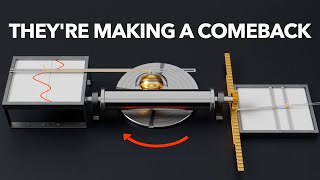
- The Mechanical Integrator and Harmonic AnalyzerThe Integration Device• Consists of a ball on a rotating disk • The further the ball is from center, the faster it spins • Motion of the ball is converted via a roller that moves a pen up or down on output graph paper • User traces the function to integrate with a stylus, which controls ball position and hence speedFrequency DecompositionTo decompose a tide curve, the disk rotates back and forth at specific frequencies. The ball moves on the oscillating disk based on the tide curve input, and the roller calculates the integral of the tide curve times the sine wave.Multi-frequency AnalysisSeveral ball and disk integrators can be connected in parallel with each disk oscillating at different frequencies to calculate coefficients for multiple frequency components simultaneously.Combined System• Tidal curves from anywhere in the world could be turned into sinusoidal coefficients using the ball and disk harmonic analyzer • Resulting sinusoids could be added together to predict future tides using the scotch yoke pulley machine • Kelvin found he needed 10 different frequency components for accurate predictions
- World War II Applications and D-DayInvasion Planning• Germans expected invasion at high tide to minimize Allied soldier exposure on beaches • Germans installed millions of obstacles underwater at mid tide, many with explosive mines attached • Allies instead planned invasion at low tide to clear channels through obstacles firstTidal CalculationsKelvin's tide prediction machines were overhauled to include 26 frequency components and used to plan the Allied D-Day invasion. Low water times differed at the five landing beaches by over an hour, so invasion times were staggered according to tide predictions.Tactical AdvantageThe low tide approach allowed demolition teams to first clear channels through obstacles. Main forces could then come through the gaps as water rose, giving landing craft enough time to depart without getting beached.Historical SignificanceThis represented a critical use of analog computers in World War II, where precise tidal predictions directly influenced one of the most important military operations in history.
- Anti-Aircraft Gun Control and the M9 Gun DirectorThe ChallengeDive bomber aircraft would plummet toward targets at up to an 80 degree angle, making them very difficult to shoot down. The U.S. sought devices to automatically aim guns at these fast-moving targets.Competing Solutions• Proposed solutions fell into two categories: analog machines like Lord Kelvin's, and fast electrical calculators • Mechanical calculating machines had been around for millennia but were too slow • New calculating machines used electrical pulses to speed up computationParkinson's InnovationDavid Parkinson at Bell Labs adapted his automatic level recorder technology to control an anti-aircraft gun. He envisioned using a variable resistor called a potentiometer to control gun trajectory, inspired by a dream he had after hearing about Dunkirk.Operational Success• The M9 Gun Director used operational amplifiers to solve ballistics equations • It used radar and optical sites to obtain speed, altitude, and direction of enemy planes • In World War I, it took 17,000 rounds to down one airplane. By 1943, after the M9 was deployed, it took only 90 rounds
- The Norden Bombsight and Precision BombingTechnical Specifications• Designed by eccentric Dutch engineer Carl Norden • Implemented 64 different simultaneous algorithms • Included one that compensated for Earth's rotation as the bomb fell • Contained over 2,000 fine parts requiring extreme precision to manufactureSecurity and ImportanceThe Norden was one of the most closely guarded secrets of the war. American bombardiers carried handguns specifically to destroy it in the event of a crash to prevent the technology from falling into enemy hands.Performance Issues• Despite hype and massive funding, the Norden didn't work as advertised • The problem with analog computers is that the physical device is a model for the real world, so any inaccuracy translates into computation errors • There will always be slop in connections between parts, causing repeated calculations to yield different answersLimited SuccessIn the American campaign against Japan, bomber crews using the bombsight were unable to destroy critical Japanese war infrastructure. The U.S. abandoned precision bombing and instead blanketed Japanese cities in napalm.
- The Rise of Digital ComputersTheoretical FoundationClaude Shannon showed in his 1936 master's thesis that any numerical operation can be carried out using Boolean algebra: two values (true/false or one/zero) and three operations (and, or, not). This made digital computers ideal versatile machines.Wartime Digital Machines• The Colossus machines at Bletchley Park in the UK were critical to breaking German codes • The U.S. invested in ENIAC, an enormously complex and expensive digital machine designed to speed up calculation of artillery firing tables • ENIAC was based on differential analyzers, the analog mechanical computers created by KelvinAdvantages Over Analog• Digital computers provide exact answers and repeat calculations yield the same result • They are robust to noise - large errors are needed to mistake a one for a zero • Only a few components are required to perform virtually any computationModern DominanceThese days, everything is digital: phones, computers, internet data centers, TV and radio. Digital computers became ideal universal computing machines due to their versatility, reliability, and the ability to miniaturize and optimize their components.
- The Analog Computing ComebackUnexpected RevivalAfter being replaced by digital computers, analog computers were thought to be a relic of the distant past. However, analog may now be making a comeback.Current DevelopmentsThere are startups actively working on new analog computers, suggesting renewed interest in this technology after decades of digital dominance.Modern Challenges• Moore's Law is reaching its limit because transistors are nearly the same size as atoms • Advancements in machine learning are straining the capabilities of digital computersFuture PotentialThe solution to these modern challenges may well be a new generation of analog computers. The reasons for this comeback will be explored in a second part of this video.