The Terrifying Real Science Of Avalanches
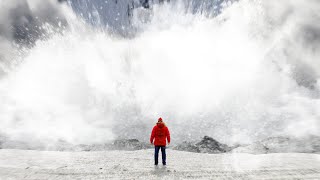
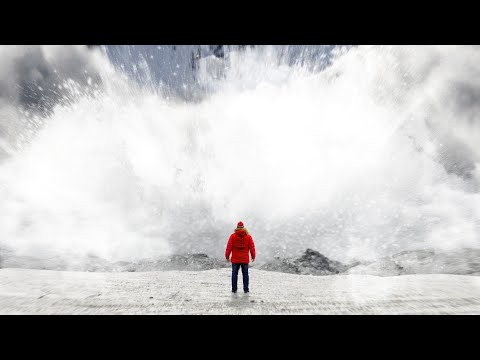
This is a video about avalanches, what they are, what causes them, how destructive ones can be prevented, and what to do if you're ever caught in one.
8 chapitres
- Introduction to Avalanches and Historical ContextOverviewThe video covers what avalanches are, what causes them, how to prevent destructive ones, and what to do if caught in one.Deadliest Events• May 1970: Yunggay and 10 villages destroyed by avalanche triggered by 7.9 magnitude earthquake, killing an estimated 30,000 people • December 1916: Deadliest snow avalanche in Dolomites during World War I killed at least 275 Austrian soldiers in single avalanche • 2,000-10,000 soldiers died over subsequent days as both Italian and Austro-Hungarian forces deliberately triggered avalanches with artilleryModern Danger93% of fatal avalanches in the US are triggered by the weight of the victim or someone in their party.Research SettingThe video features footage from Whistler-Blackcomb, North America's largest ski resort, where avalanche researchers and ski patrollers demonstrate avalanche science and control techniques.
- Personal Avalanche Experience and Basic PhysicsFirst-Hand Account• Bruce Tremper, avalanche expert, was caught in his first avalanche while tightening bolts at ski lift tower base • He ignored warnings and attempted to ski across an avalanche path, triggering the slide • The avalanche knocked him over, dragged him down the mountain, and he grabbed a tree but was still tumbling • He was buried only to his chest in the tail end where the avalanche dies, allowing him to survivePhysical MechanismAn avalanche occurs when crystalline bonds between snow crystals break and friction holding snow on the mountain cannot counteract the pull of gravity.Size ClassificationAvalanches are categorized on a scale of one to five, where size one cannot bury a person and size five involves 100,000 cubic meters of snow traveling many kilometers with massive destruction.Snowpack Structure• Snowpack is layered, built up one storm at a time • Layers are affected by air temperature, humidity, sun, wind, and rain • Example: fresh snow melts on warm sunny days and refreezes overnight creating ice sheets
- Types of Avalanches and Weak LayersLoose Avalanches• Dry loose: snow is not stuck together, fans out after triggered, also called sluff by skiers • Dry loose avalanches usually aren't serious hazards but can drag skiers off cliffs • Wet loose: occurs in spring on south-facing slopes when sun heats snow making it dense, slushy, and runnySlab Avalanches• Top layer of snow becomes stuck together like a cohesive slab • More deadly than loose avalanches as snow releases together in big chunks • Can reach speeds up to 120 kilometers per hourWeak Layer Types• Surface hoar: grows on snow surface on cold clear nights when surface radiates heat and moisture crystallizes, very angular and doesn't stick to itself • Facets: snow crystals that became angular due to strong temperature gradients in snowpack, develop when thermal gradient exceeds one degree per 10 centimetersSlab Structure• Bed surface: lower strong layer made of snow that sticks to itself with rounded crystals • Weak layer: consists of angular or faceted crystals that don't cohere to one another • Overlying slab: upper strong layer that becomes cohesive and releases together
- Factors Triggering Avalanches and Risk AnglesOptimal Slope Angles• Under 25 degrees: gravity not strong enough to pull snow down • 75% of dangerous slab avalanches occur between 34 and 45 degrees • Over 50 degrees: snow cannot accumulate due to slope steepness, small sluffs prevent larger buildupStorm Conditions• Extra weight of snow exerts additional load on snowpack triggering weak layers • Vast majority of avalanches occur during or right after storms • Best skiing conditions are also best conditions for avalanchesWind Effects• Wind transports snow from open to sheltered areas creating wind slabs • Wind pressure compacts snow particles creating dense, cohesive layers • Wind slabs are unstable shortly after formation, especially over weak layersRemote Triggers• Slab avalanches can be triggered remotely from slopes less than 30 degrees • Cracks can propagate far through the snow from initial trigger point • Cornices form when wind blows snow over ridge tops, can weigh tons and trigger massive avalanches when they fall
- Avalanche Prevention in Ski ResortsSafety Strategy• Ski patrols trigger avalanches safely before skiers access slopes • Prevention done often enough so snow doesn't build up too much • Smaller triggered avalanches are less destructive than natural large releasesTriggering Methods• Explosive charges with two-minute fuses placed on slopes likely to produce avalanches • Sometimes charges thrown from helicopters to hard-to-reach slopes • Special trams shuttle charges attached to carabiners across difficult terrainHighway Protection• Trans-Canada highway through Rogers Pass has 3,000 meter peaks on either side • Parks Canada and Canadian Army fire artillery shells at 270 preset targets on nearby mountains • Small avalanches released before they become big and destructive to roadwaySafety StatisticsDeaths from avalanches at resorts are very rare due to diligent work of ski patrollers, with most avalanche deaths occurring in the backcountry.
- Personal Avalanche Experience and Survival FactorsPhysical Impact• Feeling the force of an avalanche on your body cannot be adequately prepared for • Every impact causes people to dig hands and feet in trying to protect themselves and claw downward • When snow stops, if still buried, person cannot move and depends on buddy to dig them outSize Two Avalanche• Big enough to bury a car but not a house • Victim was able to stop on slope before it flattened where snow accumulates and burial would occur • Experience reveals the dangers present in avalanche terrain even on familiar slopesEssential Equipment• Beacon: transceiver transmitting and receiving at 457 kilohertz, sends mode while skiing and search mode to locate buried person • Probe: long collapsible stick that fits in backpack for locating buried victims • Shovel: essential for digging out buried avalanche victimsBurial Consequences• Snow refreezes after avalanche like concrete, making self-rescue almost impossible • 80% survival chance if rescued within 10 minutes, 40% at 15 minutes, 22% at 30 minutes • Time is critical for survival
- Asphyxiation Mechanics and Rescue EquipmentCauses of Death• 25% of avalanche fatalities from trauma hitting trees, rocks, or being pushed off cliffs • 75% from asphyxiation when face is under snowSuffocation Process• Small air pocket initially allows breathing • Body heat and breath melt snow which refreezes forming impermeable bubble • CO2 concentration increases and oxygen decreases in bubble until death from asphyxiationAvalanche Airbag• Skier pulls cord to activate airbag during avalanche • Historically used compressed air, newer versions use battery-powered fans • Increases skier buoyancy making deep burial less likelyAirbag Benefits• Creates larger air pocket as it deflates, providing more rescue time • Decreases chances of death by nearly half • Combines with beacon and probe to maximize survival chances
- Avalanche Statistics and Safety RecommendationsAnnual Deaths• Around 30 people in the US die in avalanches each year • Additional 100 deaths in Europe annually • Most are backcountry skiers, snowboarders, or snowmobilersSelf-Triggered RiskVery likely that victims triggered the avalanche that killed them, emphasizing personal responsibility in avalanche terrain.Essential Precautions• Carry shovel, probe, and beacon in backcountry • Check avalanche forecast before heading out • Make good decisions when entering avalanche terrainBest PreventionThe best way to survive an avalanche is not to be caught in one, emphasizing awareness and risk assessment over rescue equipment.