The Tiny Donut That Proved We Still Don't Understand Magnetism
11 chapitres
- The Paradox of Invisible ForcesThe ProblemStandard physics textbooks claim electrons can only be affected by electric, magnetic, or gravitational forces. However, in the 1950s, two physicists discovered electrons could change behavior without any of these forces present.The ExperimentElectrons could travel through a region with zero electric or magnetic fields, yet flipping a switch would change their behavior despite the absence of all detectable forces.Scientific ImpactThis experiment divided the physics community and forced them to question whether fields were fundamental or if something considered just a mathematical tool might be more core to reality.The QuestionThe discovery raised a fundamental question: Are potentials merely abstract mathematical conveniences, or do they have direct physical significance?
- The Three-Body Problem and Lagrange's SolutionThe Unsolved MysteryFor a hundred years, mathematicians and physicists failed to solve the three-body problem: given three bodies with known positions and velocities, how will they move under each other's gravity? Two bodies were solvable since Newton, but three bodies created chaos.Lagrange's BreakthroughIn the 1770s, Joseph-Louis Lagrange developed a revolutionary approach by assigning scalar values to each point in space around a mass, creating a potential landscape instead of working with complex force vectors.The Mathematical Genius• Adding scalars (potentials) is simpler than adding vectors (forces) • The gravitational field is the negative gradient of the potential • This method allowed physicists to switch between the mathematical convenience of scalars and the physical reality of forcesLegacy and LimitsWhile Lagrange's method didn't solve the three-body problem (proven impossible by Heinrich Bruns in 1887), it revolutionized physics by introducing a new way to approach mechanics through energy rather than forces.
- Potentials as Mathematical Tools in Classical PhysicsExpanding the MethodPhysicists discovered that other forces beyond gravity could have corresponding potentials. Electric potential was defined similarly to gravitational potential by Simeon Denis Poisson in the 1810s.The Magnetic ChallengeMagnetism proved fundamentally different from gravity and electricity because magnetic field lines form loops with no origin or endpoint, requiring an entirely new mathematical approach.Thomson's InnovationIn the 1840s, William Thomson invented the curl function to describe the relationship between a magnetic field and its vector potential, allowing physicists to work with magnetic potentials mathematically.Practical Usefulness• Potentials became standard tools for solving physics problems • They simplified complex calculations compared to using forces directly • Even Thomson viewed potentials as convenient mathematical devices, not physical reality • Physicists concluded potentials were merely abstract tools with no physical significance
- David Bohm and Quantum MechanicsBohm's Journey• In 1942, David Bohm was recruited for the Manhattan Project but deemed a security risk due to brief Communist Party involvement • His dissertation was classified and he couldn't complete it; Oppenheimer had to certify his work • In 1949, he was investigated by the House Un-American Activities Committee and lost his Princeton position • Oppenheimer advised him to leave America; Bohm eventually relocated to the University of BristolUnconventional ThinkingBohm developed radical interpretations of quantum mechanics and theories of consciousness, making him an outsider in the scientific community despite his brilliance.PartnershipYakir Aharonov, Bohm's gifted student, was enthralled by his unconventional approach and chose to follow him to Bristol, where they would make their groundbreaking discovery.The Quantum QuestionAharonov became deeply curious about quantum mechanics interpretation, wondering if potentials might directly influence wave functions rather than being mere mathematical conveniences.
- The Quantum Wave Function and Potential DependenceQuantum BasicsIn quantum mechanics, particles behave as waves governed by the Schrödinger equation. The wave function's modulus squared gives the probability density of finding a particle at a given point in space and time.Potentials in the EquationThe Schrödinger equation solution depends on electric and magnetic potentials, not the fields themselves. This observation suggested potentials might be more fundamental than previously assumed.The Key Insight• You cannot simply replace potentials with fields in the Schrödinger equation without losing information • A potential carries specificity that gets lost when converting to a field • Like an indefinite integral, a potential contains an arbitrary constant that fields don't preserve • Aharonov realized the potential itself, not just the field, influences quantum wave functionsThe ChallengeTo prove this, Aharonov needed an experiment where a particle passed through a region with zero fields but non-zero potential, showing observable effects from the potential alone.
- The Aharonov-Bohm Thought ExperimentExperimental Design• An electron beam is split into two paths that go around opposite sides of a solenoid • The solenoid produces a strong magnetic field inside and negligible field outside • For an ideal infinitely long solenoid, the external field is exactly zero • The beams recombine and create an interference patternWhen OffWith no magnetic field or potential, electrons on both paths experience identical phase changes, producing a standard interference pattern.When OnThe solenoid is turned on. There is still zero magnetic field outside the coil, but a non-zero magnetic vector potential exists in the surrounding space because the curl of the potential can be zero even when the potential itself is not.Expected OutcomeIf potentials directly influence quantum wave functions, the upper and lower electron beams experience different phase changes despite identical zero fields, shifting the interference pattern—proving potentials are physically real.
- Early Experimental Tests and SkepticismMixed ReceptionWhen Aharonov and Bohm published their 1959 paper, many physicists rejected it, and even Niels Bohr found it impossible to accept that particles could be influenced by potentials without forces.Scientific Support• Richard Feynman supported the idea, noting it was obvious from the Schrödinger equation • Victor Weisskopf said his first reaction was 'it's wrong,' his second was 'it's obvious' • Feynman later wondered why he hadn't noticed the effect himself, including himself in the criticismFirst Experimental AttemptRobert Chambers, a colleague at Bristol, conducted the first experiment using a tiny iron whisker about a millionth of a meter thick. The interference pattern did shift, seemingly confirming the effect.Persistent DoubtCritics objected because the whisker's finite size produced stray magnetic fields. They argued the field, not the potential, caused the observed shift, leaving the debate unresolved for decades.
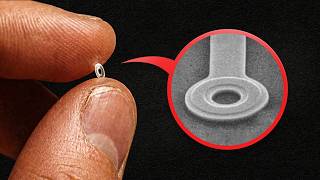
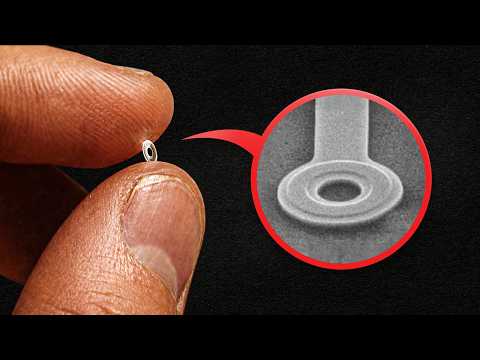
- Tonomura's Definitive ProofThe Donut DesignIn 1986, Akira Tonomura's team created a revolutionary experiment using a tiny donut-shaped magnet. With perfect geometry, all magnetic field is contained within the torus, with zero field outside. They additionally coated the magnet in superconducting niobium to block any leaking fields.New Approach• Instead of turning the field on and off, the magnet remains always on • The vector potential outside the torus differs from that inside • Part of a single electron beam passes around the torus while part passes through it • A biprism deflects the beams to intersect and create interference patternsExperimental ResultsThe interference fringes outside the torus corresponded to peaks that aligned with troughs inside the magnet's center. This matched Aharonov-Bohm's exact prediction and definitively proved the effect was real.Scientific ValidationTonomura's experiment was the final experimental proof that established the reality of the Aharonov-Bohm effect beyond doubt, resolving decades of debate.
- Interpreting Physical RealityCamp One: Physical Potentials• Potentials are not merely mathematical tools; they directly influence physical reality • This was Aharonov and Bohm's original perspective • Some argue potentials are more fundamental than fields because they appear in the Schrödinger equation • Richard Feynman claimed the vector potential A is 'as real as B, realer, whatever that means'Camp Two: Non-Local Fields• Potentials are just mathematical objects; fields are responsible for the effect • Since magnetic field was completely confined within the torus, fields must act non-locally • A field can influence things outside the region where it exists • Many physicists find this difficult to accept as it violates the principle that local causes produce local effectsAharonov's EvolutionAharonov's perspective shifted from camp one to camp two over time. He reinterpreted the effect as non-local effects of magnetic fields rather than physical effects of potentials, believing the local potential representation is misleading.Ongoing DebateThe debate continues today, with physicists divided over whether potentials are physical or fields act non-locally. Both interpretations challenge fundamental assumptions about how the universe works.
- Alternative Interpretations and ExtensionsThe Third OptionSome physicists propose that fields remain local and potentials are mathematical, but electrons explore all possible paths simultaneously through quantum mechanics, getting influenced by fields in regions where they briefly appear.Path Integral Framework• The quantum phase is affected by the electron exploring all possible paths • This can be described using quantum mechanical path integrals • Fields influence the wave function locally as the electron's amplitude extends into regions with fields • This interpretation maintains locality while explaining the Aharonov-Bohm effectGravitational ExtensionIn 2022, Stanford researchers tested a gravitational version of the Aharonov-Bohm effect. They used ultracold rubidium atoms split into two wave packet paths at different heights near a tungsten mass, observing the predicted phase shift.Universal SignificanceThe gravitational Aharonov-Bohm effect, if confirmed, suggests electromagnetic and gravitational potentials can influence reality at fundamental levels even when all fields are exactly zero, fundamentally reshaping physics understanding.
- Conclusion and Scientific HumilityTextbook LimitationsWhile physics textbooks are valuable and beautiful, they don't represent the complete picture. The Aharonov-Bohm effect demonstrates that even well-established understanding can change.The Power of IgnoranceAharonov credits his success partly to being ignorant—not knowing that potentials were universally considered merely mathematical tools freed him to question this assumption and pursue the investigation.Scientific Progress• Surprising discoveries can occur even after 200 years of established theory • Individual outsiders can challenge entire scientific paradigms • Physics remains open to fundamental shifts in understanding • New questions about familiar material lead to deeper comprehensionContinuing MysteryThe Aharonov-Bohm effect revealed that physics still doesn't fully understand magnetism and the nature of potentials, demonstrating that cutting-edge science often involves acknowledging rather than resolving fundamental mysteries.