What happens if you just keep squaring?
12 chapitres
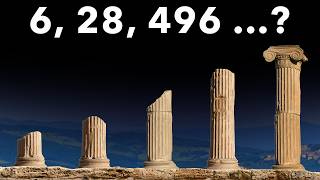
- The Squaring Pattern DiscoveryInitial Pattern• 5 squared equals 25 • 25 squared equals 625 • 625 squared equals 390,625 • Each result ends with the previous numberPattern ExtensionWhen squaring 390,625, the last 5 digits match the input, and this pattern continues indefinitely with increasing digit matches.Mathematical MysteryThe repeating pattern suggests convergence toward a number that is its own square, a number with infinite digits.Introduction to P-adicsNumbers with infinite digits extending left of the decimal point form a special number system called p-adic numbers, which differ fundamentally from ordinary numbers.
- Introduction to 10-adic NumbersSystem Properties• Addition works digit by digit from right to left • Multiplication works because last digit depends only on last digits of operands • Subsequent digits depend only on numbers to their rightFractions as InfinitiesMultiplying a 10-adic number ending in 857142857143 by 7 yields 1, meaning this number equals 1/7 without using division notation.Finding 1/3An infinite string of 6s followed by 7 multiplied by 3 gives 1, so this 10-adic number represents 1/3.Negative NumbersA string of all 9s equals -1 when added to 1; negative numbers are built into the 10-adic structure without needing a minus sign.
- The Problem with Composite BasesZero-Product FailureIn 10-adics, a number can be its own square (satisfy n×(n-1)=0) without being 0 or 1, breaking the fundamental factoring method used in algebra.Root CauseThe problem exists because 10 is composite (5×2), allowing multiple non-zero pairs to multiply to zero in the units place.Example MultiplicationIn 10-adics, 5×4 equals 20, giving 0 in the units place, allowing construction of non-zero numbers that multiply to produce 0.Solution StrategyUsing prime number bases instead of 10 restores the property that only zero times zero equals zero.
- P-adic Numbers and Prime BasesPrime Base System• P-adics use prime bases like 2, 3, 5, or 7 • 3-adic numbers use only digits 0, 1, and 2 • Can be expressed as infinite expansions in powers of the primeRestored PropertiesWith prime bases, the only way for multiple p-adic numbers to multiply to zero is if one of them is entirely zero.Negative OneIn 3-adics, an infinite string of 2s represents -1, verified by adding 1 which causes carries that propagate forever, yielding 0.Mathematical ImportanceProfessional mathematicians use p-adics over 10-adics because they work like ordinary numbers, avoiding the zero-product problem.
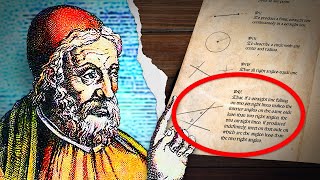
- Fermat's Last Theorem and Historical ContextDiophantine ProblemDiophantus sought integer and fraction solutions to polynomial equations like the Pythagorean theorem x²+y²=z², known as Diophantine equations.Fermat's ClaimIn 1637, Fermat claimed the equation x^n+y^n=z^n has no integer solutions for any n greater than 2, with a proof too long to fit in a margin.Unsolved MysteryFermat's Last Theorem remained unproven for 358 years, requiring new mathematical tools including p-adic numbers to solve.Modern SolutionIn 1995, Andrew Wiles and Richard Taylor proved the theorem using p-adic numbers, techniques that Fermat could not have known.
- Solving Diophantus' Squares ProblemProblem SetupFind three squares where the area of the first equals the side of the second, and the area of the second equals the side of the third, with all three areas summing to a larger square.Equation FormThe problem translates to x²+x⁴+x⁸=y², which has real solutions like x=1 yielding y=√3, but finding rational solutions is far more difficult.Historical ChallengeMathematicians in the late 1800s had no systematic method to find such solutions, working blindly without clear strategy.Hensel's MethodKurt Hensel developed an expansion method using increasing powers of primes, allowing step-by-step solution finding in modular arithmetic.
- Modular Arithmetic and Base ConversionModular SystemNumbers reset to zero after reaching a modulus; clocks demonstrate this with modulus 12, where 14 o'clock becomes 2 o'clock.Base Conversion• Convert 17 to base 3 by repeatedly dividing and finding remainders • Divide 17 by 3: remainder 2 • Divide 17 by 9: remainder 8, subtract previous 2 to get 6 (which is 2×3) • Divide 17 by 27: remainder 17, subtract 8 to get 9 (the 3² digit is 1) • Result: 17 in base 3 is 122Practical ApplicationThis method allows finding successive coefficients of p-adic expansions one at a time by working with increasing moduli.Sequential SolutionsSolving equations mod 3, then mod 9, then mod 27, and beyond reveals coefficients layer by layer in the p-adic number.
- Solving Modulo 3, 9, and 27Modulo 3 AnalysisFor x²+x⁴+x⁸=y² modulo 3, testing all digits (0,1,2) shows only y=0 works for all x values, yielding potential solutions (0,0), (1,0), (2,0).Modulo 9 ExpansionUsing the solution (1,0) from mod 3, solving modulo 9 reveals the next coefficient x₁=1 by finding what value satisfies 3+15x₁≡0.Modulo 27 RefinementContinuing with x₀=1 and x₁=1, solving modulo 27 determines x₂=1, showing all coefficients in the expansion are 1.Pattern EmergenceAs successive moduli (81, 243, etc.) are solved, the pattern confirms all coefficients equal 1, forming a 3-adic number of infinite 1s.
- Geometric Series and P-adic InterpretationInfinite 1s PatternThe solution is 1×3⁰+1×3¹+1×3²+1×3³+..., a geometric series where each term is 3 times the previous term.Series FormulaUsing the geometric series sum formula 1/(1-λ) where λ=3 gives 1/(1-3)=-1/2, suggesting the infinite string of 1s equals -1/2.Verification• Substituting x=-1/2 into the original equation yields x²=1/4, x⁴=1/16, x⁸=1/256 • Converting to common denominator: 64/256 + 16/256 + 1/256 = 81/256 • 81/256 is (9/16)², confirming x=-1/2 and y=9/16 satisfy the equationRational SolutionThe first square has sides 1/2, second has sides 1/4, third has sides 1/16, combining to form a square with sides 9/16.
- P-adic Geometry and DistanceNon-Euclidean StructureP-adic numbers don't exist on a number line; they form a tree-like structure with branching cylinders representing digit possibilities.Visual Representation• 3-adic integers use 3 base cylinders for digits 0, 1, 2 • Each cylinder branches into 3 shorter cylinders above it • From above, the structure resembles a Sierpinski gasketInverted Size ConceptIn p-adics, numbers are close when they agree on many digits; if they differ at the 27-adic place, distance is 1/27, not 27.Reversed MagnitudeCoefficients multiplying higher powers of p make finer adjustments, not larger ones; what we consider 'big' is actually 'small' in p-adic geometry.
- Absolute Values and Mathematical PropertiesAbsolute Value Requirements• Non-negative: absolute value of any number must be ≥0 • Positive definite: absolute value equals 0 only when the number is 0 • Multiplicative: |x×y|=|x|×|y| • Triangle inequality: |x+y|≤|x|+|y|Valid SystemsOnly three absolute value systems satisfy all mathematical requirements on rational numbers: the standard absolute value, p-adic absolute values for each prime p, and the trivial absolute value.P-adic ConvergenceThe geometric series with ratio 3 converges in 3-adics even though 3>1, because convergence is measured using p-adic distance, not Euclidean distance.Equation-Solving AdvantageP-adics are more disconnected than real numbers, creating fewer spurious solutions nearby; this isolation makes finding rational solutions systematic and tractable.
- Applications and Modern MathematicsFermat's Proof Techniques• Wiles' 1995 proof used the prime 3 initially but encountered obstacles • He switched to the prime 5, a technique called the 'three-five trick' • Different primes provide completely independent number systems, each useful for different equationsResearch ApplicationsP-adic numbers have been used by over a dozen recent Fields Medalists and are fundamental tools in number theory, algebraic geometry, and beyond.Historical SignificanceThe discovery of p-adic numbers shows how much remains undiscovered in mathematics, inspiring new connections and discoveries.Philosophical InsightJapanese mathematician Kazuya Kato said: 'Real numbers are like the sun and the p-adics are like the stars; the sun blocks out the stars during the day, but they are just as important.'