The world depends on a collection of strange items. They're not cheap
Part of this video was sponsored by Google Domains.
9 chapitres
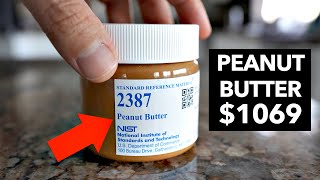
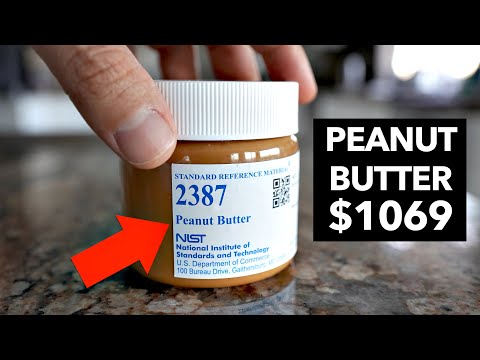
- Inside NIST's Government WarehouseWhat's Inside• US government warehouse selling diverse items including blueberries, steel, cigarettes, limestone, and domestic sludge • Houses samples of marine animals (mussels, dolphins, whales), bird tissue, and human tissue in liquid nitrogen • Contains apple leaves, peach leaves, oyster tissue, bars of zinc metal, and carbon dioxide in nitrogenThe PurposeThe warehouse sells reference materials to help researchers and manufacturers calibrate and validate their equipment and processes.Staff PerspectiveDr. Choquette, who has worked there a long time, acknowledges the science-fiction quality of collecting and storing such diverse materials.Unique OfferingsAmong the strangest items sold is standard reference peanut butter, which is the most expensive jar of peanut butter in the world.
- Standard Reference Peanut Butter ExplainedThe ProductA jar of peanut butter costs approximately one thousand dollars, purchased from a company making generic peanut butter with 2000 jars produced and carefully measured for fat and compound content.What You're Paying For• Not the peanut butter itself, but the knowledge of exactly what is in it • Years of painstaking analysis by NIST scientists to identify all different compounds with specified uncertainties • A certificate guaranteeing the accuracy of the measurementsCritical Safety ApplicationPeanut butter naturally contains carcinogenic aflatoxins produced by fungi on peanuts. Manufacturers use the standard peanut butter to calibrate equipment that detects elevated aflatoxin levels in batches.How It's UsedResearchers and manufacturers calibrate their analytical equipment by running the standard peanut butter and comparing their measured results to the values NIST supplies on the certificate.
- The Food Triangle and Food StandardsWhy Match MattersRegulatory authorities require manufacturers to measure their products against standard reference materials that closely match the target in composition and consistency, otherwise results are not comparable.The Triangle System• NIST uses a food triangle with corners representing 100% carbohydrate, 100% fat, and 100% protein • All foods fall somewhere on this triangle based on their mix of three macro ingredients • Scientists use the closest standard reference material to their product for accurate calibrationSpecialized Standards• Meat Homogenate: mixed meat product thoroughly blended, ground into fine particles, and packed in tin • Typical Diet: average American diet purchased, blended, and freeze-dried into powder representing all nutritional componentsScale of OperationNIST sells approximately 30 different food items, operates a 20,000 square foot warehouse, sells about 30,000 units a year with each order averaging three units, and splits sales equally between domestic and international customers.
- Steel Standards and Charpy Impact TestsHistorical NeedIn the early 1900s, rail car steel quality was problematic because foundries had no way to compare their results to what other chemists should be making, so Congress asked for standard steel samples.First Products• NIST created standard steels and analyzed them for all constituent parts including chrome, iron, hydrogen, and carbon • Distributed these to foundries so they could inter-compare and verify their results against a known source • These were NIST's very first products produced over a century agoThe Charpy TestA pendulum with a weight swings down to break a standard piece of metal with a V-notch, allowing calculation of the energy required to break the steel.Current Importance• Every company in the United States and internationally must check materials against NIST Charpies annually • Used for steels in pipelines, defense industries, tanks, and nuclear waste storage • NIST sells approximately 8,000 Charpies of all different kinds per year
- Limestone Legacy and Century of StandardsHistoric ProductNIST's very first standard sample number one was a gray limestone powder, still in production for 110 years.Continuous SuccessLimestone number one remains so popular that 40 to 50 units are sold annually, making it remarkable that very few companies still sell their original products from over a century ago.Product LongevityThe continued demand for limestone demonstrates the enduring importance and value of standardized reference materials in industrial applications.Business AchievementNIST's ability to maintain production of its first product while developing nearly 1300 total standard reference materials showcases sustained institutional expertise and reliability.
- Validation Standards: Cigarettes and ForensicsCigarette Standards• Developed to test fire safety of mattresses, sheets, and bed clothes after smoking in bed caused fire hazards • Standard cigarettes used with ASTM tests help manufacturers determine how flammable their furniture and bedding is • Smoking material fires are the leading cause of death by fire in US homesSafety ImpactProducts like standard cigarettes combined with regulations and educational campaigns have saved many lives.Forensic BulletsStandard bullet with nano-indentations replicates marks that rifling in gun barrels imparts to real bullets fired through weapons.Forensic ApplicationForensic labs run the standard bullet alongside crime scene bullets to validate their measurement equipment, ensuring accurate groove measurements for matching bullets to suspected weapons.
- Environmental Monitoring and Contamination DetectionHouse Dust Standard• In the early 1990s, NIST collected vacuum bags from hotels and houses, mixed them thoroughly in a big pot to ensure consistency • Measured all chemicals and materials in the mixture to create a standard house dust sampleEnvironmental ValueHouse dust is a good way to track what people and their homes are exposed to from an environmental point of view.Contamination Standards• Several types of lead paint standards • Glacier water from Greenland (limited to one unit per customer per three years due to rarity) • Soil samples from contaminated industrial sites in Bozeman, Montana and New JerseyDomestic SludgeRecord of what has come out of human bodies and down sewers, allowing researchers to examine it for traces of toxins and heavy metals that many people may be exposed to without knowing.
- Emerging Standards: Fecal Matter and Living CellsFecal Standard• Next year NIST will release an actual human poop product • Fecal matter is an incredibly difficult matrix to measure and extract different components from • Material will support measurements of metabolites and be distributed as a vial of powderMicrobiome ResearchHealth is related to your microbiome, with gut flora and stomach contents being hugely important to health, mental attitude, and overall wellbeing.Living Cell Standard• NIST preparing to launch first living standard reference material next year • Hamster ovary cells that can produce monoclonal antibodies • Monoclonal antibodies account for five of the 10 top selling drugs and over 75 billion dollars in annual sales worldwideRapid Response CapabilityWhen monkey pox spread earlier in the year, NIST created a positive control reference of monkey pox DNA in just 30 days to address the lack of clear laboratory tests for diagnosis.
- The Invisible System That Makes the World WorkBehind the ScenesThe warehouse contains many disparate pieces of the world carefully characterized, labeled, and packaged up, representing an invisible system most people never notice.Assurance We Trust• When eating peanut butter on toast, we can be sure it contains what the label says • When blood test results show cholesterol readings, they were calibrated with a standard • When walking into steel-framed buildings, the steel has appropriate structural and mechanical propertiesDedicated WorkersA small army of people works tirelessly behind the scenes to ensure that things are what we think they are.Standards AlignmentThe world works because people diligently check that what is out there aligns with the standards, even our poop.