Clickbait is Unreasonably Effective
13 chapitres
- The Problem With My Old VideoPoor PackagingThe basketball dropped from a dam video had a poorly designed thumbnail and title 'Strange Applications of the Magnus Effect.' Despite 16.3 million views in the first week, almost none came from YouTube because of the bad packaging.External SuccessThe video was embedded on hundreds of news websites and went viral on other platforms, but failed on YouTube itself where it mattered most.Re-upload EffectSomeone else re-uploaded the same video with the title 'Basketball Dropped From Dam' and it received tens of millions of views on YouTube within weeks, demonstrating the power of better packaging.Learning MomentThis experience showed that Derek was used as an example within YouTube of how not to package videos, prompting him to bring in an expert to improve his approach.
- How YouTube's Algorithm ChangedOld SystemTen years ago, subscribers mattered most because most views came from the subscription feed. Videos went viral by getting attention on other platforms like Reddit or Facebook first.New DirectionYouTube realized showing only subscribed content led to fewer clicks, less watch time, and less overall engagement. They needed to make YouTube a destination itself rather than relying on external traffic.Strategic Goals• Decrease the importance of subscribers and make the platform more like Reddit where top engagement rises to top • Get people to come to YouTube and get sucked down the rabbit hole spending hours on the site • Capture the ultimate resource: people's time and attentionConsequenceThis shift necessarily increased the importance of clickbait because click-through rate became critical to algorithmic success.
- Understanding the Clickbait ParadoxDefinition ProblemPeople universally claim to hate clickbait but it's everywhere. The problem is there's no universal definition of what clickbait actually is.Type I ClickbaitContent designed to attract attention and encourage clicks. This is essentially any content that tries to get people to click, which is a normal part of doing your job.Type II ClickbaitSensationalized or misleading headlines that intentionally withhold information to exploit the curiosity gap. Examples include 'Nine out of 10 Americans are completely wrong about this mind blowing fact.'Better Terminology• Type I should be called 'legitbait' - it sounds enticing but is legitimate • Type II should be called 'clicktrap,' 'clicktrick,' 'linktrap' or 'dupechute' • These terms better distinguish between ethical packaging and deceptive practices
- The Space Between Engagement and TruthVisualization ConceptImagine a two-axis spectrum with misleading/sensationalized content on one axis and intentionally withheld information on the other, creating zones of different clickbait types.Extreme Zones• Top right corner: Type II clickbait with high sensationalization and large curiosity gaps • Dead zone: Content so dull and unsensationalized it fails to engage • 'Strange Applications of the Magnus Effect' falls in the dead zone despite good contentSweet SpotType I clickbait occupies the middle ground between dull and deceptive. Each video has hundreds or thousands of possible legitbait titles like 'how does a zero-G plane work' versus 'What happens to fire on a zero-G plane.'Fuzzy BoundariesEveryone's definition of clickbait is different and perception varies by person. What's legitbait for one viewer might be a clicktrap for another, with no clear boundaries between categories.
- Why Clickbait Works and PersistsSimple RealityClickbait works because more enticing thumbnails get more clicks. Despite claims that people won't click or will unsubscribe, the data shows otherwise.Evolution AnalogyLike evolution, whatever succeeds multiplies and traits become amplified. If a long neck helps a giraffe reach leaves, a red arrow helps a YouTuber reach audiences. You can't begrudge one without accepting the other.Two Success Metrics• Watch time - how long viewers stay engaged with the video • Click-through rate - the number of clicks divided by impressions shownRealization About WorkDerek initially thought his job was making great videos with appropriate titles and thumbnails. He now realizes that making the title and thumbnail IS at least half the job of being successful on YouTube.
- YouTube's Impression System and Real-Time OptimizationLimited Real EstateYouTube has limited space to show virtually infinite content. You need not just a good video, but a title and thumbnail that gets clicked especially in competition with other good titles and thumbnails.Game ChangerYouTube introduced real-time metrics showing views, impressions and click-through rate, allowing creators to immediately see the impact of title and thumbnail changes.Arms Race PredictionDerek predicted creators would launch videos with different thumbnail variants and swap them out based on real-time click-through rate data. This is exactly what happened and what all big YouTubers now do.Testing ProcessCreators launch a video, monitor metrics, test variants, and identify which combination gets the highest click-through rate. The results often show a noticeable bump in views when you find a winning combination.
- The Asteroids Case StudyInitial FailureThe 'Asteroids: Earth's Biggest Threat' video was well-received by viewers but performed well below average, ranking ninth out of the previous 10 videos on day one.Testing Attempts• Tried 'Asteroid Impact: What Are Our Chances?' • Tried 'Asteroid Impact: What Could We Do?' • Neither change gained tractionBreakthrough ChangeOn day three, changed the title to 'These Are the Asteroids to Worry About' and immediately the video started doing better, shooting from near-worst to best performing.Final ImpactThe video now has 14 million views. Nothing about the video content changed, just one image and 38 characters in the title, resulting in reaching nearly 10 times more people.
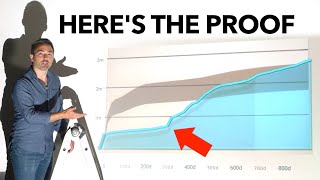
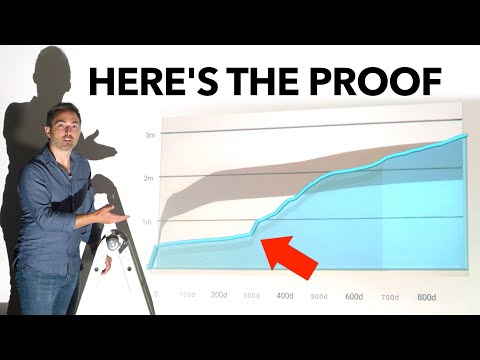
- Real-Time View Curve and Optimization StrategyTypical PatternMost recent videos show an initial spike after release, then a dip, then a second bump after finding a better title and thumbnail.Success IndicatorsDerek watches the real-time view graph for a noticeable bump. Sometimes there's no change, sometimes it gets worse, but when you see a strong positive bump, you know you've found a winner.Universal PracticeAll big YouTubers do this. Even Mr. Beast doesn't know exactly which thumbnail will work best beforehand. He typically makes two or three thumbnails and swaps them out to see which performs better.UnpredictabilityAs Mr. Beast notes, you can't predict whether a thumbnail of hiding in a tree or hiding in a trash can will work better without testing. You have to try both and see which interests people more.
- Educational Purpose and Ethical JustificationTeaching Through ReachUsing excellent type I clickbait over straightforward packaging serves educational goals. A video titled 'The Simplest Math Problem No One Can Solve' reaches more people than 'Collatz Conjecture' because most haven't heard of the concept.Audience Expansion• Straightforward titles only reach people who already know the topic • Better titles convey information to everyone and mean more people can click • Higher click-through rate leads to more impressions from YouTube • Result: teaching new knowledge to vastly larger audiencesProduction QualityVeritasium aims to make the best science films on every topic with travel, experts, props, animations, research, fact-checking, and expert consultants. To make this sustainable and possible, videos need views and lots of them.Philosophical BalanceDerek worries about the irony that a channel promoting truth-seeking has to experiment at the edge of what's truthful. But he frames this as the packaging, not the content itself.
- Scientific Approach to OptimizationMethodDerek realized the problem of finding the best title and thumbnail is a scientific problem: which accurate representation will get the most clicks from a general audience? This can be solved using the scientific method.Team Process• Hired bright people dedicated to this work • Spend significant time brainstorming titles and thumbnails • Test options on Twitter and Patreon before launch • Results have often contradicted expectationsUnexpected Findings• One video performed 10% better when excluding 'surprising' from the title • Two titles that seemed like a toss-up showed strong audience preference for one • More clickable titles often better represent video content than expectedContinuous ImprovementVeritasium titles and thumbnails improved not because Derek became better at it, but because of team collaboration and rigorous testing. Invites audience suggestions for further improvement.
- Examples of Successful Title ChangesCase 1: Neutron VideoOriginal title 'Why the Neutron is the Hero of Nuclear Physics' was weird and meaningless. Changed to 'Why Einstein Thought Nuclear Weapons Impossible' which is clearer and more accurate with significant view increases.Case 2: Magnus EffectChanged from 'Strange Applications of the Magnus Effect' to 'Backspin Basketball Flies Off Dam.' The new title is more accurate and the video now gets approximately 10 million more views than it otherwise would have had.Case 3: Salt Lamps• Original: 'Are Negative Ions Good For You?' - a question nobody asked • Changed to: 'Do Salt Lamps Work?' • Result: One and a half million additional viewsPatternThese examples demonstrate that YouTube has actually made Derek better at what he does by improving clarity and accuracy of titles and thumbnails. It helps figure out what is interesting to audiences and how to encapsulate that in a single image and fewer than 50 characters.
- Challenging Topics and Video QualityMisconception AddressSome worry that focus on titles and thumbnails would prevent picking challenging science topics. However, recent videos prove otherwise with topics like Gödel's incompleteness theorem, general relativity, and Penrose tilings.Challenging Content• Gödel's incompleteness theorem • General relativity • Penrose tilings • The logistic map • Newton's method of calculating Pi • The one way speed of lightSymbiotic RelationshipThere is a symbiotic relationship between views and video quality. More views enable investment in more people, locations, props, equipment and research, making the next video better than the last.Final ResultGood titles and thumbnails make it possible to tackle challenging topics and reach more people who hadn't heard of them before. The ultimate outcome of optimization is better videos.
- KiwiCo SponsorshipProduct OverviewKiwiCo makes hands-on STEAM projects for kids and adults. They have eight subscription lines targeted at different age groups from newborns upward, with all materials included in each crate.Learning ApproachWhile playing and having fun, kids learn about science, technology, engineering, art and math concepts. Each crate includes a magazine with additional information to enhance the learning experience.Personal Appeal• Kids jump at the chance to make projects when Derek pulls out a crate • No need to run to the store - everything comes in the box • Derek and his kids recently built a domino machine together • This is education the way it should be - learning by doingOfferViewers can go to kiwico.com/veritasium50 to get 50% off the first month of any crate.