The Oldest Unsolved Problem in Math
This is a video about the oldest unsolved problem in math that dates back 2000 years.
22 chapitres
- Introduction to Perfect NumbersThe ProblemAn ancient mathematical puzzle dating back 2000 years that some of the brightest mathematicians have failed to solve. The question: Do any odd perfect numbers exist?Why It Matters• Listed among four most pressing open problems in mathematics in 2000 • Could be solved by finding a single number • Has captured imaginations of countless mathematiciansSearch EffortsMathematicians have used computers to check numbers up to 10 to the power of 2,200 with no success so far.Appeal• It's old • It's simple • It's beautiful
- What Are Perfect NumbersDefinitionA perfect number equals the sum of its proper divisors (all divisors except the number itself).Examples• 6 has proper divisors 1, 2, 3 which sum to 6 • 10 has proper divisors 1, 2, 5 which sum to 8 (not perfect) • 28 is the second perfect number • 496 is the third perfect numberRarityBetween 1 and 100, only 6 and 28 are perfect. Up to 10,000, only 496 and 8,128 are perfect.Historical KnowledgeThe ancient Greeks knew only four perfect numbers: 6, 28, 496, and 8,128. These remained the only known perfect numbers for over 1,000 years.
- Patterns in Perfect NumbersDigit Properties• Each next perfect number is one digit longer than the previous • Ending digits alternate between 6 and 8 • All known perfect numbers are evenTriangular SumsPerfect numbers equal the sum of consecutive integers: 6 = 1+2+3, 28 = 1+2+3+4+5+6+7, and so on.Odd Cube Property• 28 = 1³ + 3³ • 496 = 1³ + 3³ + 5³ + 7³ • 8,128 = 1³ + 3³ + 5³ + 7³ + 9³ + ... + 15³Binary PatternIn binary, perfect numbers consist of consecutive 1s followed by consecutive 0s: 6 = 110, 28 = 11100, 496 = 111110000, 8,128 = 1111111000000
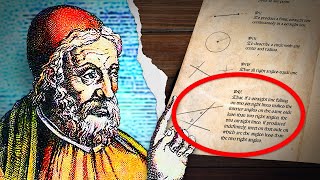
- Euclid's Formula DiscoveryThe FormulaAround 300 BC, Euclid discovered that perfect numbers have the form 2^(P-1) × (2^P - 1) when 2^P - 1 is prime.How It Works• Start with 1 and repeatedly double: 1, 2, 4, 8, 16, 32... • Add consecutive terms: 1+2 = 3 (prime), so 2 × 3 = 6 • 1+2+4 = 7 (prime), so 4 × 7 = 28 • 1+2+4+8+16 = 31 (prime), so 16 × 31 = 496Mathematical InsightUsing algebraic manipulation, the sum of consecutive powers of 2 up to 2^(n-1) equals 2^n - 1, making the pattern clear.LimitationEuclid proved this generates perfect numbers but didn't prove it was the only way, leaving open the possibility of odd perfect numbers.
- Nicomachus's ConjecturesFive Beliefs• The nth perfect number has n digits • All perfect numbers are even • All perfect numbers end in 6 and 8 alternately • Euclid's algorithm produces every even perfect number • There are infinitely many perfect numbersStatusPublished in Introdutio Arithmetica, these conjectures were treated as facts for the next 1,000 years without proof.Early TestsIn the 13th century, Ibn Fallus published a list of 10 perfect numbers; three were incorrect but the others were correct.Disproven• The fifth perfect number has 8 digits, disproving Conjecture 1 • Both the fifth and sixth perfect numbers end in 6, disproving Conjecture 3
- Mersenne's ContributionThe ResearcherFrench polymath Marin Mersenne extensively studied numbers of the form 2^P - 1 in the 17th century.His ListIn 1644, Mersenne published a list claiming 11 values of P correspond to primes. The first seven were correct and matched the first seven perfect numbers.Honest AdmissionFor larger numbers like 2^67 - 1, Mersenne admitted he hadn't checked whether they were prime, saying it would take more time than he had.CollaborationMersenne discussed perfect numbers with contemporaries Pierre de Fermat and René Descartes, advancing understanding of the problem.
- Descartes and Early InsightsDescartes' Claims• Believed no even perfect numbers exist except those of Euclid • Conjectured odd perfect numbers must be the product of a prime and the square of a different numberSignificanceThese would have been the biggest breakthroughs since Euclid 2,000 years earlier, but Descartes couldn't prove either statement.Personal BeliefDescartes believed odd perfect numbers likely exist but admitted the search takes a very long time.ImpactHis insights set the stage for future mathematicians to build upon his conjectures about odd perfect numbers.
- Leonhard Euler's BreakthroughsEarly CareerIn 1729, Christian Goldbach introduced the 20-year-old prodigy Leonhard Euler to the work of Fermat, sparking his passion for number theory.First BreakthroughIn 1732, Euler discovered the eighth perfect number by verifying that 2^31 - 1 is prime, confirming Mersenne's prediction.The Sigma FunctionEuler invented a powerful tool that sums all divisors of a number including the number itself. For perfect numbers, sigma(n) = 2n.Function PowerIf a number is the product of coprime factors, sigma can be split into the product of sigmas of each factor, making complex calculations tractable.
- The Euclid-Euler TheoremThe ProofEuler proved that every even perfect number must have Euclid's form 2^(P-1) × (2^P - 1), solving a 1,600-year-old problem.Conjecture VerifiedThis result proved Nicomachus's fourth conjecture correct, that Euclid's algorithm produces every even perfect number.Historical ImpactMathematician William Dunham called it the greatest mathematical collaboration in history, bridging Euclid and Euler across millennia.FoundationThe theorem established that all known perfect numbers follow one pattern, making the search for odd perfect numbers the remaining central question.
- Euler's Constraint on Odd Perfect NumbersThe ChallengeFor an odd perfect number, sigma(n) = 2n, where n is odd. Euler used his sigma function to analyze what this means.Parity Analysis• A prime to an odd power gives even sigma • A prime to an even power gives odd sigma • Since 2n is even and n is odd, exactly one sigma factor must be evenKey ConstraintAny odd perfect number must have exactly one prime factor to an odd power and all others to even powers, confirming Descartes' prediction.Admission of DifficultyDespite this insight, Euler couldn't prove whether odd perfect numbers exist, writing that it is a 'most difficult question'.
- Stagnation and Barlow's PredictionProgress HaltFor 150 years after Euler, very little progress was made on perfect numbers and no new ones were discovered.Barlow's StatementEnglish mathematician Peter Barlow claimed Euler's eighth perfect number would be the last ever discovered, as they are merely curious without usefulness.Incorrect PredictionBarlow was wrong. Mathematicians continued to pursue perfect numbers despite the century-long hiatus in discoveries.Renewed FocusResearchers began systematically testing Mersenne's list of proposed primes to find new Mersenne primes and their corresponding perfect numbers.
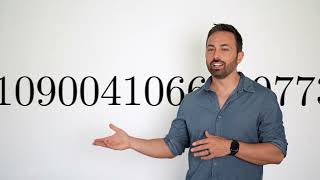
- Cole's Factorization AchievementThe ProblemIn 1876, Édouard Lucas proved that 2^67 - 1 was not prime but couldn't find its factors.Cole's Discovery27 years later, Frank Nelson Cole silently wrote 2^67 - 1 = 147,573,952,589,676,412,927 on one side of a blackboard.The ProofCole then multiplied 193,707,721 × 761,838,257,287 on the other side, getting the same answer. The audience erupted in applause.Effort RequiredCole later admitted it took three years of work on Sundays to solve this. Modern computers solve it in less than a second.
- The Computer Revolution in Prime HuntingPre-Computer EraFrom 500 BC until 1952, only 12 Mersenne primes and corresponding perfect numbers were discovered over 2,500 years.First Computer SuccessIn 1952, Raphael Robinson wrote a program to test Mersenne numbers on the SWAC, the fastest computer at the time.Rapid DiscoveriesWithin 10 months, Robinson found five new Mersenne primes and corresponding perfect numbers, dramatically accelerating the pace of discovery.Scale Growth• By end of 1952: largest was 2^2,281 - 1 with 687 digits • By end of 1994: largest was 2^859,433 - 1 with 258,716 digits
- GIMPS and Distributed ComputingProject LaunchIn 1996, computer scientist George Woltman launched GIMPS (Great Internet Mersenne Prime Search) to distribute the computational burden across many computers.How It WorksGIMPS allows anyone to volunteer their computer power to help search for Mersenne primes through distributed computing.Success RecordThe project has discovered 17 new Mersenne primes, 15 of which were the largest known primes at their time of discovery.Incentives• Discoverers are credited as the prime's discoverer • Added to a list including history's greatest mathematicians • A $250,000 prize offered for the first billion-digit prime
- Record Discoveries and Physical Artifacts50th Mersenne PrimeIn 2017, church deacon John Pace using GIMPS discovered 2^77,232,917 - 1, over 23 million digits long, the largest known prime at the time.Publication MilestoneJapanese publisher Nanairosha published the entire number in a 719-page book titled 'The Largest Prime Number of 2017'.Cultural ImpactThe book became a bestseller on Amazon and sold out in four days, demonstrating public fascination with mathematical achievement.51st DiscoveryA year later, the 51st Mersenne Prime was found: 2^82,589,933 - 1 with 24,862,048 digits, still the largest known prime.
- Infinitude Question and HeuristicsFinite or InfiniteWith only 51 Mersenne primes found, some suspect there might be only finitely many, contradicting Nicomachus's fifth conjecture.Lenstra-Pomerance ConjectureThis conjecture predicts how often Mersenne primes should appear based on the size of P and has performed remarkably well with actual data.PredictionThe conjecture predicts infinitely many Mersenne primes and therefore infinitely many even perfect numbers, though this remains unproven.Computational ChallengesMersenne primes are so large and rare that finding them requires enormous time and computer resources, making further progress slow.
- The Odd Perfect Number SearchThe Core QuestionDo any odd perfect numbers exist? This remains the oldest unsolved problem in mathematics.Direct Search AttemptsResearchers in 1991 proved that if odd perfect numbers exist, they must be larger than 10^300, making brute-force search impractical.Improving Bounds• By 2012, Pascal Ochem and Michael Rao raised the lower bound to 10^1,500 • Recent progress pushed it to 10^2,200 • Unlikely that computers will find one soonSmarter ApproachesRather than checking every large odd number, mathematicians seek to prove odd perfect numbers cannot exist through logical constraints.
- The Web of Conditions StrategyThe MethodMathematicians have been finding more and more conditions that any odd perfect number must satisfy, creating a 'web of conditions'.Current Constraints• Must have at least 10 prime factors • Must have thousands of non-distinct prime factors • Must be larger than 10^3,000 • Must satisfy many other propertiesThe GoalThe hope is that eventually there will be so many constraints that no number can satisfy all of them simultaneously, proving they don't exist.Progress So FarSince Euler, mathematicians have continued adding new conditions, but so far this hasn't been enough to prove non-existence.
- Spoofs and Alternative ApproachesWhat Are SpoofsSpoofs are numbers very close to being odd perfect numbers, sharing most properties but failing by one factor. Example: Descartes found 198,585,576,189.Descartes' Near-MissThe number 3² × 7² × 11² × 13² × 22021 would be perfect if 22021 were prime, but it equals 19² × 61, so it fails.Research StrategyBy finding properties that all spoofs must have but odd perfect numbers cannot, mathematicians hope to prove odd perfect numbers don't exist.Recent WorkIn 2022, Pace Nielsen and a team at BYU found 21 spoofs and discovered new spoof properties, but haven't yet ruled out odd perfect numbers.
- Expert Opinions and Heuristic ArgumentsBelief in Non-ExistenceSome experts believe odd perfect numbers simply don't exist, based on mathematical intuition rather than proof.Heuristic EvidenceCarl Pomerance's heuristic argument predicts between 10^2,200 and infinity, there are at most 10^(-540) odd perfect numbers of the form pm².Weak ArgumentThe same heuristic unexpectedly predicts no large even perfect numbers either, yet infinitely many are expected to exist, undermining confidence in the method.Consensus GapExperts acknowledge the heuristic can be strengthened with additional considerations, but remain uncertain whether to trust it for odd perfect numbers.
- Mathematics and Real-World ImpactNo Direct ApplicationsThe problem of odd perfect numbers has no known direct applications to real-world problems, unlike applied mathematics.Historical PatternNumber theory had no applications for over 2,000 years while mathematicians built foundational knowledge purely from curiosity.Unexpected UtilityIn the 20th century, number theory became the foundation of modern cryptography, protecting everything from text messages to government secrets.General PrincipleEinstein's general relativity was built on non-Euclidean geometries developed as intellectual curiosities without foreseeable application, showing curiosity-driven math creates breakthroughs.
- Encouragement for New ResearchersCurrent Research ActivityAbout 10-15 people currently have research papers in the area of perfect numbers and related problems.Open OpportunityHigh school students passionate about mathematics can work on this problem and make genuine progress discovering new things.Historical Precedent• Hundreds of people have studied this problem for thousands of years • That doesn't prevent newcomers from contributing • Each person can discover something newPhilosophical NoteDoing mathematics is the only way to know what the outcome will be. The problem might be a dead end or remarkably helpful, but only trying reveals which.