

Turbulent Flow is MORE Awesome Than Laminar Flow
13 chapitres
- Introduction to Flow TypesThe DebateHost argues that turbulent flow is more awesome than laminar flow, challenging Destin's well-known preference for laminar flow shown in decorative displays.Flow Characteristics• Laminar flow: particles move parallel to each other in organized layers • Turbulent flow: chaotic and unpredictableThe ChallengeNo universally agreed-upon definition of turbulent flow exists, so the video will build a checklist of characteristics to identify it.Why It MattersUnderstanding turbulence requires recognizing its defining features rather than relying on a formal definition.
- Characteristic 1: Unpredictability and ChaosCore PropertyTurbulent flow is messy and unpredictable, meaning it is sensitively dependent on initial conditions.Practical ImpactSmall changes in the fluid lead to completely different final states, making precise predictions impossible.Scientific ApproachOnly statistical descriptions work for turbulent flow; exact predictions cannot be made.The Math ProblemThe Navier-Stokes equations govern fluid flow including turbulence, but are notoriously difficult to solve. A million-dollar prize exists for significant progress in understanding these equations.
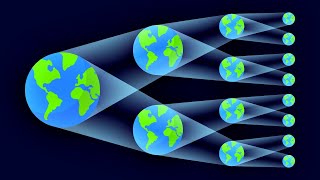
- Characteristic 2: Eddies and Multi-Scale StructuresWhat Are EddiesTurbulent flow consists of many interacting swirls of fluid also called eddies or vortices spanning a huge range of sizes.Size Range Examples• Room air: micrometer scale to meters in diameter • Solar surface: convection cells roughly the size of Texas • Jupiter: Great Red Spot larger than Earth • Interstellar dust: structures visible from orbiting spacecraftCosmic ScaleTurbulence appears everywhere from dust between stars to planetary atmospheres, making it a universal phenomenon.Laminar LimitationIn contrast, laminar flow must be small and cannot exhibit structures across such vast ranges of scales.
- Characteristic 3: Diffusiveness and MixingHistorical DiscoveryIn 1883, Osborne Reynolds passed water through a glass pipe at different flow rates using dye to visualize the flow patterns.Reynolds Observations• Low flow rates: dye remained in steady stream (laminar flow) • Increased flow: dye oscillated back and forth • Critical point: dye completely diffused throughout pipe (turbulent flow)Mixing PropertyTurbulent flow is diffusive, spreading dye, heat, and momentum throughout the fluid rather than keeping them localized.Transition FactorsTurbulence occurs more readily in wider pipes and less readily with viscous fluids like honey.
- The Reynolds Number and Flow TransitionThe FormulaReynolds number equals fluid velocity times characteristic length divided by kinematic viscosity, a dimensionless quantity predicting flow behavior.Flow Prediction• High Reynolds numbers result in turbulent flow • Low Reynolds numbers result in laminar flow • Laminar flow only occurs at low speeds, small sizes, or with viscous fluidsEveryday ObservationSmoke rising from a candle transitions from laminar to turbulent as hot gases accelerate and Reynolds number increases.Real World RealityMost fluid flow in everyday life is turbulent, making it the rule rather than the exception.
- Turbulence in Biology and WeatherBiological Examples• Air flowing in and out of lungs is turbulent • Blood pumping through the aorta is turbulentAtmospheric RoleThe atmosphere near Earth's surface is turbulent, as is airflow in and around cumulus and cumulonimbus clouds.Weather FormationModeling shows turbulent flow plays an essential role in raindrops formation.Critical ImpactTurbulence literally makes it rain, demonstrating its fundamental importance to Earth's weather systems.
- Characteristic 4: Energy DissipationHow It WorksTurbulent flow takes energy from large eddies and transfers it to smaller eddies, which eventually dissipate the energy as heat.Energy Transfer Cascade• Large eddies receive energy • Energy transfers to progressively smaller eddies • Smallest scale eddies dissipate energy as fluid heatEnergy RequirementMaintaining turbulence requires a constant energy source to keep generating large eddies.Practical ExampleTurbulence around moving objects like planes, cars, and boats demonstrates how motion continuously supplies energy to turbulent flows.
- Boundary Layers and Skin FrictionLayer StructureWhen fluid flows over a surface, molecules stick to it with zero velocity, creating a boundary layer where velocity gradually increases from zero to free stream velocity.Laminar vs Turbulent• Laminar boundary layer: smooth velocity transition • Turbulent boundary layer: fluid swirls and mixes, bringing faster-flowing fluid closer to surfaceDrag EffectsTurbulent boundary layers result in significantly more skin friction and drag than laminar ones.Surface ImpactDirty or rough surfaces can trigger boundary layer transition to turbulence, increasing drag and reducing fuel efficiency in vehicles and aircraft.
- Turbulence and Aircraft DesignThe ParadoxDespite smooth airplane designs minimizing drag, aircraft deliberately add ridges called vortex generators to induce turbulence on wings.The Problem SolvedAt low speeds or high angles of attack, airflow separates from the wing, leading to stall and loss of lift.The SolutionVortex generators create turbulence that mixes faster-flowing air down to the surface, energizing the flow and maintaining attachment.Flight BenefitAttached airflow allows aircraft to maintain lift, climb at higher angles of attack, and fly efficiently.
- Golf Ball Dimples and Pressure DragHistorical DiscoveryScottish golfers found that worn, dimpled golf balls flew farther than smooth ones, though aerodynamics was not yet understood.Two Types of Drag• Skin friction drag from the boundary layer • Pressure drag from flow separation and low-pressure wakeDimple EffectDimples force the boundary layer to become turbulent, allowing it to travel further around the ball before separating and reducing the wake.Performance GainReducing pressure drag more than increases skin friction drag results in nearly a factor-of-two reduction in drag coefficient, making golf balls travel much farther.
- Vortex Streets and Energy HarvestingPattern FormationWhen water flows around a cylinder, vortices are shed alternately from each side in a regular pattern called periodic vortex shedding.Von Karman Vortex StreetThe downstream pattern of alternating vortices is called a von Karman vortex street, visible in satellite images as cloud patterns around islands.Predictability NoteWhile following a regular pattern, vortex shedding is part of the transition to turbulence rather than strictly turbulent flow.Biological ApplicationFish in turbulent water can swim upstream by taking advantage of vortex structures, suggesting animals have adapted to harness turbulent energy.
- Conclusion: Turbulence EverywhereUbiquityTurbulence exists everywhere from the smallest scales to the largest structures in the universe, inside and around us.Practical Uses• Flying airplanes efficiently • Forming raindrops • Making golf balls travel farther • Helping fish swim upstreamLaminar LimitationsLaminar flow is small, superficial, and toy-like, with its most notable use being decorative fountains.Final AssessmentWhile Destin concedes turbulent flow is awesome, the host prefers turbulence for its richness and unpredictability over laminar flow's superficial appeal.
- Sponsor: Flushable Wipes ExperimentThe ProblemFlushed baby wipes and flushable wipes clog sewers: 60 million baby wipes are purchased yearly in the US, with 7 million flushed and 38% of NYC sewer contents being baby wipes.The SolutionCottonelle flushable wipes break down immediately after flushing, unlike regular baby wipes and paper towels that remain intact.The TestAfter 30 minutes in water, Cottonelle flushable wipes disintegrated under the weight of a penny roll, while baby wipes and paper towels remained strong.Key DifferenceFlushable wipes make up only 2% of NYC sewer contents compared to 38% for baby wipes, demonstrating the importance of products designed to break down.