Pushing The Limits Of Extreme Breath-Holding
15 chapitres
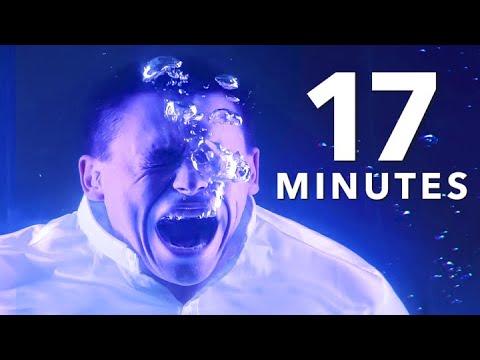
- Introduction and Challenge SetupThe ChallengeBrandon Birchak, a world expert in breath work, will hold his breath for the entire video while the camera continuously records him in a tank.Warning and ContextViewers are warned not to attempt this at home as Brandon is a professional. Derek will document how breath-holding works and learn techniques to extend his own breath-holding time.Personal BackgroundDerek failed his first swimming level because he refused to put his head underwater, making this challenge particularly daunting for him.Video StructureA continuous shot of Brandon holding his breath will run on the right side of the video throughout the entire presentation.
- The Biology of Breathing and OxygenCellular RequirementsAll human cells need oxygen to survive. Oxygen reacts with glucose to produce ATP, the molecule that delivers energy where needed in cells.Automatic Control System• Breathing happens without conscious thought under the autonomic nervous system • At rest, humans breathe about 12 times per minute • Breathing rate automatically increases during exerciseChemical SensorsChemoreceptors in the carotid arteries and brainstem detect CO2 levels. Increasing CO2 makes blood more acidic, which is the main feedback mechanism that regulates breathing.Oxygen DetectionThe only known chemoreceptors for low blood oxygen are in the carotid arteries, and these play a smaller role in breathing regulation compared to CO2 sensors.
- The Hyperventilation TrapThe ProblemHyperventilating before going underwater expels a lot of CO2, making the blood more alkaline, which is a very bad idea for breath-holding.False Oxygen BoostHyperventilation does not actually increase the amount of oxygen in the blood, which is limited by oxygen concentration in the air and the number of red blood cells.Dangerous ConsequenceWith alkaline blood, more CO2 must be produced before chemoreceptors signal the need to breathe, meaning more oxygen is consumed.Blackout RiskThe brain can run out of oxygen and lose consciousness underwater before the body even gets the urge to breathe, potentially resulting in drowning.
- Optimizing Breath-Holding: The Two-Sided EquationFirst Side: Supply• Maximize the amount of oxygen in your body before starting • Minimize CO2 levels before the holdSecond Side: ConsumptionReduce the rate at which oxygen is used up during the breath hold.BOLT ScoreBOLT stands for Body Oxygen Level Test. It measures the number of seconds you can hold your breath before feeling the first urge to breathe after a normal breath.Individual Variation• Some people are naturally better at holding their breath • Lung capacity ranges from 4-6 liters for most people, but some people have 10-liter capacity • Larger lungs hold more air and oxygen
- Physical Training and Lung ExpansionTesting BaselineDerek achieved a 40-second BOLT score at the beginning of training with Brandon.Stretching BenefitsStretching can help expand lung capacity. Specific stretching techniques include 90-degree chest stretches and exercises at half lung volume.Ideal Body TypeThe ideal physique for breath-holding is someone tall and skinny with plenty of lung capacity but not too much tissue to consume oxygen.Lung Packing TechniqueAfter taking a full deep breath, you continue to take little sips of air, packing it in on top. Brandon demonstrates packing about 20 additional packs of air.
- Reducing Oxygen Consumption Through RelaxationMuscle Relaxation• Since muscles use oxygen to contract, being relaxed is very important • A full body muscle check ensures nothing is engaged during the breath holdActivity Trade-offBrandon sometimes does active performances during breath-holds, but moving around uses oxygen faster, reducing the total duration he can hold.Brain Energy UseMental and neuronal activity uses oxygen, so the goal is to preserve as much as possible. When the body is not moving, the brain uses 80% of the body's oxygen consumption.Mental Techniques• Use a mantra to keep cycling thoughts and avoid random thinking • Give yourself something short and memorable to repeat • This can add 20-30 extra seconds toward the end of the breath hold
- The Mammalian Dive ReflexEvolutionary AdaptationAll mammals have a physiological adaptation called the mammalian dive reflex that helps us survive when submerged in water.Trigger and Mechanism• The trigeminal nerve in the face detects coolness of water • This triggers a series of survival responses in the bodyPhysical Responses• The heart beats slower, decreasing the rate blood and oxygen are circulated • Blood vessels in extremities constrict, confining blood to vital organs and brain • This ensures enough oxygen reaches the brain to stay conscious • Hands may turn pale during extended breath holds due to lack of blood flowBlood Cell ReleaseThe spleen releases extra pre-oxygenated red blood cells into the bloodstream, increasing the available supply of oxygen.
- Mental Strategies and Coping TechniquesMindfulness Practice• Use an alphabet exercise where you think of gratitude for each letter • The more you practice, the better you become at generating compassion and gratitude • This creates a very relaxing mental stateAdvanced Mental StateDuring very long breath holds, Brandon describes not thinking about anything, feeling on cloud nine, and experiencing a psychedelic-like sensation between 5-15 minutes.Fighting the UrgeThe urge to breathe is your body lying to you. You do not actually need to breathe when the urge first appears; you have plenty more time.Safety PerspectiveUnderstanding that you have about 4-5 minutes after the urge to breathe before any danger helps you stay relaxed and continue the hold.
- Derek's Training ProgressInitial Attempts• Derek achieved 1 minute in first attempt • 1:30 in second attempt • 1:45-1:50 in third attemptBreathing TechniqueBrandon recommended breathing at a set rhythm: 5 seconds in through the nose, 5 seconds out through the stomach, without engaging any muscles.Mental Distraction Method• Derek used alphabet animals as a distraction technique instead of gratitudes • He also sang nursery rhymes from his children • Both methods helped gently distract the mind without being too cognitively demandingFinal AchievementDerek achieved 2 minutes and 36 seconds by the end of training, significantly surpassing his initial 40-second baseline.
- Physiological Verification and Mammalian ResponseHeart Rate Drop• Derek's average heart rate was 72 beats per minute • During the breath hold, it dropped to 48 beats per minute • Derek noted this is lower than his sleeping heart ratePsychological ChallengeDerek emphasized that the psychological aspect is the hardest part. The challenge is learning to distract and calm your mind when experiencing something unusual and uncomfortable.Expert Guidance ValueHaving a knowledgeable and experienced guide like Brandon made a significant difference in successfully extending breath-hold duration.Personal MilestoneDerek reflected that he likely has never held his breath for 2.5 minutes in his entire life before this training session.
- Advanced Techniques: Altitude and Pure OxygenAltitude Training• Spending time at high altitude or in low oxygen chambers triggers the body to create more red blood cells • This increases oxygen carrying capacity • The chamber in the video was set to simulate 5,000 meters altitudePure Oxygen PreparationBreathing pure oxygen beforehand can dramatically extend breath-hold duration beyond regular air limits.Record Achievements• Brandon's record for non-oxygenated breath hold is 10 minutes • With pure oxygen, Brandon has held his breath for 23 minutes • Branko Petrovic holds the record for regular air at 11 minutes 54 seconds • Budimir Sobat holds the pure oxygen record at 24 minutes 37 secondsSafety WarningBreathing pure oxygen is dangerous if you don't know what you're doing, especially for free divers. Oxygen toxicity risk increases significantly at depths beyond 5-6 meters.
- Brandon's Record Attempt with Pure OxygenPreparation ProcessBrandon went through a lengthy breathe-up process involving multiple breathing stages, with the final part involving breathing pure oxygen and packing in the last few gulps.Extended DurationEven with pure oxygen and optimal techniques, remaining submerged for an extended time isn't easy. Brandon held his breath for 17 minutes during this video attempt.Time Progression• First few minutes: focused on retaining heavy lung pack and not losing air through the epiglottis • 5-15 minutes: super relaxed with sense of falling and euphoria • After 15 minutes: CO2 encroaches and requires fighting breathing mechanismsCO2 Effects• CO2 has a slight narcotic effect • High CO2 causes loss of sense of time • The urge to breathe increases dramatically, then suddenly plummets dangerously
- Underwater Performance and Artistic IntegrationPioneering AchievementWith his wife, Brandon has pioneered the first active underwater performance that lasts 10 minutes, combining choreography with breath-holding.Unique Challenges• Choreographing and directing underwater is different from normal work • Communication is limited by the underwater environment • Setting choreography to music while the performer is underwater adds complexity • Coordinating with aerial dance above water while managing underwater performance belowCreative Risk-TakingThis project is unprecedented, so they're literally writing the book as they go. They have to take risks to make something this extraordinary work.Pushing BoundariesThe performance dances on the line between what's possible and what's safe, continuously testing how far they can push the human body and artistic vision.
- Physical Sensations and CO2 NarcosisEarly Urge SensationThe urge to breathe starts as a light sensation in the chest or lower diaphragm area.Escalating Symptoms• As time progresses, convulsions develop • The urge to breathe keeps increasing • CO2 has narcotic effects that cloud judgmentDangerous ConfusionHigh CO2 causes you to lose sense of time completely. You have no idea how fast time is passing. The urge to breathe suddenly plummets, creating a false sense of being fine when your body is actually in danger.Critical Decision PointWhen the urge to breathe suddenly drops due to CO2 narcosis, you must pull the plug and breathe immediately, as this is when the body is most at risk despite feeling fine.
- Extended Hold Mental ExperienceEarly Phase Focus• First few minutes involve retaining the heavy lung pack • Preventing the epiglottis from opening or losing air • Keeping all other muscles calm while engaging only the necessary musclesMiddle Phase State• Between 5 and 15 minutes: super relaxed and euphoric • Sense of falling while fully conscious • A meditative, transcendent mental stateLate Phase Battle• After 15 minutes: CO2 encroaches significantly • Must focus intensely on fighting breathing mechanisms • Active battles with diaphragm, intercostals, and epiglottis flutteringAcidic Blood SensationBrandon can physically feel his blood becoming acidic. The sensation is exactly like the urge to breathe. With practice, you get used to this extreme sensation.