
Testing if 60 minutes of silence drives you crazy
5 chapitres
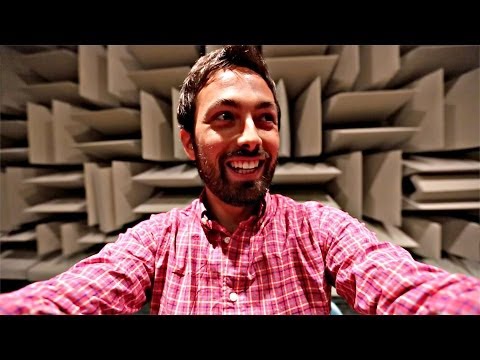
- Introduction to the Anechoic ChamberThe VenueThe quietest place on Earth is an anechoic chamber at BYU. The room uses foam wedges on walls and floors, plus a spring floor, to absorb sound across all frequencies.How It Works• Low frequency sound bounces repeatedly until lost in the wall • High frequencies get absorbed directly into the foam • The combination creates near-total sound absorptionThe ChallengeReports claim the record for staying in the chamber is 45 minutes. People reportedly experience claustrophobia, dizziness, nausea, and even hallucinations.The ExperimentThe host decides to test the 45-minute limit by staying in the chamber for as long as possible with lights off.
- Understanding the DiscomfortPsychological ResponsePeople feel claustrophobic and experience pressure because they're used to room reverb that signals space. Without it, the brain interprets the environment as tiny and enclosed.Anxiety Mechanism• People are accustomed to ambient sounds in normal environments • The absence of these familiar sounds triggers panic • The brain may generate hallucinations trying to recreate expected auditory inputReported SymptomsDocumented effects include dizziness, disorientation, nausea, and hallucinations. One violinist reportedly banged on the door within seconds to escape.Internal Sounds• Clothing rustles become audible with minimal movement • Throat and mouth fluids produce noticeable sounds • Blood flow through the brain becomes detectable • Some people hear their heartbeat from their chest
- Inside the Chamber: Initial MinutesFirst ImpressionsThe environment is the quietest place the host has ever experienced. It feels relaxing rather than disturbing initially.Early Sensations• A low-pitched hum is barely perceptible • Awareness of heartbeat increases noticeably • The pulse feels like it radiates through the chest toward the head like a wave • A hissing sound appears in the ears, attributed to hearing lossAmplified AwarenessThe brain recalibrates sensitivity. Tiny sounds—like a quiet burp—become surprisingly audible. It's as if the brain has adjusted its volume threshold.Physical SensationsThe heartbeat feels stronger with each pulse. The body seems to vibrate with the heartbeat, similar to a device with a motor inside.
- Extended Duration and ExitTime EstimateApproximately 46 minutes into the chamber, the host feels fine and estimates ability to stay much longer—possibly five hours.Comfort LevelThe host did not fall asleep and had a good experience. The space feels like a peaceful environment suitable for work or meditation.Exit ObservationThe doors are quiet when exiting. The transition back to the outside world is smooth and uneventful.Personal AssessmentThe host doesn't understand how anyone could go crazy in the chamber. Some people may find it unnerving due to sensitivity to silence, darkness, or confined spaces.
- Reflection and FindingsInternal Sounds• It wasn't pure silence but rather filled with subtle noises • Sounds included clothing rustles, beard rubbing, and swallowing • Work was required to maintain the feeling of silenceNotable Experiences• Heightened awareness of heartbeat • Strong sensation of blood pushing through the body • Feeling of the heart shaking the body • No actual hallucinations or unusual mental effectsMyth EvaluationThe claim that staying in the anechoic chamber for longer than 45 minutes is impossible appears to be false. The host successfully remained for about an hour without negative effects.ConclusionExtended silence and sensory deprivation are tolerable for most people. The myth of inevitable psychological breakdown is debunked.