
The Man Who Accidentally Discovered Antimatter
15 chapitres
- The Mysterious 1928 LectureThe PresentationA young physicist presented his work in Germany with an unusual, detached style that resembled a technical recitation without any sign of enjoyment.Physicist Reactions• Werner Heisenberg called the theory 'The saddest chapter in modern physics' • Heisenberg wrote to Niels Bohr expressing despair about the situation • Wolfgang Pauli allegedly abandoned quantum physics and started writing a utopian novelThe ProblemThe young man's work revealed a troubling particle: one with negative energy, unlike anything previously known.The ChallengeThe work addressed unifying Einstein's relativity with quantum mechanics, a problem physicists are still tackling today.
- Einstein's Relativity and EnergyRelativity FoundationEinstein's special theory of relativity is based on the principle that for anyone moving at constant speed, the laws of physics should be the same, including the speed of light measurement at 300 million meters per second.Space-Time LinkSpace and time are not separate dimensions but are linked in a four-dimensional fabric called spacetime, with the speed of light remaining constant in all reference frames.Mass-Energy DiscoveryWhen an object loses energy by emitting photons, its mass decreases proportionally, leading to the famous equation E=mc².Energy-Momentum RelationshipA particle's total energy comes from its momentum and rest mass, creating a curve where the rest mass energy is the lowest possible value—but mathematically, negative energy solutions also exist.
- Classical Physics and the Negative Energy ProblemThe Mathematical IssueWhen taking the square root of the relativistic energy equation, a plus/minus sign appears, yielding two curves: one for positive energies and one for negative energies.Classical SolutionIn classical physics, the solution is simple: ignore the negative energy solutions as they cannot physically represent anything real.Quantum Discoveries• Physicists observed strange phenomena in atomic physics overthrowing classical assumptions • Energy levels of subatomic particles like electrons were discrete, not continuous • Electrons behaved as both particles and waves, creating interference patterns like lightNew Field EmergingThese observations led to the discovery of quantum mechanics, a radically new field of physics unlike anything in Newton or Maxwell's work.
- Schrödinger's Wave EquationThe EquationErwin Schrödinger formalized quantum mechanics in 1926 with his wave equation, which describes how quantum mechanical systems evolve over time.Wave Function MeaningThe wave function psi does not describe a particle with precise position and momentum, but rather the modulus squared gives the probability of finding the particle at a specific location at a specific time.Derivation Process• Start with total energy for a free particle, which is kinetic energy (1/2 mv²) • Rewrite in terms of momentum (p²/2m) • Introduce the wave function psi and quantum operators to extract particle propertiesLimitationsThe equation fails for heavy elements at relativistic speeds. Gold should be silver-gray according to Schrödinger but is gold-colored, and mercury should be solid at room temperature but is liquid.
- The Need for Relativistic Quantum MechanicsThe Root CauseHeavy elements have high numbers of protons that attract orbiting electrons more strongly, causing them to whiz around at speeds approaching the speed of light.Schrödinger's BreakdownThe Schrödinger equation is not consistent with the theory of relativity and is technically incorrect for particles moving at relativistic speeds close to the speed of light.The Solution AttemptPhysicist Oskar Klein in 1926 substituted the relativistic energy-momentum relation into the quantum operator framework, creating what became known as the Klein-Gordon equation.Collaborative DiscoveryWalter Gordon and Vladimir Fock independently arrived at the same equation that year, resulting in the Klein-Gordon equation (though Fock received less recognition).
- The Klein-Gordon Equation's Fatal FlawThe ProblemThe Klein-Gordon equation contains a second-order time derivative, meaning the wave function is differentiated twice with respect to time, unlike Schrödinger's first-order time derivative.Initial Condition RequirementTo predict a quantum system's future state using Klein-Gordon, you need both the initial wave function and its first derivative, not just the wave function alone like in Schrödinger's equation.Probability ProblemThe probability equation derived from Klein-Gordon can produce negative solutions, yielding negative probabilities—something physically impossible.Criticism• Wolfgang Pauli, known for being harsh, wrote to Klein wishing his physics a speedy recovery • The equation's failure to produce only positive probabilities was considered a fatal flaw • Even though the equation had some uses, it could not be the final solution
- Paul Dirac's Quest for BeautyThe PhysicistPaul Dirac was a brilliant 25-year-old who disagreed with Niels Bohr's assertion that Klein had already solved the relativistic electron problem, earning Bohr's nickname 'The Strangest Man'.Personality Traits• So quiet that colleagues invented a special unit, a Dirac, meaning one word per hour • Once sat silently through an entire three-hour meal at Princeton without speaking • Enjoyed climbing trees in three-piece suits • Hated socializing and small talkMathematical PhilosophyDirac was drawn to relativity theory's elegance and beauty, believing that having beauty in equations was more important than fitting experiment, and that advanced mathematics was crucial to understanding nature.MotivationDirac made a hobby of obsessively updating classical equations with Einstein's theory of relativity for scenarios approaching the speed of light, viewing this as a game and searching for a truly beautiful unified theory.
- Dirac's Matrix SolutionThe ChallengeDirac sought to create a linear equation without second-order time derivatives by rewriting the relativistic energy-momentum relationship and finding mysterious coefficients (alpha and beta) that would satisfy the equation.The BreakthroughAfter struggling with 2x2 matrices that couldn't satisfy all equations simultaneously, Dirac realized he could use 4x4 matrices instead, finding the solution where order of multiplication matters.Mathematical Inspiration• Werner Heisenberg had used matrices to represent quantum properties like position and momentum • Heisenberg's uncertainty principle showed that order of multiplication matters for certain physical properties • Max Born suggested matrices could represent the non-commutative properties mathematicallyThe Equation EmergesBy substituting the 4x4 matrix solutions back into his linear equation and using energy and momentum operators on the wave function, Dirac derived his final equation for the relativistic free electron.
- The Beauty of Dirac's EquationStructural Elegance• First-order in both time and spatial derivatives, unlike Schrödinger's second-order spatial derivatives • Treats time and space symmetrically, aligning with relativity where they form spacetime • Relativistic, working at high speeds using Einstein's energy-momentum relationshipFour-Component Wave FunctionUnlike Schrödinger's single-component wave function, Dirac's equation requires a four-component wave function with four possible states for any quantum system.Spin DiscoveryThe equation naturally describes electron spin, with two spin states (spin up and spin down) due to different orientations of intrinsic angular momentum, each creating a tiny magnetic field.Spectral PredictionsDirac's equation predicts the fine structure splitting of hydrogen's energy levels into two closely-spaced levels, which is observed in emission spectra but not predicted by Schrödinger's equation.
- The Negative Energy CrisisThe Alarming DiscoveryWhen a particle is at rest, Dirac's equation yields two positive energy solutions and two negative energy solutions, baking negative energies directly into the equation.The ImpossibilityIf electrons could have negative energy, they could continually radiate positive energy (emit photons) and drop into lower negative energy states with no limit to how far they could fall.Physicist Despair• Heisenberg, recognizing the absurdity, abandoned the equation and said he gave up • Even the smartest physicists found the equation got the mass and magnetic moment right but predicted this ridiculous situation • The equation appeared to predict its own nonsenseDirac's StandDirac spent three years defending his equation and trying various interpretations to explain where the negative energy came from, refusing to abandon the beautiful mathematics.
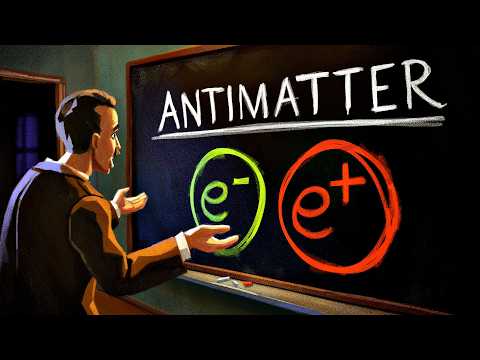
- The Prediction of AntimatterThe Bold ProposalIn 1931, Dirac proposed a radical solution: a new kind of particle unknown to experimental physics with the same mass and opposite charge to an electron, which he called an anti-electron.The Prediction Details• The four-component wave function describes spin up electron, spin down electron, spin up antielectron, and spin down antielectron • He warned that anti-electrons should not be expected in nature due to rapid recombination with electronsInitial ReceptionWhen Dirac made this prediction, physicists did not enthusiastically search for the antielectron; they largely ignored the idea.Accidental DiscoveryJust one year after Dirac's prediction, in 1932, Caltech postdoc Carl Anderson photographed tracks in a cloud chamber that curved opposite to electrons in a magnetic field but had similar mass, discovering the positron by accident.
- The Positron and Dirac SeaThe Discovery DetailsAnderson observed tracks of positively charged particles with the same mass as electrons but opposite charge, ruling out protons due to the track length in air, creating a positive electron or positron.The Remaining ProblemEven with the positron discovered, the negative energy problem persisted—particles could still continually radiate energy and drop into lower negative states with no solution in sight.The Dirac Sea SolutionDirac theorized that the vacuum is an infinite sea of electrons occupying all available negative energy states, and since no two electrons can occupy the same state, this prevents observable positive energy electrons from falling into negative states.Sea Interpretation• A hole or vacancy in the electron sea becomes a positron • When an electron and positron annihilate, the electron simply falls back into the sea and fills the hole • Mathematically sound but conceptually difficult to accept
- Reinterpretation and Feynman DiagramsStueckelberg's InsightIn 1941, Swiss physicist Ernst Stueckelberg proposed that negative energy electrons traveling backward in time are mathematically equivalent to positive energy antielectrons (positrons) traveling forward in time.Feynman's ContributionAround 1948, Richard Feynman used this idea in Feynman diagrams, showing antiparticles traveling opposite to particles and backward in time as a representation of particle interactions.Problem ResolutionNegative energy solutions no longer required belief in the Dirac sea; they simply indicated the presence of an antiparticle traveling backward in time.Universal Application• Every subatomic particle has a corresponding antiparticle with the same mass but opposite charge • Examples: proton has antiproton, neutrino has antineutrino • This doubles the diversity of particles in the universe
- Matter-Antimatter AsymmetryAnnihilation ProcessParticles and their antiparticles are equal and opposite; when they meet, they annihilate and produce two photons with energy equivalent to their mass and kinetic energy (Breit-Wheeler pair production).Early Universe ConditionsDuring the first moments after the Big Bang, the universe was hot, dense, and full of matter-antimatter pairs constantly popping in and out of existence.The MysteryIf equal numbers of matter and antimatter were created, they should have annihilated each other in the dense environment, leaving only energy; yet we have a universe full of matter.The Improbable SurvivalOnly one particle per billion of matter needed to survive annihilation in the early universe to produce our current matter-dominated universe—an incredibly tiny asymmetry with profound consequences.
- Dirac's Legacy and Personal LifeRecognitionDirac shared the 1933 Nobel Prize with Schrödinger for the discovery of new productive forms of atomic theory, though he remains less well-known than Heisenberg or Schrödinger.Scientific Impact• His contribution to quantum physics was immense • The Dirac equation revealed a pattern in nature like nothing previously seen in physics • His work fundamentally changed understanding of fundamental particles and their interactionsPersonal ConnectionEugene Wigner, who attended Dirac's 1928 lecture, became a reasonable friend and introduced Dirac to his sister Margit in 1934, a woman who would change Dirac's life more than any equation or prize.The Partnership• They were antiparticles with completely opposite personalities • He had almost no empathy; she had buckets of it • He hardly talked; she couldn't stop talking • The marriage worked: 'He gave her status, she gave him a life'