Half the universe was missing... until now
Until recently, half the universe was missing or hidden or just... undetected
8 chapitres
- The Missing Baryon ProblemThe MysteryThe universe should contain 5% baryonic matter (ordinary matter like protons and neutrons that make up stars, planets, and galaxies), but observations only find 2.5%, meaning half the expected normal matter is unaccounted for.Why 5 PercentThe 5% expectation comes from Big Bang nucleosynthesis calculations using the observed ratios of deuterium, hydrogen, and helium in the universe today.Early Universe Physics• Right after the Big Bang, neutrons and protons were whizzing around in extreme heat with tons of radiation • As the universe expanded and cooled after 10 seconds, deuterium could form • By 20 minutes after the Big Bang, fusion stopped and elemental abundances locked in at 75% hydrogen and 25% helium by massDeuterium ClueDeuterium is stable and cannot be created in significant quantities after the Big Bang, so virtually all deuterium in the universe today was created in the first 20 minutes after the Big Bang.
- Calculating Expected MatterCosmic EvidenceThe oldest light visible is the Cosmic Microwave Background Radiation, the afterglow of the Big Bang traveling unimpeded since about 400,000 years after the Big Bang.Measurement MethodBy counting photons in the Cosmic Microwave Background and using the deuterium ratio of 26 nuclei per million hydrogen nuclei, scientists can calculate the ratio of baryonic matter to photons.The CensusIn the late 1990s, scientists added up all planets, stars, black holes, galaxies, dust clouds, and gas—everything observable or inferable with telescopes—and found these visible objects make up only about 20% of all baryonic matter.The GapAdding visible matter brings the total to about 50% of expected baryonic matter, leaving the other half completely unaccounted for.
- The Lyman-Alpha Forest MethodUsing BacklightingQuasars—supermassive black holes at the centers of early galaxies with luminosity thousands of times that of entire galaxies—serve as perfect backlights to reveal intervening matter.Redshift EffectLight from distant quasars is heavily redshifted; for example, Lyman-alpha ultraviolet light at 121.6 nanometers in a lab appears as yellow light around 560 nanometers from a distant quasar.Absorption LinesThe Lyman-alpha forest consists of many small dips in the spectrum created by neutral hydrogen atoms along the line of sight to the quasar, forming a one-dimensional map showing where and how much neutral hydrogen gas exists.Partial AnswerAdding all neutral hydrogen gas revealed by the Lyman-alpha forest brings the baryon budget to almost 50%, but still leaves the other half unaccounted for.
- The Warm-Hot Intergalactic MediumHidden LocationComputer simulations suggested the missing baryons exist between galaxies in sheets and filaments, extremely spread out at one to ten particles per cubic meter.Physical Properties• The missing baryons are ionized, so they do not absorb light like neutral hydrogen gas • They exist in the temperature range between 100,000 and 10 million Kelvin • This range is called 'warm-hot', giving rise to the term warm-hot intergalactic medium or WHIMDetection ChallengeThe WHIM is extremely difficult to find because being ionized and hot, the particles only emit or absorb in high energy ultraviolet or low energy X-rays.Solution PreviewA naturally occurring physical phenomenon eventually allowed scientists to detect all the missing baryons.
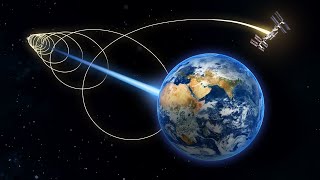
- Lightning and Electromagnetic DispersionGlobal DetectionLightning produces a flash of electromagnetic radiation across the entire spectrum, including broad spectrum radio waves that can be detected from the other side of the Earth.Magnetosphere PathVery low frequency radio waves travel up and out of the atmosphere and are guided along Earth's magnetic field lines several Earth radii away, then back down where they can be detected in the opposite hemisphere.Whistler FormationWhen these radio waves arrive at the distant detector, they are spread out as a 'whistler' rather than a single pulse because lower frequency waves are slowed down more than higher frequencies as they pass through electrons in the plasma.Information ContentThe amount of dispersion in the radio waves reveals how many free electrons the wave passed through, providing a way to measure electron density along its path.
- Fast Radio Bursts DiscoveryThe PhenomenonFast radio bursts are very short-duration pulses of intense radio waves lasting on the order of a millisecond, coming from distant galaxies in the deep universe.Power LevelsThese pulses can be incredibly powerful, billions or trillions of times as powerful as the sun.Unknown OriginScientists do not really know what creates fast radio bursts, though some suspect magnetars, neutron stars, or collisions between very powerful massive objects like black holes and neutron stars.Practical UseFast radio bursts can be used to examine dispersion and figure out how many ionized baryons exist between Earth and the source, making them perfect tools for finding the missing baryons.
- Finding the Missing BaryonsThe StudyA recent paper published in Nature plotted the dispersion measure of several fast radio bursts versus the redshift of their host galaxy.Key Findings• The further away fast radio bursts were, the more dispersed their signal became upon reaching Earth • Using these measurements, scientists estimated the total baryonic matter in the universe, including all ionized particles in the WHIMThe ResultThe measurements showed that the total baryonic matter in the universe is 5%, exactly as predicted by Big Bang nucleosynthesis.Success ConfirmationRoughly 50% of the missing baryons are in the warm-hot intergalactic medium, validating decades-old computer simulations and solving the missing baryon problem.
- Implications and ReflectionsInefficient StructureOnly 10 to 20% of all baryonic matter from the Big Bang ended up in stars and galaxies, showing that the formation of these interesting structures is a really inefficient process.Scientific ValidationComputer simulations run decades ago turned out to be largely correct, representing a triumph for science and validation of theoretical predictions.Scientific vs Non-ScientificNon-scientists prefer when things turn out the way they expect, while scientists actually want things to work out differently because that is how we discover clues about new physics.Current StatusFor now, scientists can be content with being right about the missing baryons.