Can you float in concrete?
15 chapitres
- Cement vs Concrete: Understanding the BasicsKey Definitions• Cement is the binding glue that holds concrete together • Concrete is cement plus aggregate (gravel and sand) • These terms are often confused but have distinct meaningsGlobal Importance• 500 kilograms of cement are created yearly per person on Earth • This amount can make two cubic meters of concrete • Cement is the most important man-made substance on the planetMaterial ComparisonWe produce more cementitious material than all other solid materials combined, including copper, aluminum, glass, asphalt, iron, ceramic, and wood.Why Concrete Works• Liquid rock that can be poured into any shape • Strong, durable, and inexpensive • Easy to produce, with versions used for thousands of years
- Ancient Cement: From Limestone to Roman InnovationPrimitive Method• Heat limestone (calcium carbonate) to 1,000°C to drive off CO2 • Results in quicklime (calcium oxide) • Mix with water to create calcium hydroxide • Material hardens as CO2 from air turns it back to calcium carbonateKey Limitations• Cannot make large molds because CO2 cannot penetrate deeply • Does not work underwater where CO2 is unavailableRoman SolutionRomans added volcanic ash called pozzolana to crushed limestone before heating, creating cement that was much stronger, more durable, and could harden underwater.Roman Achievement• Built the Pantheon, the largest unreinforced concrete dome in the world, still standing after 2,000 years • Constructed concrete piers in the sea that hardened underwater and remain standing today
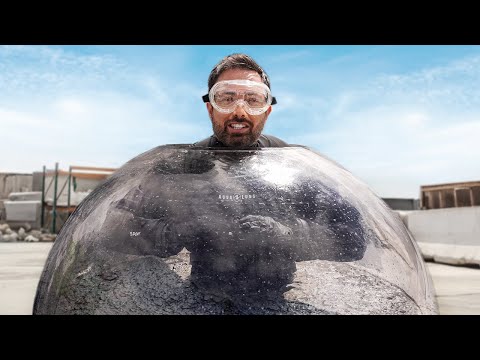
- Physical Properties: Density and Buoyancy ExperimentConcrete DensityConcrete is approximately three times as dense as water.Buoyancy DiscoveryBecause of its density, a human can float in concrete with most of the body above the surface, up to the waist.Unexpected ResultsDespite being able to lift legs initially without suction issues, the dense weight creates concern about breathing pressure as concrete rises higher.Safety MeasuresOxygen is kept on hand as a precaution, and the participant practiced escape techniques beforehand.
- How Roman Concrete Achieves Underwater StrengthHistorical MysteryFor centuries, the Roman cement recipe was lost until rediscovered in a Swiss monastery book in the 1400s.Chemical DiscoveryRoman cement's strength came from pozzolana (volcanic ash) containing silica, which changes cement chemistry fundamentally.Silica's Role• Silica allows cement to harden without drying • Water becomes an integral part of hardened concrete • Maximum strength is achieved when setting underwaterModern EquivalentNearly 2,000 years later, scientists discovered that adding clay or shale to limestone before heating produces the same effect as pozzolana.
- Testing Concrete Strength: Lab MethodsQuality Control• Every time concrete is poured on a job site, sample cylinders are cast from the material • These samples are tested to ensure required strengthCuring ProcessConcrete samples must be kept in 100% humidity, often submerged in a lime bath in the curing room.Strength Timeline• Samples are tested at 7, 14, and 28 days • At 28 days, concrete is considered to have reached full strength • Strength continues increasing after that milestoneFailure TestingSamples are placed in a hydraulic press with pressure increased at 30 psi per second until failure, measured in pounds per square inch.
- Portland Cement: The Modern StandardDiscovery & NamePortland cement was discovered in the 1840s and named after desirable rocks quarried near Portland, England, though the name is purely marketing.Manufacturing Process• Limestone is crushed and mixed with shale or clay for silicates • Ground into fine powder and heated to high temperatures in a kiln • Results in hard nodules called clinkerWhy It DominatesClinker was likely discovered by accident when lime mixtures were overcooked, but grinding it produces superior cement far stronger than other known chemistry.Key CompoundThe most common compound in Portland cement is tricalcium silicate.
- Concrete Composition: Comparing Pure Cement vs MixedTest SetupThree cylinders were tested: pure cement, cement with sand, and cement with sand and gravel (typical concrete mix).Test Results• Pure cement failed at 8,000 psi with significant flaking and chipping • Cement plus sand failed at 9,163 psi • Cement plus sand and gravel failed at 8,300 psiSurprising FindingAll three mixtures broke under similar pressure despite pure cement having the most binding glue, contradicting expectations.Cost Efficiency• Cement is the most expensive part of concrete • Reducing cement to 30% of the mix still achieves the same strength characteristics • Aggregate helps the sample cohere and stay together under load
- Aggregate Materials: Sand, Gravel, and Lightweight OptionsQuarrying Process• Aggregates are blasted out of quarries • Ground up to particular sizes • Strict requirements exist for size and shape to affect concrete strengthSand Characteristics• Well-graded concrete sand helps with finishability • Rounded particles work better than jagged crushed particles • River sand, resembling river stone, is preferredWeight Variations• Normal weight concrete weighs 150 pounds per cubic foot • Lightweight aggregate can reduce weight to 110 pounds per cubic foot • Used for elevated construction to lighten deck loadsDistribution MethodAggregates are hauled by truck, dumped at the plant, transported on conveyor belts into storage piles, loaded into hoppers, weighed, and poured into mixer trucks.
- Concrete Plant Operations: Batching and MixingRecipe ControlEach concrete load has a specific recipe with precise weights for components like 3/4 rock (13,000 pounds target), 3/8 rock, sand, water, and chemical additives.Operator OversightBatch operators manage the plant using a computer system that displays the recipe and automatically measures materials with tolerance controls to prevent overshooting targets.Water Management• Water can be added to mixtures but should not be • Adding extra water can affect concrete strength • Once added, water cannot be removed from the batchMixer Truck ProcessMaterials are dropped from hoppers above into mixer trucks where the drum rotates continuously to blend the concrete.
- Concrete Workability: Slump Tests and AdditivesConsistency Requirements• Concrete must not be too dry or too runny • Water adjustment affects strength, so alternative methods are used • The concrete for buoyancy testing had a 27-inch spread requirementChemical AdditivesModern superplasticizers are dispensed from units at the plant to make concrete easier to work and spread without changing water content significantly.Slump Test Method• A cone is filled with concrete to the top • The cone is lifted and the distance the concrete spreads is measured • Both sides must meet the target spread distancePractical PurposeCorrect consistency allows concrete to flow and fill containers properly without being too dry, which would prevent complete filling.
- Setting Time: Why Trucks Keep SpinningTime WindowWithout agitation, concrete typically sets in about four hours.Truck Drum FunctionThe drum on concrete trucks must keep turning during transport to maintain agitation and prevent the concrete from hardening prematurely.Emergency Situations• If a truck breaks down, hits traffic, or encounters other delays, concrete can harden inside the drum • This is considered a terrible outcome requiring interventionSugar Solution Hack• Sugars in carbonated soft drinks like Coke slow the concrete setting process • Truck drivers carry two-liter bottles to add if needed • This can buy several additional hours before setting occurs
- Cement Hydration: How Concrete HardensChemical Process• Water dissolves cement powder grains releasing ions into solution • Calcium hydroxide ions make concrete a very basic solution • pH can reach 12 or 13, as corrosive as bleach on skinCrystal Formation• Tricalcium silicate reacts with water to form calcium silicate hydrates and other hydrate minerals • Crystals grow and become interlocking • This interlocking crystal structure causes hardeningWater's Critical Role• Water does not evaporate or dry out • Water becomes part of the solid concrete material itself • This process is called cement hydration, not dryingMoisture Requirements• Freshly poured concrete should be kept in as damp an environment as possible • Las Vegas frequently uses misters to spray new concrete and maintain high humidity • Proper humidity ensures correct hydration and strength development
- Roman vs Modern Concrete: Advantages and LimitationsRoman Advantages• Less well-mixed with undissolved calcium oxide (quicklime) particles remaining • When cracked, water dissolves quicklime forming calcium hydroxide and new calcium carbonate growth • This self-healing property is a fascinating advantage over modern concreteSuperiority QuestionThe short answer is no - Roman concrete was not overall superior to modern concrete.Survivor BiasWe only see Roman structures that survived to the present day, creating a bias that overestimates their quality and durability.Modern Economics• Modern concrete can be made very strong to last incredibly long • We choose not to prioritize longevity for cost reasons • Buildings are not expected to last as long as ancient Roman structures
- The Floating Discovery: Buoyancy in ActionUnexpected FindingThe presenter discovers they are floating in concrete with most of the body above the surface, which is totally unexpected and ridiculous.Physical Explanation• Concrete is three times as dense as water • This density allows human bodies to float • Flotation occurs up to the waist levelInitial Concerns• Initially worried about suction preventing exit from concrete • Able to lift legs without problem • Main concern becomes breathing pressure as concrete rises to chestPractical Outcome• Cannot get buried in concrete due to buoyancy • Pushing down is extremely difficult, like fighting against the material • Concrete continuously pushes the body upward out of the material
- Environmental Impact: The Carbon Cost of ConcreteGlobal Carbon Problem• Concrete production creates an estimated 8% of global CO2 emissions • This exceeds the entire aviation sector's emissions • A significant environmental concern requiring actionLimestone Origin• Limestone core component comes from ancient sea life • Formed from skeletons and shells of organisms that died millions of years ago • Compressed over time into the limestone we use todayInfrastructure Connection• Skyscrapers and large infrastructure are made of concrete • Modern skylines are essentially made from ancient marine life • This creates an interesting perspective on our built environmentSolutions Approach• Individual carbon reduction actions are helpful but not sufficient alone • Systemic change requires policy advocacy through organizations like Wren and the Clean Air Task Force • Focus on new technologies and policies for zero-emissions economy