
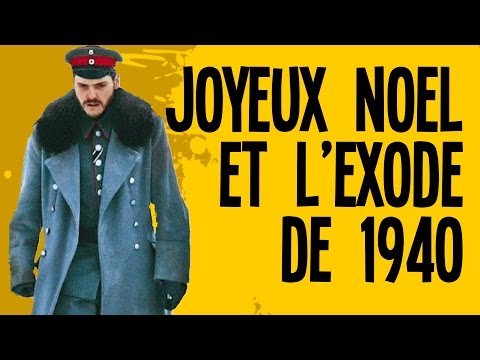
Joyeux Noël et Exode de 1940 - Motion VS History #3
10 capitulos
- Introduction and Episode OverviewEpisode StructureThe episode is divided into two parts: analysis of the film Merry Christmas by Christian Carion, and discussion of the 1940 exodus with a special project invitation.Content Focus• First examination of 20th century and World War I content • Film accuracy versus historical fiction • Discovery of little-known historical episodesSpecial OpportunityViewers are invited to participate in a project related to the 1940 exodus, details to be shared at the end of the episode.Film AnalysisExamination of whether Merry Christmas is faithful to history or pure fiction despite being inspired by true events.
- World War I Context and Trench WarfareWar OriginsIn 1914, World War I broke out following years of bitterness and tension between European powers, triggered by Serbian extremist Gavrilo Princip's assassination of Archduke Franz Ferdinand of Austria-Hungary.Early Strategy• Germany feared being caught between Russia and France, so attacked Belgium first • This led to UK's entry into the war • Germany then advanced into France using blitzkrieg tacticsMilitary TacticsFrance relied on numbers and honor with offensive strategy, launching enormous numbers of men in attacks on foot with orders to advance quickly, a costly tactic in terms of human lives.Trench DeadlockAfter initial massacres where neither side advanced, the conflict shifted to positional warfare and trench warfare, where soldiers dug in, fortified positions, and defended against all odds.
- Soldier Disillusionment and FraternizationSoldier QuestionsSoldiers became disillusioned by 1914, questioning why they were fighting enemies they knew little about and why they were told the enemy was wrong.Civilian DisconnectIn cities, thousands of people lived almost as if nothing was happening, creating a stark contrast to the horrors of the front.Fraternization Acts• Soldiers would meet enemy soldiers face to face with caution • They would question why they should fight someone they found to be human • Brief moments where enemies from opposing trenches recognized their shared humanityFilm InspirationMerry Christmas tells the extraordinary and improbable story of one such fraternization episode during WWI, focusing on the humanity of soldiers rather than the horrors of war.
- Merry Christmas Film PlotMain Characters• A famous German tenor with a golden voice who left everything for the front • A Scottish priest serving the troops • A young French lieutenant whose wife is giving birth in a town occupied by GermansChristmas PreparationsGerman troops receive dozens of Christmas trees from their families to restore morale, while on Christmas Eve the Scottish priest and singer provide music and comfort to their respective forces.Fraternization Events• German troops slowly cross no-man's-land carrying a lit Christmas tree, singing • German, Scottish, and French soldiers share chocolate and alcohol • Officers declare a Christmas Eve truce • A joint Christmas Mass is celebrated by the Scottish priestDifficult ReturnAfter the Mass, soldiers return to their trenches by night, but face the impossible question of how to kill people they've come to sympathize with, leading to continued fraternization and refusal to fight until artillery bombardment forces them apart.
- Historical Accuracy AnalysisCharacter Origins• The tenor was inspired by Walter Kirchhoff, a real singer who visited camps to encourage troops but was never a soldier • Kirchhoff performed at the famous Christmas Eve event but never served on the front line • Other characters are composites of various soldiers from different nationalities and professionsVerified Events• The football match between allied and German troops • Soldiers protecting each other from artillery fire • Truces to collect fallen bodies • Trading chocolate for alcohol • All verified through soldier notebooks and war archivesCensorship ImpactThese fraternization cases were transmitted by English media and photographs showing different fighters in groups, sent by a Scottish photographer, but official censorship prevented widespread knowledge of these human moments in official newspapers.Temporal ConsolidationThe film compiles multiple anecdotes and episodes of fraternization that did not occur at the same time and same location, making Merry Christmas a tribute to all these episodes rather than a single historical event.
- Film Adaptations and OmissionsHistorical AdjustmentsThe director Christian Carion arranged some facts for production needs, including adapting the Mass sequence from multiple accounts of joint masses that never occurred at a single battlefield.Too Improbable Details• A cat named Felix by Germans and Nestor by French passed between trenches, creating comic moments • This cat actually existed and inspired Carion, but the full story was too unbelievable for film • The cat was actually captured by French, accused of espionage, and shotInterpretation DebateSome view the film's adaptations as fabrication, while others see it as a way to preserve the sensitivity and humanity of wartime soldiers compared to more traditional violent war films.Historical ValidationDespite adaptations, extensive research was conducted using soldier memories and war archives, leading to documentaries, books, and a monument completed in late 2015 honoring these men.
- Film's Educational LegacyResearch ValueThe research work accompanying the film's release proved very important, much like work on slavery mentioned in another episode, helping preserve historical memory.Documentary SupportA documentary was created about fraternization acts, books have mentioned it, and a monument was erected to honor these men, all as a result of the film's release.Companion ProjectsExtra content accompanying the film's release became historically important, including educational initiatives and recognition of this little-known WWI episode.Director's Next WorkChristian Carion's new film released November 4, 2015, titled In May Do As You Please, also addresses history and specifically World War II, continuing his focus on historical storytelling.
- The 1940 Exodus OverviewMassive MigrationThe 1940 exodus is the most important population movement of the 20th century, yet remains little-known despite its enormous scale.Scale and Causes• After German forces advanced through Belgium and northern France in 1940 • Nearly all of France's population decided to head south to free territory • When Germans reached Paris, many capital residents fled desperately seeking train tickets to liberated areasStaggering NumbersApproximately 10 million people, representing 25% of France's population at the time, were involved in this exodus, leaving everything behind for an uncertain future and suffering deaths and injuries from German air attacks on roads.Personal ImpactOne out of four people in France lived through this traumatic episode involving many deaths and casualties, meaning virtually everyone in modern families experienced or inherited this trauma.
- Witness Testimony ProjectOriginal VisionThe narrator previously wanted to collect testimonies from parents and grandparents in a video to explain who they were, what they lived through, and what important events they experienced.Expanded Concept• Planned to gather statements from unknown people with similar experiences • Create a mosaic of a particular event and its impact • Initially interested in testimonies about the Algerian WarProject OpportunityA film team's initiative matched exactly what the narrator had envisioned, offering to create one of the largest witness appeals ever conducted in France.Preservation GoalThe project encourages relatives of exodus survivors to testify so their memories and experiences are not lost to history, allowing participation in a major educational initiative with teachers and students throughout France.
- Call to Action and ParticipationParticipation InstructionsTo submit stories of relatives who experienced the 1940 exodus trauma, visit the website enmaifaiscequilteplait.org and share your family's testimony.Educational InitiativeParticipants can contribute to a large pedagogical project involving teachers and students from throughout France in preserving these testimonies.Message PurposeThe narrator endorses this project as beautiful and encourages viewers who can contribute to participate in preserving collective memory.Episode ConclusionThe episode ends with thanks for viewing, encouraging viewers to take care of themselves and inviting them to watch future content.