Espionnage et folles évasions - La Résistance française
6 chapters
- André Devigny: The Brave Young ResisterEarly heroismAt age 23, André Devigny became the youngest Knight of the French Legion of Honor for a successful counterattack against larger German forces using only a bayonet.Resistance activities• Entered the resistance as an intelligence agent in North Africa and Southern France to prepare for Allied landings • Created an escape network via Switzerland that the entire French Resistance used • Eliminated the head of Italian counterintelligence who was threatening his operationsArrest and tortureArrested on April 17, 1943 at Annemasse and imprisoned at Montluc prison in Lyon, where he was tortured by Klaus Barbie without breaking under interrogation.Spectacular escape• Dug through his cell door with a spoon, dismantled his box spring and light bulb frame, and cut his clothes and sheets • Built homemade grappling hooks and 11-meter ropes from his makeshift equipment • Escaped on August 25, 1943 by reaching the prison roof, strangling a sentinel, and scaling two walls
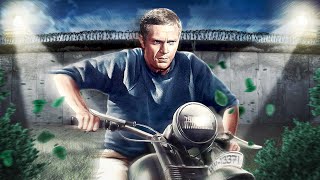
- André Devigny: Escape and RevengeFinal freedomRecaptured in Vaulx-en-Velin after his first escape but managed to flee again by jumping into the Rhone River, where he hid in the mud for five hours before escaping for good.Cultural legacyHis escape was so remarkable that famous filmmaker Robert Bresson adapted it into the 1956 film 'A Man Escaped'.Family tragedy• His cousin Raymond Devigny was killed at age 23 as punishment by the Germans • His relative René, only 17 years old, was deported and never returned from the campsReturn to combatAndré volunteered for the Shock Brigade as a paratrooper commando, returning to France during the Provence landings in 1944 and continuing to fight through to Germany.
- The Brandy Network: Large-Scale Resistance OperationsNetwork leadersAndré Jarrot and Raymond Basset, both Companions of the Liberation, participated in the Brandy network to help fugitives cross the demarcation line.Massive impactThe Brandy network successfully helped nearly 4,000 people cross, including resistance fugitives, escaped prisoners, English agents, and crashed pilots.Continued serviceWhen forced to leave France, Jarrot and Basset went to England for further training before parachuting back into their country to continue helping those in need.LegacyTheir testimonies after the war demonstrated the scale and importance of resistance escape networks in saving lives.
- François Delimal: Young Resister, Tragic EndRecruitment and training• Joined the Resistance at age 20 after performing risky missions to organize weapon airdrops into France • Traveled to London in August 1943 for specialized training • Returned to France under the pseudonym 'Faraday' two months laterActive operationsIdentified suitable drop and landing zones, organized reception teams across multiple departments simultaneously despite his young age.CaptureArrested on March 20, 1944 by the Gestapo after falling into a trap and taken to their headquarters on rue des Saussaies in Paris.Final choiceTo avoid torture and protect other resistants, François Delimal swallowed a cyanide capsule he carried with him, sacrificing himself at only 22 years old.
- Fred Scamaroni: From Officer to ResisterMilitary service• Son of a prefect, rejected a safe administrative position and instead joined the military as a second lieutenant in 1939 • Trained as an air observer hoping for more combat action • Wounded in air combat in May 1940 but continued fighting on footFree France involvementAfter the armistice stopped his military efforts, Fred left immediately to join General de Gaulle's Free France in London after hearing about him.Resistance operations• Secretly founded the 'Copernic' resistance network and performed missions for London in Corsica • Prepared a plan to liberate Corsica from German occupationArrest and death• Arrested in March 1943 after a network member was betrayed and tortured into revealing his name • Refused to break under torture and wrote with his own blood: 'Long live France, long live de Gaulle' before slitting his throat with iron wire • Died at less than 30 years old, yet Corsica was liberated by Free French Forces that same year
- Preserving Resistance MemoryMuseum's roleThe Museum of the Order of Liberation maintains the memory of resistance men and women throughout history.Educational exhibitsThe museum displays tools used by resistance fighters to escape from prison or evade the enemy after getting outside.Historical partnershipThe museum continues collaborations to educate visitors about resistance operations and strategies.Call to actionViewers are invited to visit the museum and explore detailed information about resistance history and artifacts.