4 clichés sur l'Égypte ancienne
4 chapters
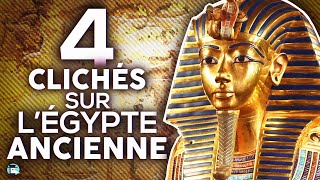
- The Curse of TutankhamunDiscovery StoryOn November 4th, 1922, archaeologist Howard Carter discovered the first entrance step of Tutankhamun's tomb in the Valley of the Kings near Luxor. After clearing the entrance and finding a sealed door, Carter waited until November 24th for expedition backer George Herbert, Earl of Carnarvon, to arrive before continuing. Upon breaking through, Carter famously described the treasures as 'wonderful things' including gold beds, chariots, statues, and the pharaoh's intact sarcophagus with mummy and gold head mask.Reported Deaths• Lord Carnarvon died in April 1923 from a mosquito-bite infection • Around twenty people linked to the tomb died within seven years following Carnarvon's death • Notable deaths included Carnarvon's half-brothers (1923 and 1929), a radiologist (1924), Carter's friend (1924), Georges Bénédite curator of the Louvre (1926), Carter's associate (1928), Richard Bethell and his father (1929-1930), and another assistant (1930)Scientific Reality• Deaths occurred at an average age of 52, which was the average life expectancy for men in England and France during the 1920s • Most deaths resulted from ordinary illnesses: radiologist Archibald Douglas-Reid developed health problems from radiation exposure, Hugh Evelyn-White was plagued by illness his whole life, Arthur Mace had pulmonary issues • Howard Carter himself lived 17 years after the discovery, dying of cancer in 1939 at age 64 • Carnarvon's daughter lived to age 79 in 1980ConclusionMost people linked to the tomb either died at normal ages for the period or were already in poor health with occupational factors contributing to illness. When examining any historical event with many people involved, strange coincidences will always emerge; proper analysis requires looking at every detail and considering all elements broadly rather than accepting conspiracy theories.
- Egyptians Depicted Everything in ProfileThe StereotypeThe common belief is that ancient Egyptians depicted everything in profile, like 2D Super Mario games, showing figures sideways at all times. This idea comes from the appearance of Egyptian depictions in temples and tombs, which at first glance seem to be exclusively side-on.Actual Technique• Human faces are shown in profile, but eyes are depicted from the front as if looking straight at the viewer • The torso and chest are shown front-facing while arms remain in profile • Fingers are sometimes superimposed as if the hand were half-bent • The pelvis faces forward while legs are in profile, sometimes with superimposed toes • Artists intentionally blended multiple viewpoints to represent the true essence of a human beingArtistic PurposeEgyptian artists did not attempt realism as understood today. In ancient Egyptian belief, depictions were thought to come to life if activated through rituals, spells, or magical acts. For anything to come to life, its traits had to be fully represented not realistically, but in a visible and explicit way. Both eyes needed to be clear and recognizable, and limbs had to be distinctly visible even if disjointed.Counter-Examples• The goddess Hathor is often depicted front-facing with two eyes, mouth, and all other features visible, as seen on columns of the Dendera Temple in southern Egypt • The god Bes is always shown from the front with his grimacing face facing forward to best protect against lurking dangers, despite being a dwarf god with unique half-human, half-animal attributes
- There is Nothing Left to Discover in EgyptCurrent AbundanceEgypt is one of the countries with the most discovered relics in the world, with over 3000 years of ancient history plus prehistoric periods. Museums' Egyptian sections contain hundreds if not thousands of artifacts: sarcophagi, tablets, papyri, statues, and wooden, stone, and metal tools. Egyptian monuments are among the best preserved of all ancient civilizations due to climate and few successive conquests, with temples, pyramids, and tombs still mostly standing.Ongoing Discoveries• Most Egyptologists agree that we are very far from having discovered everything in Egypt • Even at well-known sites like Karnak Temples near Luxor, specialists continue to excavate despite daily tourist visits, with estimates suggesting only 20% of the site has been uncovered since 19th-century excavations • In 2019 and 2020, tons of discoveries culminated in dozens of sarcophagi being unearthed by archaeologists by late 2020Obstacles to Exploration• Financial constraints limit archaeological work • Egypt's 20th-century demographic and urban growth has permanently buried areas, hiding potentially amazing discoveries • Regions like the Delta and Faiyum oasis west of Cairo are difficult to excavate due to swamps, high humidity, and poor artifact preservation • Working conditions in these difficult areas are far trickier than in deserts or necropolisesFuture PotentialEgyptologists continue every year, even every month, to uncover new tombs, sarcophagi, residential areas, and much more. Egypt will continue to reveal its mysteries for a very long time, with recent discoveries proving that there are still many unknown sites and areas yet to be discovered and appreciated.
- Cleopatra: Seductress or Political Leader?Historical Origins• Cleopatra was the last Queen of Egypt but was not actually Egyptian; she was Macedonian, belonging to the Ptolemaic dynasty that ruled Egypt after Alexander the Great's death in 323 BC • Her reputation as a gorgeous, seductive queen dates to antiquity, particularly through Roman authors of the time • She had a son Caesarion with Julius Caesar, then married Mark Anthony • When Octavian (future Augustus, first Roman emperor) declared war and emerged victorious, Mark Anthony and Cleopatra committed suicide • Augustus launched a vicious propaganda campaign against Cleopatra, defaming her as power-hungry, seductive, and immoral, while in Egypt she maintained a more illustrious imageModern ReinterpretationSince the mid-20th century, Cleopatra has gradually transformed from seductress to feminist icon, embodying strength of character, resilience, and independence. In pop culture she is often portrayed as particularly seductive and provocatively dressed to oppose conservative patriarchy, evolving into a model for strong and independent women. However, this modern image fudges history as much as the ancient propaganda did, as she has been a tool for defending different movements' ideas for 2000 years.Real Character• One of Cleopatra's most prominent traits was fierce determination to preserve Egypt's independence and protect its people • Her various alliances and successive unions helped keep Egypt from being controlled by Rome • She evidently shared real love with Caesar and Mark Anthony, as shown by the political risks these Romans took to please her and their children • After Mark Antony's death, Cleopatra refused to surrender to Octavian, choosing death over manipulation or execution by a man who had destroyed her life and taken over her countryBeauty and LegacyPlutarch, a favorable biographer, stated that 'her beauty was not so remarkable that none could be compared with her.' The idea of Cleopatra's great beauty originated from her critics who thought their seductress image needed physical beauty too. Her actual appeal likely came through her voice, oratory skills, and ability to speak to visitors in their own language. According to legend she killed herself by snake bite, but there is absolutely zero proof of this claim.