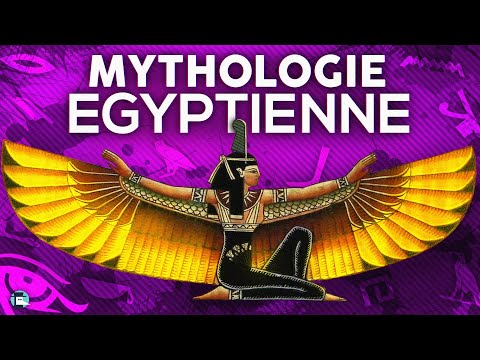
Mythologie Egyptienne - Mythes et légendes #3
9 chapitres
- Introduction to Egyptian MythologyTopic OverviewEgyptian mythology is surprisingly complex despite appearing simple on the surface through popular media representations.Key Challenges• Multiple versions exist across different cities in Ancient Egypt • Mythology contains illogical and absurd elements that serve symbolic purposes • No single unified source like the Norse Eddas existsSource MaterialsEvidence comes from literary texts, magical and medical books, ritual texts, funeral texts, and accounts from Greek historians like Herodotus and Plutarch.Research FoundationUnderstanding Egyptian mythology requires studying hieroglyphic texts deciphered since 1821-1822, monuments, bas-reliefs, paintings, and ongoing archaeological research.
- The Creation of the UniversePrimordial BeginningOriginally, an essential ocean called the Nu covered everything. From this ocean, a huge clod of soil emerged where the first god Atum gave birth to himself.Divine Generations• Atum created Shu (god of air) and Tefnut (goddess of moisture) • Shu and Tefnut gave birth to Geb (Earth) and Nut (Sky) • Geb and Nut produced Osiris, Isis, Nephtys, and SethCosmic OrderAtum separated the lovers Geb and Nut due to jealousy, though they had already conceived their children, establishing the structure of the cosmos.Pantheon FoundationThis Heliopolitan cosmogony established the main gods of the Egyptian pantheon, though alternative creation stories existed in different regions.
- The Twelve Major GodsCreator & Solar Deities• Ra: The Creator and sun god who travels in a solar boat across the sky • Atum: The primordial god associated with Ra in some cosmogoniesUnderworld & Resurrection• Osiris: God of vegetation, fertility, and ruler of the Kingdom of the Dead • Isis: Mother goddess who resurrected souls and protected pharaohs • Nephtys: Keeper of the dead and guardian of sarcophaguses • Anubis: Funeral god, protector of tombs and embalmersWisdom & Conflict• Horus: Son of Osiris and Isis, protector of pharaohs, represented with hawk head • Thoth: God of wisdom, writing, knowledge, moon, and arbiter of gods • Seth: God of desert and chaos, both villain and protector of RaLesser Deities• Ptah: God of craftsmen and main deity in Memphis cosmogony • Hathor: Goddess of love, dance, music, and maternity • Sobek: God of water and fertility, represented with crocodile's head • Amun: Local god of Thebes who merged with Ra to become Amun-Ra
- The Daily Cycle: Ra vs. ApophisSolar JourneyEach day, Ra boards his solar boat and travels from east to west across the visible world, with sunrise representing birth, zenith representing maturity, and sunset representing death.Nightly Battle• During night, Ra enters the underworld and fights Apophis, the snake god of chaos and evil • Apophis and forces of evil try to capsize the boat using scorpions and crocodiles • Seth protects the weakened sun by standing at the boat's front to assault ApophisDivine AssistanceRa is accompanied by protective gods and animals, including a protective snake. At midnight, Osiris helps Ra regenerate.Eternal RenewalRa eventually returns to Earth in the morning as a beetle full of strength, while Apophis remains in the underworld, renewing his failure day after day.
- The Myth of OsirisRise to PowerOsiris was the first pharaoh of Egypt who, with help from his wife Isis and god Thoth, unified nomadic tribes, taught them agriculture and writing, establishing a prosperous kingdom.Murder & Dismemberment• Seth, jealous of Osiris' success, organized a banquet and tricked him into a custom-fitted sarcophagus • Seth locked Osiris inside and threw it into the Nile, drowning him • Seth then tore Osiris' body into 14 or 16 pieces and scattered them across the countryResurrectionIsis, with help from Nephtys and Anubis, found almost all of Osiris' pieces (his penis was eaten by a fish) and used her powers to resurrect him and restore his manhood so they could conceive Horus.Horus' Ascension• Horus grew hidden in swamps protected from Seth and later claimed the throne • Horus and Seth fought violently, with Horus losing an eye and Seth losing his testis • Isis' sympathy for Seth infuriated Horus, who decapitated her; Thoth replaced her head with a cow's head • Osiris threatened the gods from his kingdom, forcing them to accept Horus as pharaoh
- The Afterlife & JudgmentPreparation Requirements• The individual must have a grave bearing their name • The body must be embalmed, representing Osiris' rebirth and allowing Isis to resurrect the soul • Without proper burial and embalming, the spirit remains locked in the body for eternityDual NatureAn individual is composed of the Djet (earthly body) and the Ka (soul). At death, these must be separated so the spirit can elevate to face Osiris' judgment.The WeighingThe deceased's heart is placed on a balance to judge their earthly life and sins. An ostrich feather is placed on the other side; if the heart is lighter than the feather, the deceased is cleared for the Kingdom of the Dead.Divine Consequence• If the heart is heavier than the feather, Amenet the soul eater swallows it, resulting in eternal nothingness • Thoth stamps the rejected soul with denied access • This judgment is chaired by Osiris with gods like Isis, Nephtys, and Anubis present
- The Nature of Egyptian GodsDivine Characteristics• Egyptian gods are very human-like: they live together, eat, drink, talk, love, and feel jealousy • Unlike Greek gods, they rarely mingle with the general population • Gods exist in heaven, the underworld, and temples where they receive human offeringsMortality ParadoxLike Northern gods, Egyptian gods are mortal, but they can resurrect themselves, giving them advantages mortals do not possess.Representation & Change• Gods can be represented as animals, humans, or combinations of both • Same gods can shift representations from animal to human to hybrid forms • Gods wear distinguishing features like crowns, combs, or objects that vary with representationsEvolution Over Time• During the Old Kingdom (2778-2420 BC), Ra, Osiris, and Seth were prominent • During the New Kingdom (1580-1085 BC), Amun, Ra, and Ptah ruled alongside Isis and Osiris • Hundreds of local gods existed with varying worship intensity across different cities
- Religious Evolution & DeclinePolytheism DominanceEgyptian culture centered on polytheism with hundreds of gods, though some theories suggest only three gods with different names existed representing the same entities.Monotheistic AttemptUnder Akhenaten's reign, a forced attempt toward monotheism imposed the cult of Aten, the solar god, but this vanished with his death and polytheism returned.Religious ConstancyDespite changes in god prominence and representations over nearly 5000 years of Egyptian dynasties, the core religion remained remarkably stable and consistent.Historical Decline• Emperor Theodosius (383 CE onwards) closed many pagan temples throughout the Roman Empire • Emperor Justinian (around 550 CE) forbade the cult and closed Isis' last temple • The arrival of Islam and Christianity delivered fatal blows to these ancient traditions
- Concluding PerspectivesComplexity AssessmentEgyptian mythology is complex with hundreds, perhaps thousands of gods, constantly changing and surprising scholars with new information.Knowledge ParadoxWhile funeral practices are well understood through extensive evidence, the topology of the afterlife remains blurry, creating a paradoxical feeling of knowing both very much and very little.Research FoundationSubstantial knowledge comes from archaeological research, but discoveries continue with many unexplored paths that will reveal new horizons and currents of thought in Egyptian villages.Closing MessageThe creator invites viewers to share the episode to propagate knowledge and thanks supporters through various platforms including Facebook, Twitter, Tipeee, and merchandise.