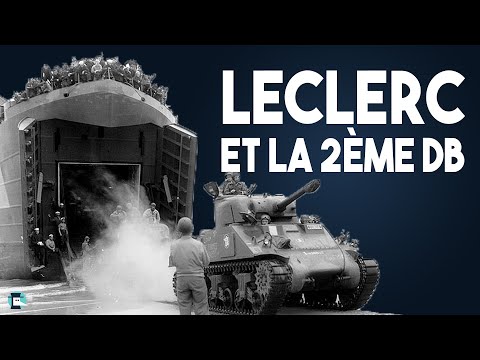
Leclerc et la 2ème division blindée : le plus téméraire des généraux français ?
5 chapitres
- The Birth of a LegendIntroductionGeneral Leclerc is one of the most badass figures of World War II, with streets and avenues named after him. The 2nd Armored Division he commanded was the first Allied unit to return to Paris in 1944, liberating the capital from German occupation.Early Life• Born in 1902 as Philippe de Hauteclocque • Entered Saint-Cyr military school at age 20 to become an officer • Brilliant pupil who obtained an assignment in Morocco • Became captain by 1938 and joined the War SchoolFirst CapturesWhen war broke out, Leclerc was sent to the front. His infantry division was surrounded, leading to his capture, but he escaped by bicycle. On June 15th during a fight against armored vehicles, he was captured again but escaped once more, determined not to spend the war behind barbed wire.Escape ArtistLeclerc escaped multiple times from German captivity. Even his horse at Saint-Cyr, named Iris XVI, killed a German soldier who approached it too closely and was shot for this act of resistance.
- From England to AfricaNew IdentityAfter a long journey, Leclerc reached England where he appeared before de Gaulle under the assumed name François Leclerc to protect his family from German danger.De Gaulle's RecognitionDe Gaulle recognized Leclerc as an exceptional officer and promoted him to squadron leader, sending him to Africa to join the colonies supporting Free France.African Campaign• Leclerc claimed to be a colonel (though he wasn't) to gain more authority in negotiations • De Gaulle learned of the deception but promoted him to colonel anyway, appreciating his determination • He successfully rallied Cameroon and Gabon to the Free France causeRise to LegendAppointed to Chad in 1941, Leclerc truly launched his legend with minimal resources: only old trucks, outdated weapons, two artillery guns, and 400 men, yet attacked and routed Italian forces in Libya.
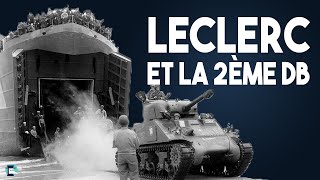
- The Koufra Victory and Desert CampaignsBluffing StrategyWith limited resources in Chad, Leclerc attacked Italian forces in Libya by bluffing the local garrison into believing he commanded a huge army, successfully seizing their stronghold of Koufra.The OathAt Koufra, Leclerc took the famous oath with his men: "Let us swear to lay down arms only when our colors, our beautiful colors, will float on the Strasbourg Cathedral."Desert Expansion• Named Companion of the Liberation by de Gaulle • Promoted to general while commanding increasingly more Free French forces • In 1942, conquered the Fezzan region of Libya • By December 1942, advanced north to reach TripoliEquipment UpgradeIn 1943, thanks to American equipment arriving, the Leclerc column was sent to Morocco where it finally acquired tanks and became the famous 2nd Armored Division, then joined England for liberation battles in France.
- The Normandy Campaign and Paris LiberationNormandy LandingLeclerc and his 2nd Armored Division arrived in Normandy on August 1, 1944, under American General Patton's command, strengthening units on site so successfully that Americans sometimes asked Leclerc to pass in front to open the way.Path to ParisOn August 19, 1944, Paris rose in insurrection and needed reinforcements. Leclerc sent Captain Raymond Dronne of the Nueve, a unit mainly composed of Spanish republicans, through German lines to announce support coming to the insurgents.Liberation AchievedOn August 25, 1944, Leclerc's column entered Paris and freed the capital. The first FFL soldiers to enter the capital were largely Spanish fighters from the Nueve unit.Remarkable Soldiers• Military doctor François Jacob received 80 grenade fragments while evacuating wounded under fire and was named Companion of the Liberation • Jean Gabin, France's biggest movie star, left his comfortable life as an actor to serve as a tank chief in the 2nd DB • Alain Gayet, grandfather of actress Julie Gayet, also fought with Leclerc
- Strasbourg, Germany, and Final MissionsKeeping the OathAfter Paris was freed, Leclerc continued fighting eastward, passed the Vosges mountains, and on November 23, 1944, his 2nd Armored Division flew the tricolor on the arrow of Strasbourg Cathedral, fulfilling his famous oath.Final European Battles• Reduced German resistance pockets, including operations near Colmar • Sank deeper into Germany and captured Hitler's Eagle's Nest in Berchtesgaden • Fought until Germany capitulatedAsia CampaignAfter Germany's surrender, France needed to fight for its colonies in Asia. Leclerc separated from the 2nd Armored Division and departed for Asia in September 1945, receiving Japan's act of capitulation on behalf of France.Tragic End• Returned to the other side of the globe in 1946 as inspector general of North African forces • Died on November 28, 1947 when his plane was caught in a sandstorm and crashed near Colomb-Béchar, Algeria • Posthumously received the title of Marshal of France • His ashes rest in the crypt of the Invalides