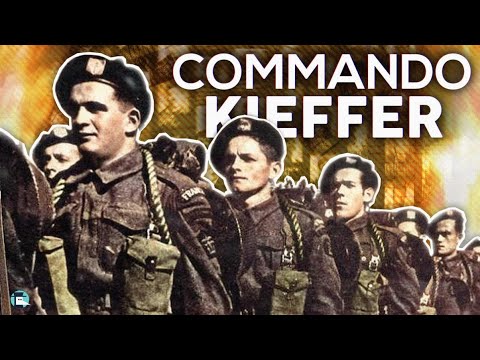
Le Commando Kieffer, les seuls français à débarquer le jour J !
6 chapitres
- Introduction to D-Day and French CommandosHistorical ContextJune 6, 1944 marked D-Day when Americans, English, Canadians, and other Allied troops landed on Normandy beaches to begin the liberation of France.The MysteryWhile most know about the main D-Day landings, few are aware that French commandos also landed that day, distinct from Leclerc's 2nd Armored Division which had to wait until August.Key FigureThe story centers on Philippe Kieffer, the man who would lead these French commandos.Episode PurposeThis episode explains who these French commandos were and how they managed to land on D-Day itself.
- Philippe Kieffer's Early Life and Path to CommandBackground• Born in 1899 in Haiti, not mobilized during World War I due to his remoteness • Worked as a bank employee in Haiti before 1939 • Returned to France in 1939 at age 40 and was mobilized as a simple sailorEarly War Service• Became secretary then interpreter due to mastery of English • Initially confined to administrative positions teaching English to Free French fighters • Found his administrative role unfair and sought to join combatCommando TrainingRequested training as a fusilier officer and discovered the commando units—new British military units designed to carry out striking actions against the enemy.Unit FormationSuccessfully proposed to the British the formation of a French commando under his command. Thirty French soldiers followed British commando training, distinguished themselves, and formed the Commando Kieffer under English command with General de Gaulle's agreement.
- Pre-D-Day Operations and PreparationsEarly Missions• Participated in the raid on Dieppe on August 19, 1942 • British forces were impressed by Kieffer's men under fire • Unit set foot in France multiple times before the 1944 landingReconnaissance RoleThroughout 1943, the commando participated in many actions, often involving reconnaissance operations in France where they were best positioned as native French soldiers. These operations were risky and cost many lives.Security ConcernIn 1944, Kieffer's men knew French soil so well that when they were shown photos and plans of objectives without location details, they recognized and identified Normandy. The English confined them to camp to prevent disclosure of the landing location.D-Day PreparationBy June 6, 1944, the commando was ready. Two landing craft opened and liberated Philippe Kieffer and 176 commandos as the first to land on Sword Beach—the British having accepted that French would tread their country's soil before others.
- D-Day Combat and Normandy CampaignBeach LandingPhilippe Kieffer and 176 commandos were the first to land on Sword Beach on June 6, 1944, in the early hours of the day.Combat Operations• Seized several German positions including the famous casino of Ouistreham, which had been transformed into a German fortified point • The battle for the casino was particularly difficult but won, and was later depicted in the film 'The Longest Day' • Kieffer was injured twice during the fight but refused evacuationLeadership and Heroics• Alexandre Lofi, one of Kieffer's officers, took command and led the commando through subsequent days despite his own injuries • Paul Chausse distinguished himself on June 17, 1944 by successfully attacking Germans with a bayonetCasualties and LegacyBy the evening of D-Day, Commando Kieffer had lost almost a quarter of its troops, dead or injured. The unit was replayed in 'The Longest Day' where Philippe Kieffer served as historical adviser alongside former President Eisenhower.
- Extended Campaign Through Liberation and BeyondGeographic Scope• After Normandy, the commando crossed France • Philippe Kieffer was among the first Free French to enter Paris where he paraded his unit • The war did not stop in France; the commando continued to distant theatersHolland OperationsCommando Kieffer was sent to Holland where it engaged in heavy fighting to control islands and conduct nocturnal reconnaissance missions within enemy lines.Major AchievementOn November 1, 1944, facing Germans superior in number during the Battle of the Scheldt, Alexandre Lofi's commandos seized a key enemy position, captured a hundred Germans including the commander, and opened the way to Allied reinforcements.War's EndThe commando continued fighting from engagement to engagement until the occupation of Germany.
- Legacy and CommemorationKieffer's EndPhilippe Kieffer died on November 20, 1962, well after the war.Military Heirs• The Commando Kieffer gave rise to modern marine commandos • Notable heirs include the Trépel commando and the Hubert commando, which appeared in recent news following hostage releases in AfricaNaming Tradition• Each modern commando perpetuates the Kieffer commando tradition by bearing the name of a fallen member • Charles Trépel was a founder who died in a raid in February 1944 • Augustin Hubert was killed during D-Day fightsOfficial Recognition• Since 2008, one of the marine commandos officially bears the name Commando Kieffer in homage to the founder • A window dedicated to the unit exists at the Museum of the Order of the Liberation