La terrible attaque de Mers El Kébir et l’opération Catapult
15 chapitres
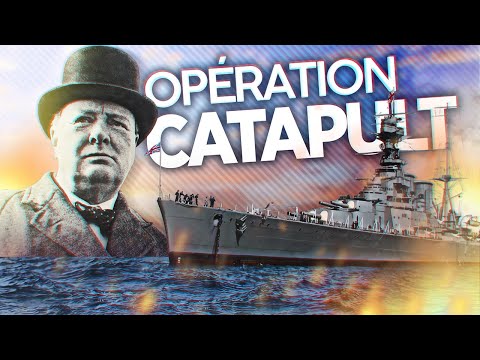
- Introduction to Operation CatapultEvent OverviewOperation Catapult was a British military operation conducted from July 2-8, 1940, aimed at seizing or destroying the French Navy. The most infamous episode was the attack on Mers El Kébir fleet, resulting in over 1200 casualties.Central QuestionHow did Britain and France, still allied 15 days earlier, come to engage in an act of war against each other?Content ApproachThis video focuses on exploring the historical causes and context of the conflict. Technical details, battle specifics, and operational information are covered on the related Cap-hornier channel.FrameworkThe analysis begins with historical causes as a foundation for understanding how the situation deteriorated between the two former allies.
- Collapse of Allied TrustMilitary Breakdown• May 16: Churchill asked General Gamelin where Allied backup forces were; Gamelin responded they had none • May 24: British Expeditionary Force retreated without orders, abandoning the Belgian Army • May 27: Operation Dynamo began evacuating British forces without initially informing the French government • French soldiers were sometimes refused boarding or pushed back with guns during evacuationGrowing GrievancesThe British refusal to send RAF forces to French skies was seen as a betrayal by French authorities, even though sacrificing these planes would not have affected the German campaign but would have jeopardized British defenses.Armistice UncertaintyFrom June 11, Admiral Darlan assured Churchill that the French fleet would never be delivered to the enemy and would be scuttled rather than seized. This was framed as a matter of honor.Separate PeaceJune 17: Despite promises of mutual peace negotiations, Pétain requested an armistice. However, Darlan ordered the fleet to continue fighting, causing dozens of warships to leave Brest on June 18.
- The Armistice and Article 8 CrisisRepeated AssurancesFrom mid-June until June 29, all French authorities, including naval attachés, Paul Reynaud, and Pétain, assured British authorities that the fleet would never be delivered and would be scuttled if threatened with seizure.Language AmbiguityArticle 8 of the Armistice stipulated that the fleet would be gathered and disarmed under German or Italian control. The French word 'contrôle' means 'wide monitoring,' while English 'control' is more restrictive, creating crucial misunderstanding.British InterpretationThe British interpreted Article 8 as giving the Axis complete control over the French fleet, viewing it as an existential threat. Aware of Article 8 on June 21, British authorities were horrified.Communication Breakdown• Talks continued despite mistrust through unofficial and diplomatic channels • Diplomatic telegraphs took time to reach recipients • Diplomatic language did not adequately convey the underlying worries and state of mind • The point of no return was reached as mutual suspicion deepened
- Misunderstandings and DeteriorationIncidents and SuspicionsMultiple incidents occurred involving French units like the Battleship Richelieu near Dakar and the cruiser Emile Bertin in Canada, who interpreted Royal Navy maneuvers as suspicious or aggressive from June 18 onward.Conflicting DemandsBritain desperately wanted the French fleet to sail to British harbors as the only condition for accepting a separate peace. France considered this a vague demand without real substance, while French intelligence falsely reported that Churchill's cabinet member Lord Halifax sought peace with Hitler.French OrdersJune 24: Darlan sent messages to all French ships ordering them to sail to the United States or scuttle rather than risk enemy seizure. A second message warned of possible British attack.Churchill's DecisionOn June 22, Churchill declared in a speech that seizing or destroying the Richelieu was a priority, even stating that France and Britain would soon be at war. Despite violent opposition from British admirals, he launched Operation Catapult.
- Operation Catapult - British SeizuresFleet DispositionWhen Churchill gave the order on July 2, the French fleet was scattered from Canada to Indochina, with main forces at Toulon, Alexandria, Mers El Kébir, and Dakar.Target Selection• Fleets at Toulon and Algiers were too well-protected by coastal guns • Only fleets at Mers El Kébir, Alexandria, Dakar, and United Kingdom were targeted • French ships in UK were of low military importance except for submarines and light cruisersUK OperationsOn July 2 evening, British officers boarded French ships in British waters, sometimes posing as friends and sometimes with threats. Most ships were seized during the night with minimal casualties.Human CostFrench crewmembers were sent to prisoner of war camps for weeks; some enlisted in Free French Forces while others returned to France. Some sailors experienced mistreatment, humiliation, and threats that contributed to the negative reputation of Catapult.
- Alexandria - A Different PathForce X CompositionThe French Force X in Alexandria consisted of one battleship, four cruisers, one submarine, and light cruisers, anchored in the middle of the British fleet and ready for combat.Key Relationships• Vice Admiral Godfroy commanded Force X; Admiral Cunningham commanded Royal Navy forces in Alexandria • The two admirals knew each other well and were good friends • Cunningham was francophile and Godfroy's wife was English • These personal relationships proved decisive in preventing conflictPeaceful ResolutionDespite orders from both London and France, and despite ships pointing guns at each other, the two admirals negotiated a compromise. The ships remained French, were not scuttled, but were immobilized in Egypt.Political OutcomeChurchill was furious at the Alexandria settlement because he wanted to use the French ships, but had no choice but to accept it. This outcome demonstrated that human relationships and political wisdom could prevent war.
- Mers El Kébir - The TragedyBase and CommandMers El Kébir was a French naval base built in the 1930s on the Algerian coast near Oran. Admiral Gensoul commanded a fleet of four battleships (Dunkerque, Strasbourg, Bretagne, and Provence), six light cruisers, and one seaplane carrier.Admiral Gensoul's Profile• A true sailor and loyal military man with no suspected anglophobia • Had commanded a Franco-British fleet during Atlantic German cruiser hunts • Poor political sense and unaware of French political situation • Did not know of General de Gaulle's call, which was not broadcast in North AfricaBritish PreparationChurchill recalled retired Admiral James Somerville to lead the operation to avoid assigning too francophile an officer. Somerville was sent to Mers El Kébir with the aircraft carrier Ark Royal, battleships, and cruisers including the Hood.Initial ContactOn July 3, the British destroyer FoxHound appeared and signaled that Captain Holland would come to confer. Holland was francophile, fluent in French, and a former naval attaché in Paris—Somerville believed sending a friend would ease negotiations.
- The Ultimatum and Negotiation FailureProtocol ViolationAdmiral North had discussed French fleet intentions with Gensoul, one of the highest-ranking French officers. However, Holland, a lower-ranking captain, was sent to negotiate, which violated military protocol and was interpreted as an insult by Gensoul.The Four Options• Continue fighting alongside Britain • Sail to a British harbor • Sail to the French West Indies under British or American control • Scuttle the shipsUltimatum ToneThe ultimatum was written in red and unsigned, threatening to sink the ships if not complied with within 6 hours. The lack of tact and the threat were interpreted as an insult and almost an act of war by Gensoul.Delayed ResponseGensoul reported to France that he had been offered only two options: scuttling or being shot at, omitting the West Indies and continued fighting options. He ordered ships to prepare to get underway, which required several hours to warm the boilers on steam-powered vessels.
- Critical Hours and BreakdownGensoul's ResponseAt 9 AM, Gensoul transmitted his answer: 'French ships will never be seized by the Germans, we will answer to strength by strength.'Communication Delays• The two officers negotiated in a tiny boat at harbor entrance • It took 40 minutes to travel between Gensoul's office and harbor entrance • Each message had to be sent, received, and answered • The ultimatum deadline continued running while communications were delayedFrench Internal OrdersAt noon, Admiral Leluc (Darlan's chief of staff) received Gensoul's message. With low political sense, he sent an unchyphered order to all Mediterranean French ships to sail immediately to Mers El Kébir, knowing the British would intercept it.Final Hours• 1:30 PM: Gensoul seemed on the edge of accepting a British proposal; Somerville postponed firing to 3 PM • 1:30 PM: British aircraft laid mines at harbor entrance, triggering French anger • 4 PM: Holland was finally received by Gensoul • 4:15 PM: Somerville claimed he was about to open fire
- The Attack on Mers El KébirDarlan's Earlier OrderGensoul showed Holland Darlan's June 24 order commanding ships to sail to the USA or scuttle in case of German seizure threat. Holland claimed this order could have changed everything.Point of No ReturnSomerville, who had intercepted Leluc's order about incoming French reinforcements, could not wait any longer. At 4:15 PM, he announced he would open fire. Holland desperately tried to contact Somerville but was too late.The Bombardment• 4:55 PM: First gunfire erupted with British fleet hammering French ships barely able to fire back • Most French turrets pointed toward the coast rather than seaward • Light cruisers cast off moorings and sailed toward harbor exit • Mogador was badly hit as the first cruiser in lineShip Losses• Dunkerque and Provence both took devastating salvos and ran aground to avoid capsizing • Bretagne capsized with approximately 1000 casualties • Strasbourg escaped in a wonderful maneuver with five light cruisers, firing salvos at Hood • Somerville hunted the fleeing ships for several hours before giving up
- Continuation and AftermathFollow-up Attacks• July 5: Admiral Esteva announced the Dunkerque was unscathed; Churchill was furious • July 6: Torpedo plane attack on Dunkerque caused 29 additional casualties • July 7: A British warship presented the same ultimatum to Richelieu at Dakar • July 8: British torpedo aircraft attacked Richelieu with minimal resultsOperational AssessmentFrom a military perspective, Operation Catapult achieved medium success: an important part of the French fleet was neutralized or damaged, but most main targets remained undamaged or operational. The French fleet stayed strong even when diminished.French ReactionIn France, the outrage was absolute. Admiral Darlan wanted to declare war on Britain and held negotiations with Italy to mount a common action against Alexandria. Pétain eventually refused this option on the threshold of new conflict.Colonial ImpactBefore Catapult, many French colonies including Dakar favored continuing the fight alongside the Allies. The operation changed everything, and Western African French colonies remained loyal to Vichy afterward.
- Responsibilities and BlameFrench Leadership Failures• Admiral Leluc's unchyphered order to send reinforcements triggered British firing despite negotiations being close to success • Gensoul held great responsibility for refusing West Indies alternative, although intelligence showed it was never plausible • Gensoul's initial incomplete message to French admiralty about the ultimatum contributed to Leluc's emergency response • Gensoul was the wrong person at the wrong moment with poor political sense and tactical surpriseBritish Officer ResistanceMany British naval officers opposed the operation: Cunningham disobeyed in Alexandria, Somerville repeatedly delayed his firing order, four crewmembers sabotaged torpedoes during the July 6 attack, and Captain Holland requested relief from command.Churchill's ActionsChurchill was the sole decision-maker for Operation Catapult, despite war cabinet approval. He spread fears about Nazi seizure of the French fleet, a myth that persisted for decades. He forced Holland to retire for disobedience before recalling him under public pressure.Political GoalsChurchill pursued a double political objective: demonstrate British determination to continue fighting and convince Roosevelt that Britain would persevere. This succeeded in convincing the US president to deliver ships to Britain months later.
- Context and CounterargumentsHistorical PerspectiveWhen Roosevelt asked Churchill to send the Royal Navy to the US in summer 1940 if England were invaded, Churchill gave the same answer as the French: ships would scuttle and never fall into enemy hands.Proven French CommitmentIn November 1942, when Germans tried to seize the Toulon fleet, French sailors scuttled their ships, proving the risk of capture in July 1940 was non-existent and validating French assertions.de Gaulle's Distortionsde Gaulle justified the operation by declaring in radio messages that the French government was about to deliver the fleet to Germany—a false claim. His interest was legitimizing himself to Churchill and Roosevelt while denigrating the Vichy government.British Historians' VerdictSome British historians including R. T. Thomas and Richard Lamb declared Operation Catapult was the worst decision Churchill made during the war, highly damaging to the Allied cause. British admirals stated there was no strategic necessity, only Churchill's perceived political necessity.
- Conclusion and Complex LegacyTragic ComplexityMers El Kébir remains a complex historical case far from simple clichés. Both nations spread misinformation and fake news afterward, continuing to dominate online discussions with myths rather than facts.Avoidability QuestionWhether the tragedy was avoidable has no clear answer. The situation involved multiple failures, misunderstandings, protocol violations, and poor political judgment from both nations' leadership.Broader Impact• The operation decreased French volunteer recruitment to Free French Forces • French crews who wanted to continue fighting after June changed their minds following Mers El Kébir • Western African colonies shifted loyalty from Allies to Vichy • The attack damaged the Allied cause despite its intended political benefitsHistorical LessonThe case demonstrates how complex historical events resist simple narratives. Even controversial decisions require understanding multiple perspectives, competing national interests, communication failures, and the genuine dilemmas faced by decision-makers on both sides.